A Work Commenced September 3 2026.
What could possibly be sweeter? A small, lightweight binocular, built by a leading global optics firm with built-in image stabilisation and a high magnification to boot? Well, as I was to discover, the Nikon Stabilized 10 x 25 proved far more frustrating than thrilling. To see why read on.
The Nikon Stabilized 10 and 12 x 25 promised a lot when they were first introduced back in the autumn of 2024. But as I considered a unit for review I was surprised by how little interest they garnered from the community. The reviews were all over the place. So, it was with some degree of trepidation that I bought in a 10 x 25 unit for testing.
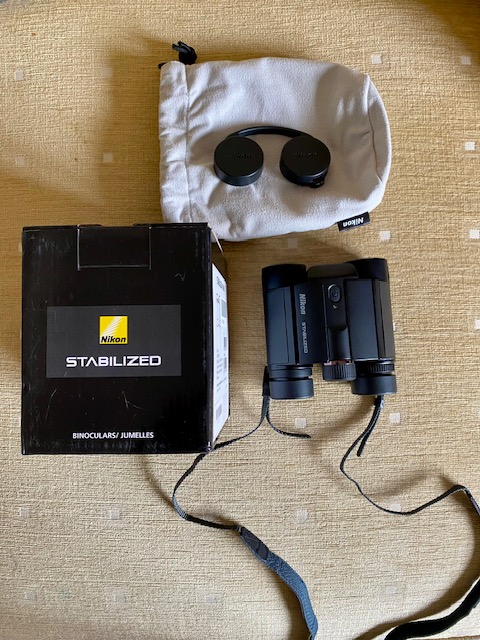
As usual with Nikon, the binocular is everything! No fancy box, a cheap plastic eye guard and no covers whatsoever for the small objectives. A soft pouch was all there was between me and my binocular. OK, but Nikon usually deliver despite the plain jane presentation, right?
Wrong.
Yeah it’s cute: a tiny foldable binocular that has none of the weird bulkiness that attends pretty much all the other image stabilised brands. It actually looks like a regular 10 x 25- only very slightly larger. What betrays its outwardly appearance is the weight: 405g, which is significantly heavier than a regular 10 x 25 because of the additional electrickery packed up inside the chassis.
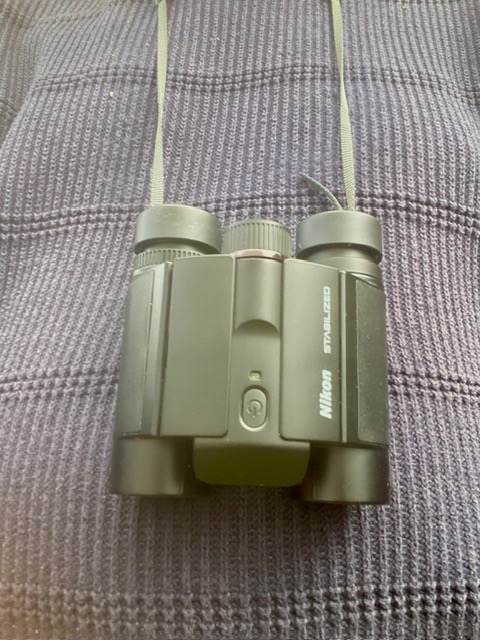
It comes with a couple of 1.5V AA batteries that are inserted on the under side of the bridge. The plate that holds the batteries in place is of very poor quality: made of cheap flimsy plastic that is just capable of keeping them in place: at least for a while.
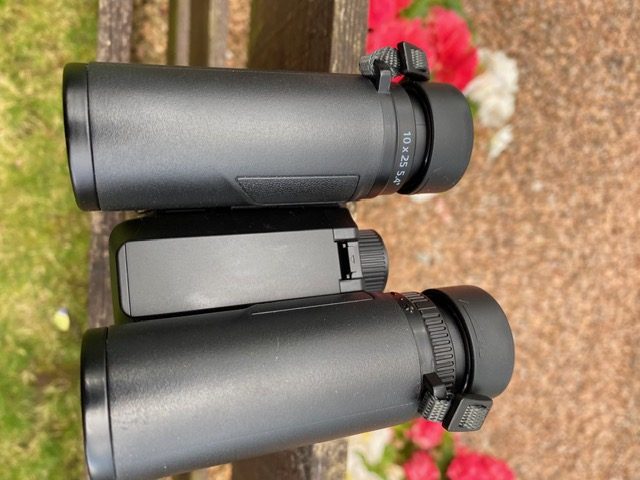
The focus wheel is quite nice: a bit slow to turn but precise and without free play. The eyecups twist up but I consider them only of average quality. The black rubber armouring is grippy enough to hold the instrument steadily in hand.
The dioptre compensation is the traditional kind: located under the right eyepiece. It does its job adequately. But it was only when I had a look at the objective lenses that I became mildly alarmed:

Reflection upon reflection upon reflection……
Nikon state that they used a multilayer coating on the lenses. Yet, you can clearly see multiple reflections – something you only see on budget binoculars,not one that retails for about £500!
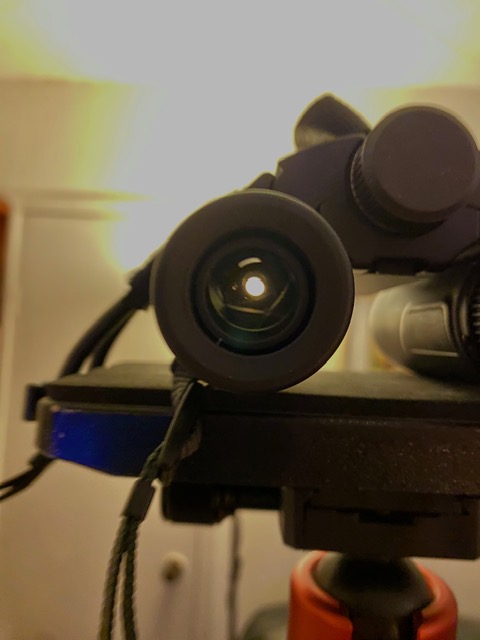
I then had a look at the exit pupils. The reader will note a truncated pupil in the left eyepiece and light leaks in the immediate vicinity of both pupils. Pointing the binocular at a bright light showed a prominent diffraction spike and a couple of strong internal reflections. All these concerns were realised when I looked through the binocular on a bright sunny day. These are glare monsters!
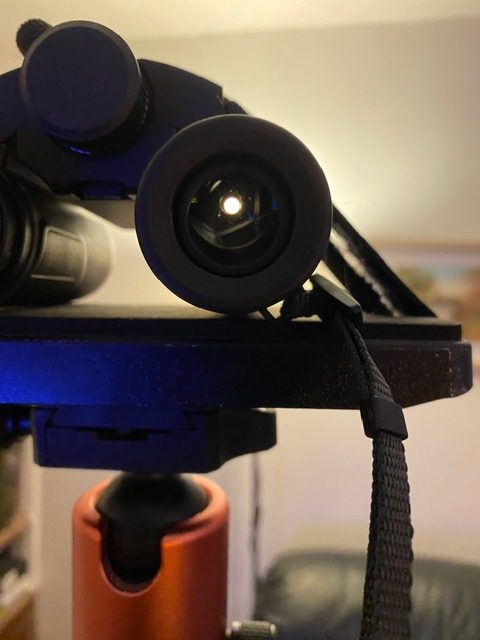
Stabilisation is achieved by pressing a button located on the front of the bridge. It works well: maybe even better than the Canon IS binoculars I’ve tested in the past. But with such poor optics, the stabilisation is far less enjoyable.
I can’t recommend the Nikon Stabilized in good conscience. In this day and age, when you can enjoy excellent optics at very modest prices, Nikon has clearly put all their efforts into the stabilisation without giving much of a thought to the substandard optics built around it.
Nikon can do a helluva lot better than this!
Neil English is author of Choosing & Using