Three Good Binoculars that Won’t Break the Bank.

Three binoculars offering very good performance for a modest price.

April 14 2020

As my regular readers will know, I’ve spent quite a lot of time in recent years seeing what’s what in the binocular market. But just like the telescope market, all is not what it seems. You don’t always get what you pay for and you can find genuine bargains that offer much better bang for buck than those usually presented on internet forums frequented by amateur astronomers, birders and the like. The trouble with these forums is that they usually become hijacked by folk who insist on using and promoting premium products that are usually way beyond the price range of most enthusiasts and many good products simply fall below the radar and so never see the light of day. In this blog, I’ll be presenting three binoculars from the pocket, compact and mid-size aperture range that offer exceptional value for money, having been thoroughly tested(not the usual ‘mickey mouse testing’ seen on the internet) by yours truly in a variety of field conditions.

I’m writing this fully in the knowledge that a lot of folk are hurting financially at the moment, owing to the international crisis precipitated by the corona virus. Millions of people’s mobility has been severely restricted and so there may be quite a few individuals out there who may be looking for cost-effective products that will make life in lock-down that little bit more palatable. What better way than a good binocular to bring the world closer and to examine the beauty of the creation from the vantage of a garden, rooftop or balcony?

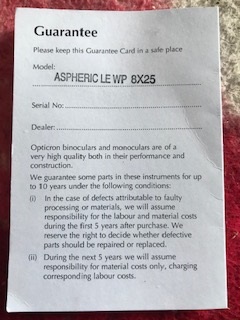
All of the binoculars featured in this blog are well made, coupling very good mechanics with excellent optics, all have price tags under £150(UK) and all come with a ten-year guarantee so that if you’re not fully satisfied with the product you can always return it in due course. These instruments include:

The Opticron Aspheric LE 8 x 25 pocket binocular

The Nikon Prostaff 7S 8 x 30

The Barr & Stroud Savannah 8 x 42


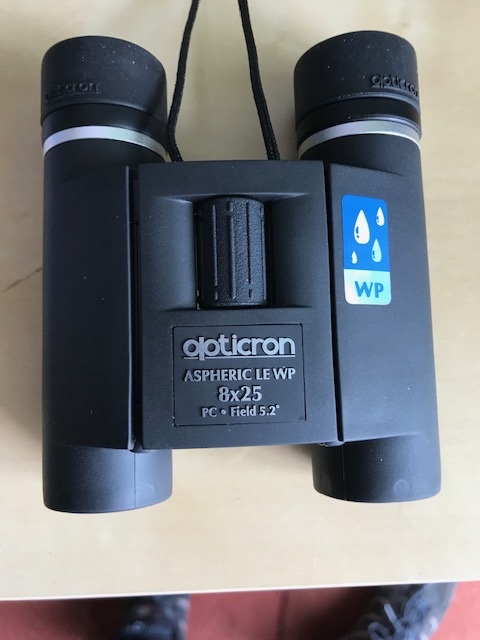
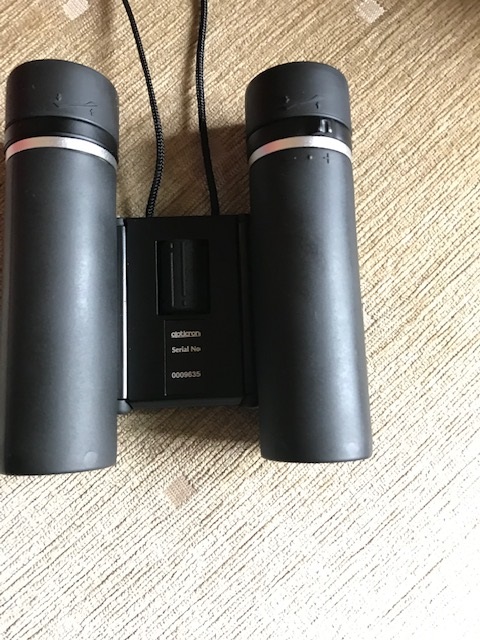
The Opticron Aspheric LE 8 x 25:
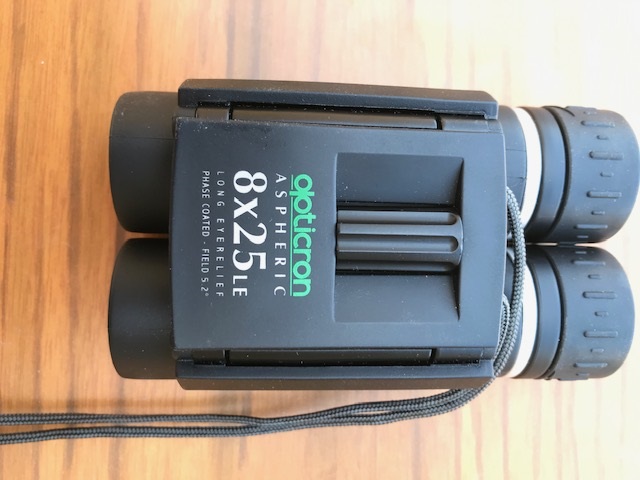
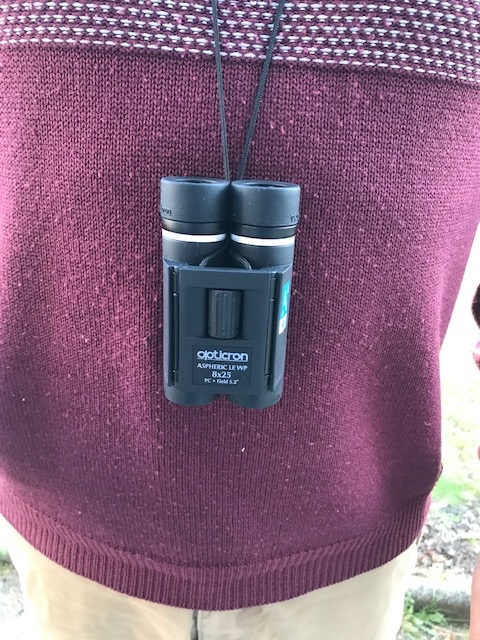
The Opticron Aspheric LE 8 x 25 has an rugged aluminium body with dual hinge design that allows it to be folded up into a very small size so that it fits inside a pocket.

Are you looking for a well-made pocket glass that you can take anywhere to deliver very sharp, high-contrast images of your environment? The Opticron Aspheric LE 8 x 25 may be all the binocular you might need. Opticron is a well established British firm with a long history of delivering high quality optical products to their customers. The unit has fully multi-coated optics, high-reflectivity silver coated, phase corrected BAK-4 prisms to maximise light transmission. My glare tests using a very intense artificial light source shows to show up internal reflections and unwanted glare revealed that not one, but two of these instruments produced very satisfactory suppression of stray light. This is a good indicator of high contrast optics even in difficult lighting situations, such as glassing artificial light sources at night and observing heavily back-lit daylight scenes. The unit shown above was purchased for my wife and was acquired before the newer model was brought to market. The only difference between the newer and older models is that the former are fully water- and fog-proof, purged internally with inert, dry nitrogen gas.

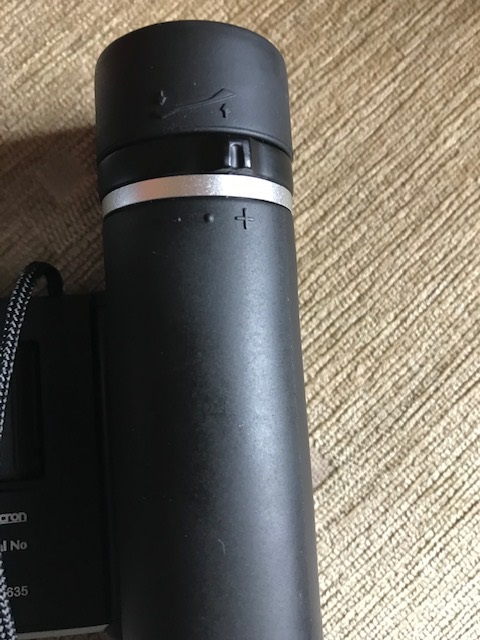
The Opticron Aspheric LE folds out to suit most anyone’s inter-pupillary distance( IPD) and has well made twist up eye cups.

Tipping the scales at about 290g, the little Opticron pocket glass has good quality, twist-up eye cups that hold their position well and possess generous, 16mm eye relief, making them well suited both for eye-glass wearers and non-eye glass users alike. The Opticron also features a built-in lanyard for easy transport in the field so there’s no need to fit a strap. Focusing is smooth and precise, and the newer unit has slightly better rubber armouring for comfortable handling in the field. Close focus is also exceptional on these units. I measured one at 1.4 metres!
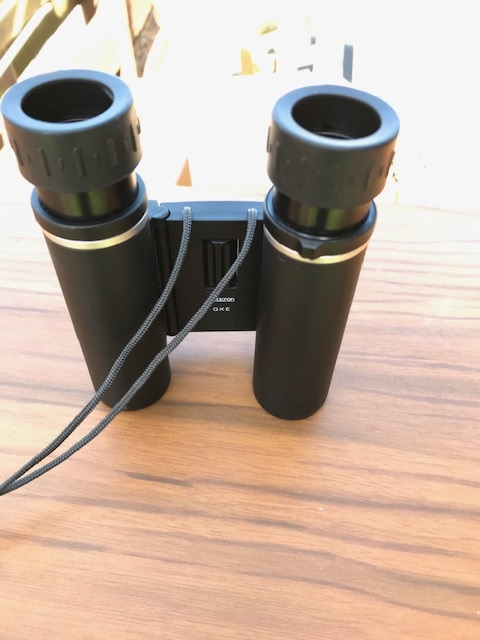
The Opticron Aspheric LE  8 x 25 allows you to get to work or play quickly.

Optically, these little Opticrons serve up very sharp, high contrast images and their aspherical ocular lenses ensure that the image does not degrade appreciably even when subject is imaged at the edge of the field. The only slight downside with these units is their relatively small field of view; just 92 metres at 1000m(~5.2 angular degrees),  but the fine optics more than makes up for this small field!

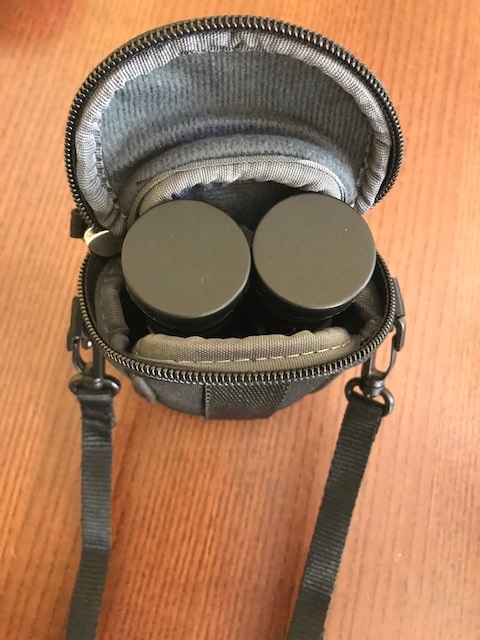
The newer model comes with a beautiful neoprene carry case that perfectly fits the binoculars.

The well-made logoed carry case fits the pocket binocular exceptionally well for easy transport and storage.

Retailing for £129(UK), these pocket glasses will provide years of hassle-free entertainment that is sure to delight anyone who uses them! I’ve often employed them for limited astronomical applications too, where they have proven their worth in delivering razor sharp and glare free images of the Moon, bright planets, and with an almost flat extended field, are well suited for glassing larger star fields and bright deep sky objects.
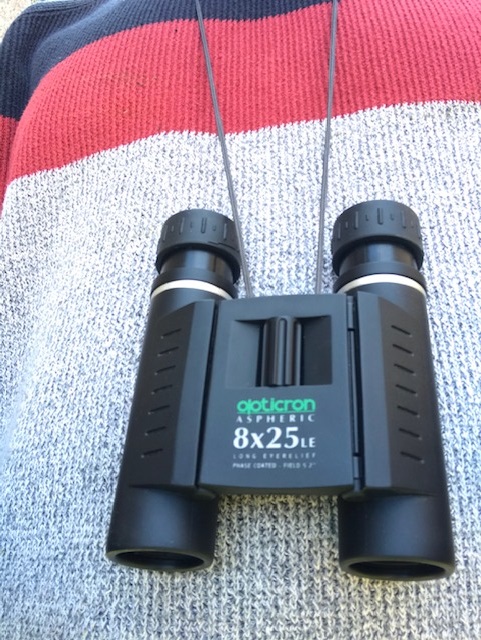
An elegant, ultra-portable pocket binocular.


The Nikon Prostaff 7S 8 x 30:
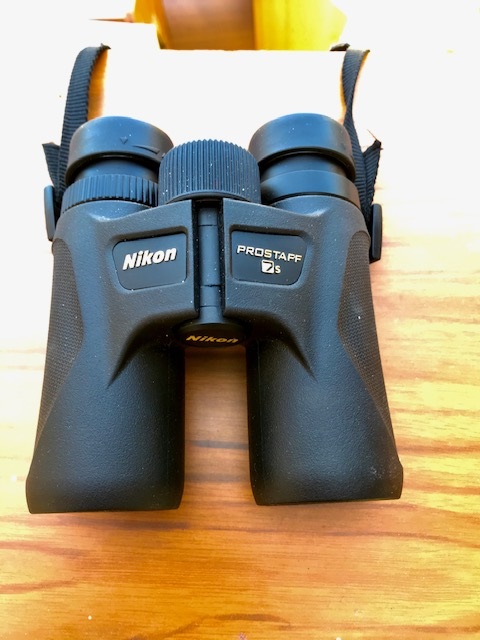
The Nikon Prostaff 7S 8 x 30 compact binocular.

The next binocular featured in this blog was a very pleasant surprise! I took a punt on the Nikon Prostaff 7s 8 x 30 out of sheer curiosity, since the vast majority of comments made by their owners were very positive indeed. And I can now say they weren’t wrong!

Weighing in at 415g, the Prostaff 7s 8 x 30 is very light weight for a binocular with these specifications. The optics are fully broadband multi-coated and the prisms are phase (and silver) coated for bright and sharp images. Being significantly larger than a pocket glass, they are easier to hold and easier to engage with owing to their larger exit pupil( 3.75mm). I was very surprised to learn that the Prostaff 7s has a higher light transmission than Nikon’s more expensive offering, the Monarch 8 x 30, as revealed in my more in-depth review I conducted on this binocular earlier this year. With a length of only 12cm, it is only one centimetre longer than the Opticron pocket glass keeping it very small and tidy!

The Nikon Prostaff 7s 8 x 30 has good quality twist -up and down eye cups that hold their position very well.

Despite being very light weight, it’s very easy to hold steady in my hands owing to its shorter bridge which exposes a larger area to wrap your hands around the barrels. The big focus wheel is buttery smooth and moves effortlessly with zero backlash or slack from close focus (just over 2 metres) to infinity in less than one revolution. The Prostaff 7S has well-made, twist-up eye cups that offers generous (15.4mm) eye relief to suit both eye glass wearers and those that don’t. The poly-carbonate body is overlaid by a thick rubber-like armour with exceptional grip. In addition, the instrument is fully water proof (1m depth for 10 minutes according to the user manual) and being filled with dry nitrogen gas, is also fog proof.

My tests show that the little 8 x 30 was superior to the Opticron in suppressing glare and internal reflections, which came as yet another pleasant surprise to me. Optically, this compact-sized binocular packs a powerful optical wallop. Having a true field of 114m @ 1000m (6.5 angular degrees), the image is very sharp and contrasty, and retains its sharpness almost to the very edge of the field. In addition, there is very little attenuation of light as one moves from the centre to the field stop, unlike many other models I have tested(sometimes costing many times more). This level of optical excellence is achieved by keeping the field of view on the small side compared with many other 8 x 30/32 units you are likely to encounter. I found this a very acceptable compromise though, as 6.5 degrees is still plenty good enough for most applications.

Although the Prostaff 7S units don’t employ ED glass, the chromatic aberration is, to all intents and purposes, non-existent, and delivers no appreciable reduction in performance over an equivalent unit employing ED glass. Like I said before, don’t fall for marketing hype. Most users won’t be able to tell the difference between a unit with ED glass elements and one without, provided that quality optical components are properly assembled in house.
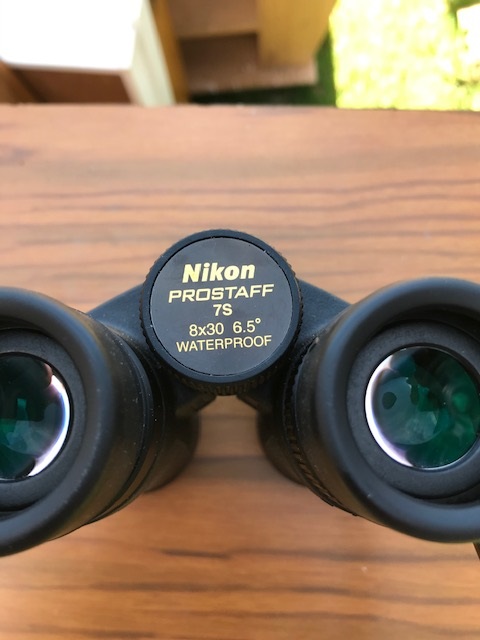
The Prostaff 7s 8 x 30 compact binocular has an exceptionally smooth focus wheel for precision focusing in the field.

Having both larger objective lenses and exit pupils, the Nikon Prostaff 7s is noticeably superior to any pocket glass in low light conditions, where it serves up brighter images at dawn or dusk or on dull winter days. But its biggest performance difference over pocket glasses comes into play when turned on the night sky, where its greater light grasp pulls in significantly fainter stars, making deep sky observing more rewarding.
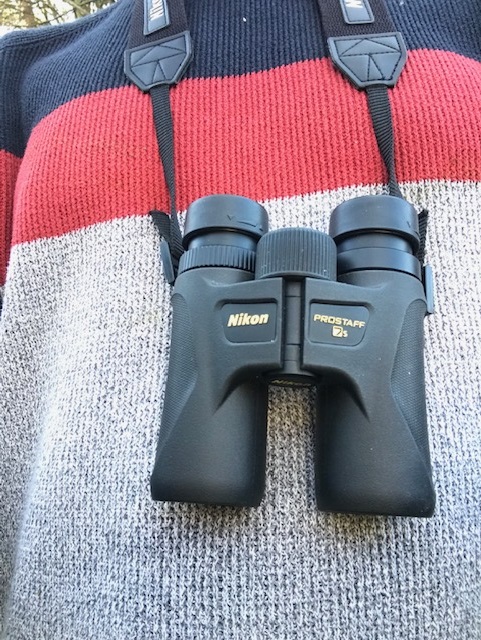
A fantastic performer for a great price: the Nikon Prostaff 7S 8 x 30.

Together with a good rain guard and high quality padded neck strap featuring the Nikon logo, this 8 x 30 unit is likely to please the vast majority of users and will deliver flawless performance for many years. All in all, the Nikon Prostaff 7s 8 x 30 offers exceptional value for money in today’s market, combining great ergonomics with remarkable optical performance for its modest price tag (~£140 UK).

The Barr & Stroud Savannah 8 x 42:
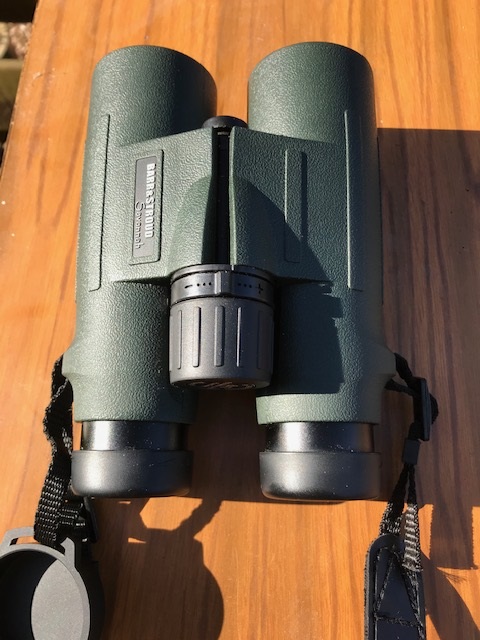
The Barr & Stroud Savannah 8 x 42 super-wide angle.

Now for a very special binocular. When I started out looking at the modern binocular market, I took the advice of a number of more experienced glassers who recommended I try a Barr & Stroud roof prism binocular. Now, several years on, I’m very glad I did. Every model I have tried for their range has been impressive. But one model in particular stood out from the crowd; the Barr & Stroud Savannah 8 x 42. Having owned and tested two samples of this product, I can say, hand on heart, that it’s got to be one of the best bargains your money can buy.

Built like a proverbial tank, it sports a whopping 143m@1000m true field; one of the widest on the market for a binocular with these specifications. But unlike a string of other models in this modest price class, you get an extraordinarily well corrected field with an enormous sweet spot that keeps the object well focused even near the edge of the field.  With a larger exit pupil of 5.4mm, the 8 x 42 is supremely comfortable to use, even by complete novices, since it is very easy to get good eye placement. The body is covered with a thick rubberised armouring, which provides excellent grip even in tricky conditions. Unlike most other roof binos in this price class, the Savannah has its dioptre ring located just ahead of the focus wheel, making it very easy to access should you wish to tweak the optics in the right barrel. On the downside, its location makes it that little bit easier to knock out of place while glassing in the field and so a little bit more care should be afforded to it when removing the instrument from its hard, clam shell case.

Everything about the Barr & Stroud exudes quality. The focuser is a joy to use and one of the best I have experienced in an 8 x 42. It is buttery smooth and moves effortlessly with absolutely no backlash or bumpiness in either direction, taking nearly two full revolutions from its closest focus (under two metres) to beyond infinity. The eye cups are of very high quality and twist up to give extremely comfortable eye relief. What’s more, they remain firmly in place even when significant pressure is applied to them. The instrument is fully waterproof(1.5m for three minutes) and is dry nitrogen purged to eliminate internal fogging when used in cold, damp conditions.

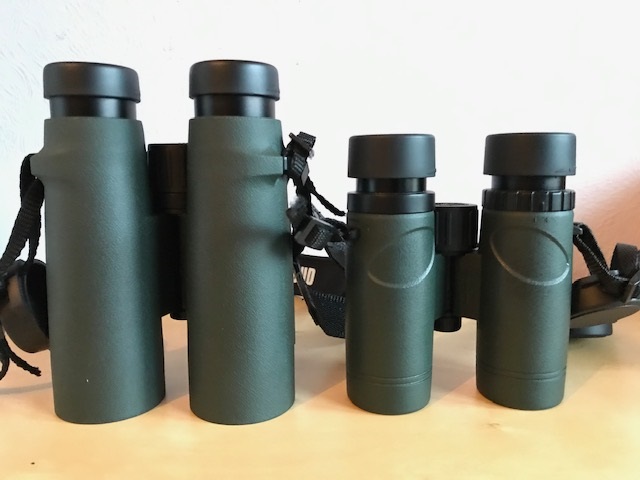
My glare and internal reflections testing showed that the Savannah has exceptional control of stray light and the result is that you get very punchy, high-contrast images. Indeed, the only binocular that has produced better results than the Barr & Stroud Savannah is my little Leica Trinovid BCA 8 x 20, but at a price fully three times the asking price of the former! It has noticeably superior control of diffraction spiking (tested on night light sources) compared with a Zeiss Terra ED 8 x 25 and the aforementioned Nikon Prostaff 8 x 30 and Opticron Aspheric LE.
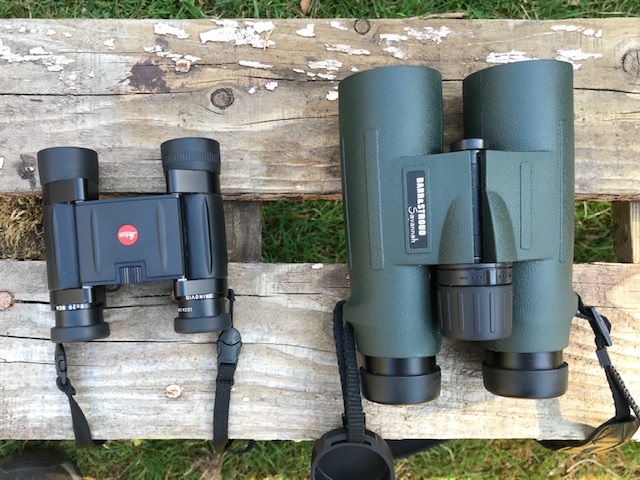
The Barr & Stroud Savannah 8 x 42(right) has exceptional glare and internal reflection suppression that is only just bettered by the premium Leica Trinovid 8 x 20 costing three times more.

The first model I acquired was second-hand but developed a dioptre fault. But I received a brand new instrument from the parent company who own Barr & Stroud,Optical Vision Limited(OVL) and the rest, as they say, is history. The model features fully broadband multi-coatings on all optical surfaces and phase coated Schmidt-Pechan prisms to boost light transmission and image contrast. It ‘s extremely sharp, even when compared with premium models. In one series of tests I conducted in the summer of 2019, the Barr & Stroud Savannah 8 x 42 yielded images that were only very slightly less sharp compared with an optically perfect Swarovski EL Range 10 x 42. I believe the vast majority of users will be delighted when they look through this instrument. Don’t let zealous binocular gayponauts coerce you into buying a model costing many times more before checking this unit out first!

It might be all the 8 x 42 you need!
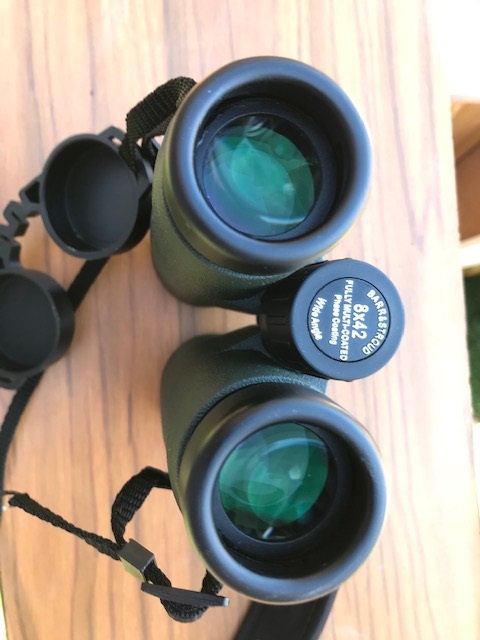
The large well-made eyecups and buttery smooth focuser on the Barr & Stroud Savannah make for supremely comfortable viewing.

The 8 x 42 serves as one of the best all-round binoculars for a wide variety of glassing applications, whether it be bird-watching, hunting in low light and for casual stargazing. Its nearly flat, super-wide field will delight those who wish the cruise the Milky Way or  ogle large deep sky objects. The only downsides are its weight and slightly lower overall light transmission compared with premium models; at 820g the Savannah is not light by any means but I suppose that, in creating the highly impressive near-flat and super-wide field of view, it needs more optical components to execute this correctly and thus the trade-off is reduced portability and reduced overall light transmission. That said, unlike the two other binoculars discussed in this blog, the Barr & Stroud Savannah 8 x 42 can easily be affixed to a tripod or monopod for ultra-stable viewing, should you require it.
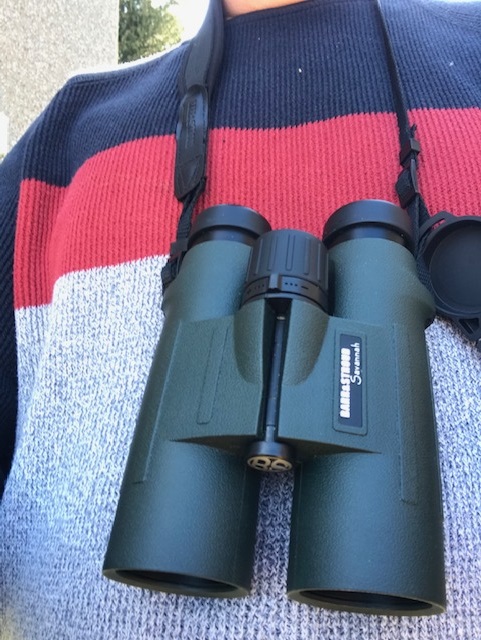
The Barr & Stroud Savannah 8 x 42; a truly remarkable value in today’s market.

This impressive binocular is always a joy to hold in one’s hand and the images it serves up keeps you coming back to it again and again and again.  And while you can pick this model up for about £120, I would rank it as my personal favourite binocular. It’s just a supremely sweet instrument made by a company that once supplied optics to the British Navy during two world wars. And that counts for something!

Storing and Transporting the Binoculars

There is further good news when you purchase any of these binoculars. They all come with good quality carry cases. I have already highlighted the nicely designed yellow and black neoprene case fitting the newer Opticron Aspheric LE(illustrated earlier in this blog). The Nikon Prostaff 7s comes with a black padded case with the Nikon logo on the front and fits the binocular very well together with its strap wound tightly around the body. The Barr & Stroud Savannah has arguably the best quality case of the lot though. As you can see form the image below, the 8 x 42 comes with a hard clam shell case that can be zipped up to seal in the binocular and keep out dust and moisture – the destructive enemies of all optical instruments. As with all of my binoculars, I highly recommend placing a sachet of silica gel desiccant inside their cases, as well as  leaving the caps for both the objective and eyepiece lenses on for added protection.
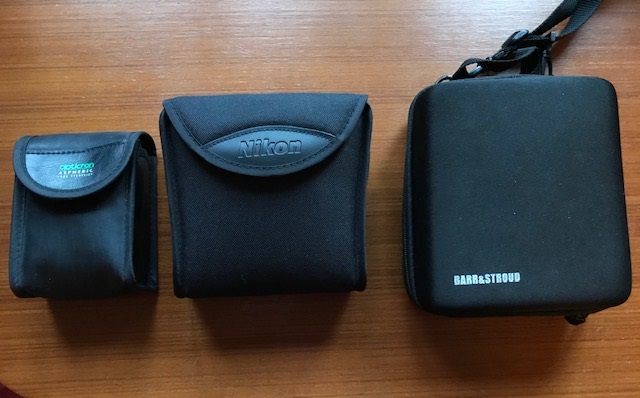
All three binoculars featured in this blog come with good quality carry and storage cases. On the left, the original Opticron Aspheric LE had a simpler padded case to the one now being offered. the Nikon Prostaff 7S case is featured in the middle, followed by the hard clam shell case of the Barr & Stroud 8 x 42 Savannah(right).

Well, I hope that you found this short blog useful. Above all, I hope you’ll agree that you don’t have to spend a small fortune to get good optical and mechanical quality. Indeed, those days are well and truly behind us!  And if you take reasonable care of your binocular it will provide flawless performance for many years to come.

Thanks for reading!

Neil English is the author of seven books and several hundred magazine articles in amateur and professional astronomy. He has many decades of experience testing and evaluating all manner of astronomical equipment. You can help him continue this work by purchasing one of his books. 

 

De Fideli.

A Short Commentary on the NIV Bible.

My Largeprint NIV 2011 (Anglicised)Reference Bible.

‘The days are coming,’ declares the Lord,
    ‘when I will raise up for David a righteous Branch,
a King who will reign wisely
    and do what is just and right in the land.
In his days Judah will be saved
    and Israel will live in safety.
This is the name by which he will be called:
    The Lord Our Righteous Saviour.

                                                                                    Jeremiah 23:5-6

Preamble

There’s an old Chinese saying, “May you live in interesting times.”  There’s no doubt that we do and then some. At a time in history when humanity is at its most creative, its most technologically advanced, a time when scientific knowledge has been increasing exponentially, it is also a time when mankind has begun to unhinge itself from the timeless truths and morals rooted in the Judeo-Christian faith, which held much of the western world together through a common culture and creed for centuries and millennia. Church attendance began to decline in the mid-20th century, slowly at first and then more rapidly, when in the twenty first century, many of these beautiful and age-old centres of Christian worship have been transformed into pubs, restaurants and nightclubs. This is part of what the Bible calls the ‘great falling away,’ where the end of days is characterised by a small, healthy, recalcitrant Church of true believers walking the narrow path, loyal to God’s unchanging message. I believe these trends to be no accident; this falling away was augured from the foundation of the world.

Deceived by silver-tongued atheist evolutionists (read fools) who disseminated their godless(and false) ideologies in best-selling glossy books and prime-time television documentaries proclaiming that we’re not made in the image of God, as the Bible uniquely attests, and that we are only highly evolved animals, our morality was destined to take a steep nose-dive. Abortion, once outlawed in all civilised nations is now fair game in many of the same nations, where today it has become the leading cause of death in the west, outstripping heart disease, cancer and diabetes. The same is true of homosexuality. Scarcely a quarter of a century ago, surveys consistently showed that the vast majority of people were firmly against it on moral grounds. Today, as activists in positions of power have lobbied(I would say bullied) our governments to normalise it, it’s now all over our television screens – morning, noon and night. And while one or two per cent of people identify as such, I find it truly alarming that nearly every second programme beamed into our living rooms has a theme or story related to these deviant sexual lifestyles. What’s more, for a career in modern showbizz, being openly gay has almost become a prerequisite!

So I don’t watch TV anymore and carefully vet all programmes my kids choose to watch, lest their minds be caught up in this campaign for immorality.

Men are now marrying men, and women do the same. They are raising children in homes where the traditional roles of father and mother are no longer considered important. With single-parent families now the norm, children grow up without the steadying influence of a mother or a father. Small wonder so many of our little ones grow up confused. And if the present trends in society are anything to go on, polyamory will become widespread and bestiality will also be normalised.

Our entertainment industries; Hollywood, sports, gaming and pornography, take centre-stage in many of our lives and have done much to erode traditional Christian moral values. Our children learn to kill efficiently and mercilessly with their joysticks, the films they watch are filled with gratuitous violence, infidelity, and blaspheming. Pornography is ubiquitous, tearing families apart. Our sports men and women and other types of celebrities have been elevated to the status of idols and we’re on our iphones more or less constantly, bombarding our senses with as much meaningless drivel as we can possibly soak up. Instead of seeking the true God, we lose ourselves in drug-induced trances. Who needs God when you have alcohol, cannabis, heroin, crack cocaine, crystal meth and so-called ‘prescription drugs’ to dope you into a false utopia?

While childhood used to be a relatively happy and carefree time of life, our young ones are now sexualised to the hilt. Indoctrinated by depraved activists with no respect for traditional values about gender or the family, the number of children receiving puberty-blocking drugs has skyrocketed in recent years, as has the number of teenagers and adults undergoing transgender hormone therapy and/or surgery. And yet, all the while, there has been an avalanche of such transgender individuals reporting that they regret undergoing such life-changing therapies, triggering severe depression in many cases and a commensurate rise in suicides among their members. This only serves to reveal the truth in all of this; transgenderism is a mental disorder, pure and simple, and many clinicians working in the field would agree with me.

With increasing wealth comes increasing materialism. We have larger disposable incomes than at any other time in human history, and yet our propensity for greed spirals ever upward and out of control. The ugly sceptre of human covetousness has led to great deteriorations in the salubrity of the natural world, with the collapse of whole ecosystems, the decimation of animal and insect populations, and all-out extirpations of hundreds of land-based and aquatic species. Without a shadow of a doubt, humans have proven to be irresponsible stewards of the planet and we won’t be given another one.

Many forms of counterfeit Christianity have emerged in recent decades. False  teachers are a dime a dozen and very effectively disseminate their lying doctrines to their sleepwalking congregations, who have ever shorter attention spans and who resent being challenged or rebuked. Whatever you believe, however unscriptural it may be, you’ll soon find a pastor willing to tickle your ears. The internet is crawling with them!

Curiously though, all of this has occurred in lock-step with increasing knowledge of our significance in the Universe. Naive and ill-thought-through faith in Darwinian evolution led many scientists to suppose that extraterrestrial life would be the rule rather than the exception. But we are now more certain than at any time in the past that our planet is extraordinarily rare, if not unique in the Universe, and that all terrestrial life is far too complicated to have evolved naturally from the everyday laws of chemistry and physics that govern everything else in the inanimate cosmos. No, life comes from the mind of God. To deny this fact is sin. Life on Earth is God’s ‘Ace card,’ and human life His Royal Flush. We ain’t going anywhere either, to the chagrin of space-age dreamers. With the possible exception of our nearby Moon, humans are unable to travel and live on other worlds. The reason is simple; our physiology precludes it.

Lawlessness has greatly increased in recent times, with hardly a day going by before we hear of another terrorist strike, protest or war breaking out. The victims of these conflicts are usually the ordinary citizens, leading to the destruction of their homes, their places of business and worship and their livelihoods. Millions of people have been displaced from their homelands, creating the largest humanitarian crisis in living memory. Christian persecution worldwide has also greatly increased in our times. Coupled to all of this, the events surrounding the prophecies of Ezekiel (Chapters 36, 37, 38 and 39) are now aligning themselves in the Middle East. You simply couldn’t make this stuff up!

The bubble has truly burst!

Bearing in mind how human society has changed in recent years, would it be unreasonable for God to express His displeasure with us?

I don’t think so!

This pandemic is a chastisement from the Living God.

The Bible informs us that God expresses His indignation with His human subjects in a variety of ways; by sending freak weather – fires, floods, droughts and blizzards as judgements. He sends plagues, pestilences and earthquakes which, like Sun and rain, affect both the righteous and the unrighteous. He turns the wicked over to strong delusion so that they wallow in their lies and seared consciences. And yet, Jesus warned us that as humans become more wicked and depraved, all of these events would increase both in magnitude and frequency, just like birth pains, toward the time of the end. And this is the world we now inhabit. In one fell swoop, by allowing(but not causing) the spread of the Coronavirus, God has silenced the idols of Hollywood, the idols of sport, and the idols of health, wealth and prosperity. He has restricted our freedoms and our civil liberties.

God now has our undivided attention and the world would do well to listen. Perhaps most importantly, God is reminding us not to get too caught up in the cares of this world and that this is not our ultimate home. Everything we possess and covet will be burned up when God finally brings this Universe to a fiery end.

Of course, none of these trends come as a surprise to Bible believing Christians, who have been forewarned about them in the words of Scripture. Christians know and understand that the world ruled by man, with no regard or acknowledgement of the Creator, is doomed to failure and always goes from bad to worse, so that it is hardly surprising all of these events are converging in this day and age. And while I’m confident that we will get through this Coronavirus pandemic, there will certainly be other and possibly bigger challenges to come, especially if wider society does not repent.  It also highlights the importance of understanding what God has planned for his people, and one of the best ways of gleaning that information is by reading the Bible.

Background to the NIV

Necessity, they say, is the mother of invention, and in the case of the New International Version (NIV), it was born out of a desire to share the gospel with those who had never heard it. It’s story began with one man, Howard Long, an engineer by profession based in Seattle. Possessing a strong Christian faith, Long spent a lot of his time travelling and liked to share his faith with others. Back in the 1950s, there were only a few Bibles penned in the English language, but the one most popularly used by evangelical Christians at that time was the old King James Version(KJV). But Long soon hit a snag; quite a few of the people he witnessed to didn’t really understand the KJV, as it was written in archaic English. And that got him thinking, “can a new translation be made of the Bible in contemporary English that accurately conveys the Word of God?” That question started a decade long consultation with Bible scholars across the nation and by 1965, he had successfully received support from the Christian Reformed Church and the National Association of Evangelicals, who set up a new committee that would begin work on a brand new translation of the Holy Scriptures that was not based on any other existing translations at the time, and which would draw upon the latest Hebrew, Greek and Aramaic manuscripts. By 1966, Long had successfully garnered the support from 80 evangelical ministry leaders who established the Committee on Bible Translation (CBT), an independent body overseeing the creation of the NIV.

Thus began the painstaking process of creating a new English Bible translation with the goal of attaining maximum accuracy and readability for a contemporary audience. Each book of the Bible was assigned to a translation team consisting of two translators, a couple of translation consultants and, where necessary, an English style consultant. Furthermore, another 5-strong team of scholars reviewed their work, comparing it to the original biblical texts and assessing its readability. After that, each book went to a committee of between eight and twelve scholars, as well as lay reviewers who offered constructive criticism on the translation in regard to comprehension and overall literary style. Finally copies were dispatched to working pastors, students and members of church congregations for general feedback. By 1968, the CBT secured a financial sponsor in Biblica, who oversaw the development of the NIV text, and by 1978 Zondervan became the official publisher of the newly completed NIV Bible. The first print run – amounting to a million copies – was sold out almost overnight.

The NIV was the first to use gender inclusive language, recognising that older translations tended to use male biased terminology to reflect the culture in which the Scriptures were first penned. An example can be seen in 1 Thessalonians 2:1. Here is how the KJV reads:

We beseech you, brethern……….

And in the NIV :

You know, brothers and sisters……………

The aim of the translators in producing more gender inclusive language was to make it more accessible to a female readership. In most cases, these changes are entirely inoffensive, as they do not detract from any doctrinal issue and render the text more natural sounding to a modern reader who accepts the equality of men and women as children of the Most High. But in other passages the use of gender inclusive language renders the translation somewhat corny or awkward. Take Mark 1:17 for example. In the KJV it reads:

I will make you to become fishers of men

Note how the NIV phrases the same passage:

I will send you out to fish for people

The NIV underwent its first revision revision in 1984. This version is probably the highest regarded among Bible readers and remains a firm favourite with a broad section of Christians. But in 2005, more revisions were introduced including the highly controversial Today’s New International Version (TNIV), which introduced gender neutral language to refer to people. Noting the tendency of older versions to translate humanity as ‘Mankind,’ the TNIV replaced many of the passages emphasising overtly male-centred language. An example will help illustrate the point.

Here is how the 1984 NIV translated Genesis 1:27

So God created mankind in his own image

The TNIV translates the same passage as:

So God created human beings in his own image

Many Bible commentators felt that this was a step too far, as it sought, they argued, to make the Bible more ‘politically correct.’ Taking these criticisms on the chin, the CBT brought out a new version of the NIV, discontinuing both the 1984 version and the TNIV. Called the NIV 2011, it toned down a lot of the gender neutral language introduced by the TNIV, making it more similar to the NIV 1984. Indeed the CBT stated in the introduction to the 2011 edition that, “the updated NIV you now have in your hands builds both on the original NIV and the TNIV….”

The interested reader can learn more about the NIV 2011 by clicking on the Preamble link at the top of this page.

Strking a Balance Between Two Translation Philosophies

Unlike old Bibles like the KJV, which drew upon a relatively small number of newer manuscripts( 12th century and younger), 100+ bible scholars working on the NIV included the Dead Sea Scrolls (which featured a number of Old Testament books), the Masoretic Hebrew Texts (which are the authoritative Hebrew scriptures, featuring 24 books of the Hebrew Bible), the Samaritan Pentateuch (the first five books of the Hebrew Bible attributed to Moses), the Latin Vulgate (a 4th century Latin translation made by St.Jerome that remained the official Catholic Church’s Bible for many centuries), to name but a few. All of these manuscripts were thoroughly read, translated and brought into modern English.  The translation process was long, thoughtful, and in-depth.

Some critics of the NIV have stated that many verses have been left out or placed in footnotes when compared to translations like the KJV, the New King James Version(NKJV) and the newer Modern English Version(MEV). But The CBT were justified in doing so as many of the older manuscripts discovered in the centuries after the KJV was created do not contain such verses. The decision to do this was not at all intended to deceive, as some Bible commentators I’ve read have suggested but rather to clarify them as facts. For example, the ending of Mark’s gospel is presented in italics with a heading stating that, “the earliest manuscripts and some other ancient witnesses do not have verses 9-20.”

The ending of Mark’s gospel (chapter 16) in the NIV 2011 is presented in italics to emphasise the fact that many of the oldest manuscripts did not contain such verses.

A curious aside: Check out this youtube link to an NIV user who was villified by KJV onlyists. Such bigotry is, unfortunately, still alive and well today

……………………………………………………………………………………………………………………………..

Most modern Bible translations draw on one of two translation philosophies; so-called ‘word-for-word’ and ‘thought-for-thought’ (sometimes referred to as dynamic equivalence) The KJV, NKJV, MEV and New American Standard Bible(NASB) and the English Standard Version(ESV) are highly literal, word-for -word translations, but many readers, especially new Christians, find them to be difficult to read and understand. The NIV is a thought-for-thought translation, and so often departs from the precise wording of more literal Bible translations in order to convey the essential concepts more firmly.  That said, having read the NIV 1984, TNIV and the NIV 2011 in their entirety, I would say that all achieve a very high level of technical precision yet are easy to read. The language of the NIV is at a grade 7 level and so is suitable for all readers 12 years old and upwards. In regard to reading through the NIV 2011 in particular, I found it to be very enriching experience. And while it is a new and fresh translation, it is obviously respectful of classic translations like the KJV. The poetic sections of the NIV Bible, particularly the Book of Psalms, is arguably one of the best presentations I have personally encountered.

As an avid reader and collector of different Bible translations, I recognise the value of every version. What may be unclear in one rendering of the Word of God, other translations can help you arrive at a crystal clear understanding of the same text. Crucially though, the NIV, like all other modern English Bible translations, there is no change in doctrine between them. So you can be assured that in reading the NIV you will arrive at an accurate understanding of God’s message to humanity.

There has never been a better time to get back into reading the word of God, and the NIV 2011 is a great, scholarly translation that is both accurate and easy to read. But I would also recommend reading another more literal version of the Bible as well if you can. As world events continue to unravel before our very eyes, knowledge of the Bible will help you see the wood for the trees, so that you’re not frightened or caught off guard when disaster strikes. Time spent reading and applying Biblical wisdom will be added to your life.

Dr. Neil English is the author of seven books in amateur and professional astronomy. He delights in using science to debunk misconceptions about the supposed incompatability of science and faith.

Postsciptum:

The NIV is also available in both American an anglicised (UK) English

The NIV has also been translated into many other languages to reach millions of non-English speaking people around the world.

Like all good Bible translations, the entire text of the NIV can be accessed free online.

There are audio versions of the NIV available. Arguably one of the best is narrated by the actor and Christian, David Suchet.

The full Gospel of Mark(NIV version) can be watched here.

De Fideli.

8 x 42 vs 8 x 32; Which is More Versatile?

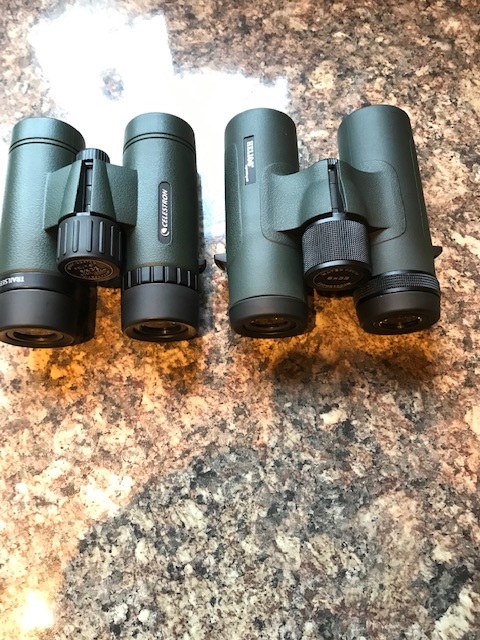
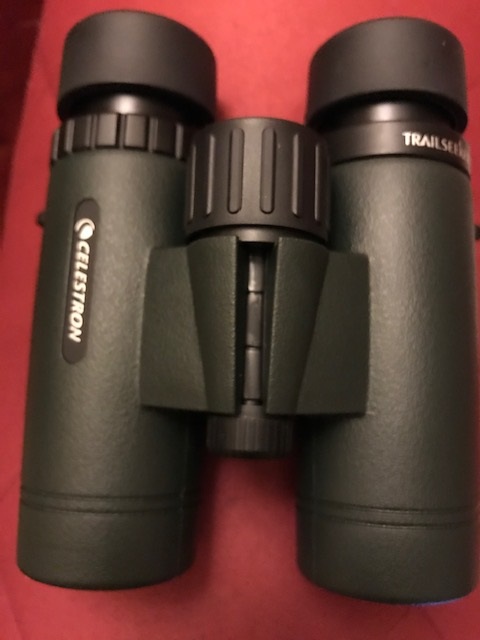
Two good binoculars: The Barr & Stroud Savannah 8 x 42(left) and the Celestron Trailseeker 8 x 32(right).

Many binocular enthusiasts will often recommend a good 8 x 42 as the near perfect all-round instrument for birding, hunting and astronomy. This recommendation seems sensible enough given their medium size, weight and decent light gathering power for use in bright daylight, low light conditions and stargazing. But the increasingly popular compact 8 x 32 has also earned a respectable place in the hearts of many birders and sightseers owing to its lighter weight but greater light gathering power over a pocket binocular. But that raises an interesting question; which model is more versatile in the long run?

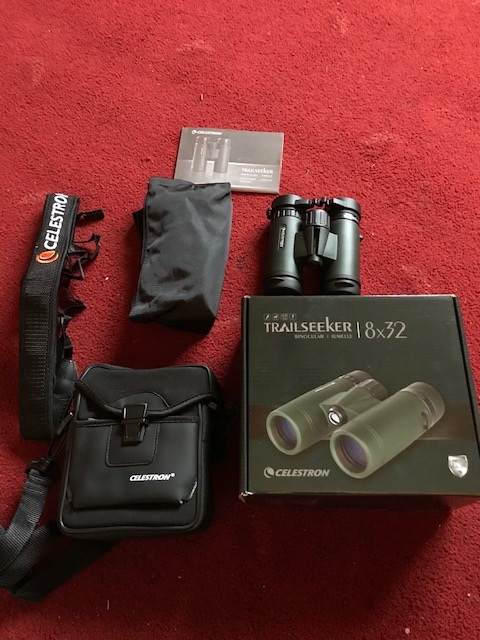
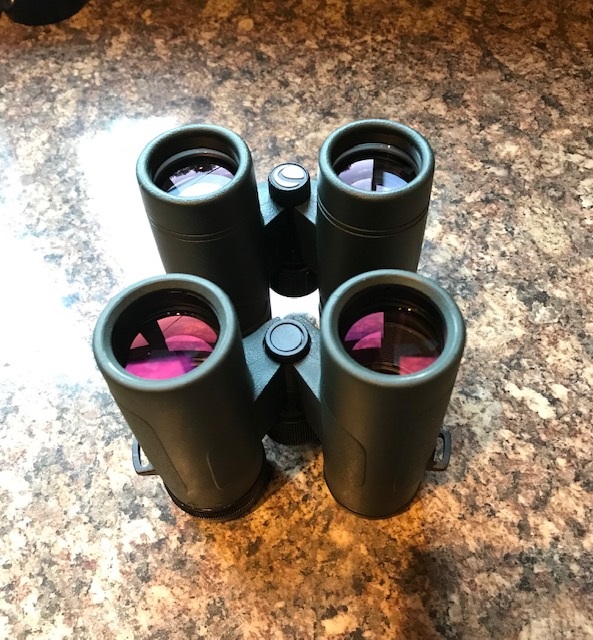
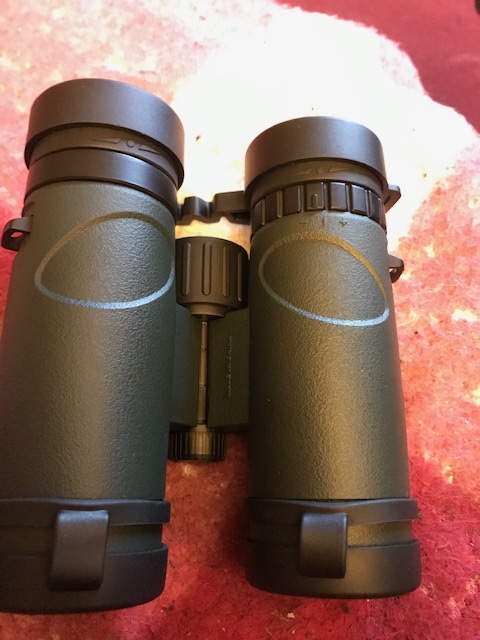
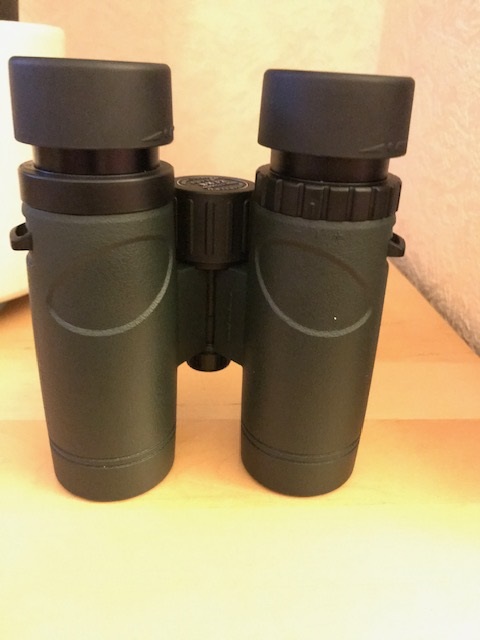
To begin to answer that question, I’ve spent some time comparing and contrasting the efficacy of two binoculars in these size classes; a Barr & Stroud Savannah 8 x 42, which I have written enthusiastically about in a past blog, and more recently, a Celestron Trailseeker 8 x 32, described in more detail here.

Let’s first look at the specifications of both models at a glance:

The Barr & Stroud 8 x 42

Fully multi-coated

Phase coated(probably silver or enhanced aluminium)

8.2 degree FOV(143m@1000m)

5.25mm exit pupil

18mm eye relief

Dry nitrogen purged

Waterproof

810g

Retail Price: £120 UK

The Celestron Trailseeker 8 x 32

Fully broadband multi-coated

Phase coated(high reflectivity dielectric coatings)

7.8 degree FOV(137m @1000m)

4mm exit pupil

15.6mm eye relief

Dry nitrogen purged

Waterproof

453g

Retail Price: £125(recently reduced for clearance owing to the discontinuation of the model)

Performance in Bright Daylight Conditions

Both instruments serve up  very sharp, high contrast images of well-illuminated targets with virtually no chromatic aberration(this is widely exagerrated by many reviewers but is actually not really an issue in any realistic situation. Indeed, in my comparison of smaller high-quality ED and non-ED instruments there has never been a target that I have imaged where ED glass made any meaningful difference to the viewing experience). The Celestron has a narrower field of view and a smaller ultra-sharp sweetspot. The Barr & Stroud displays a wider, flatter field with a noticeably larger sweetspot. The larger exit pupil on the latter makes viewing that little bit more comfortable, since positioning the eye over a larger shaft of light is easier to achieve. Both instruments generate images that are about equally bright under these conditions though. Near equal too is their ability to suppress glare and internal reflections owing to good baffling and high-quality coatings applied to all optical surfaces. The objective lenses are also deeply recessed in both binoculars, offering protection against rain, wind-blown dust, as well as serving as an effective barrier against peripheral glare.

I also noted slight differences between these instruments in colour tone when observing brightly illuminated daylight targets. The Celestron had a more neutral colour tone, whereas those of the Barr & Stroud were ever so slightly yellower and darker in comparison.

The focusing wheels on both instruments are notably different in field use however. The Barr & Stroud possess one of the best focusers I have personally experienced(indeed they have been very good in a number of other instruments marketed by the same company). It is buttery smooth and very easy to adjust in situations where rapid changes of focus are necessary. The Celestron focuser has much more tension in comparison, even after using it for a considerable number of hours in the field. When rapid focusing is required, the Barr & Stroud Savannah is clearly superior, which makes a significant difference when scanning fast-moving targets like birds flying across the field of view.

There is also a significant difference in eye relief between the two instruments. The Barr & Stroud has a whopping 18mm eye relief whereas the Celestron Trailseeker only exhibits 15.6mm in comparison. What this means in practice is that the latter is far more comfortable to use while using eyeglasses. I can see the entire field of the Savannah if I use my eyeglasses but it’s a lot more challenging with the Trailseeker.

The weight difference between the models is considerable however; with the Celestron tipping the scales at just over half the weight of the Barr & Stroud. Indeed the latter is one of the heaviest  8 x 42s currently available, while the Celestron Trailseeker is one of the lightest models in its aperture class. This has a significant  bearing on  prolonged use and transport in the field, where neck strain is effectively eliminated in the light-weight Celestron.

Low Light Performance

On paper, one would reasonably expect that the significantly larger 8 x 42 would prove better in low light conditions, such as those experienced at dawn and dusk, but my testing revealed some surprising results! In a nutshell, the Celestron Trailseeker proved to be much closer to the Barr & Stroud under such conditions! Immediately after sunset on several late January evenings, I found that both instruments produced very similar performance in terms of the brightness of the images garnered of a heavily lichen-adorned tree branch located some 50 metres off in the distance. Indeed, the 8 x 42 only pulled noticeaby ahead well into twilight when the last light of day was ebbing from the landscape. This seemed genuinely puzzling to me, as I fully expected the results to be well, like night and day.  But why though?

The first significant difference between the models relates to the coatings used on the roof prisms in both instruments. The Celestron Trailseeker has state-of-the-art dielectric coatings that significantly improve its light transmission over a similar sized model with lower reflectivity aluminium or silver coatings. Maybe the Trailseeker has better anti-reflection coatings applied to the lenses making up the objectives and the eyepieces? The second thing that I noted is the significantly larger frame of the Barr & Stroud Savannah, which will have commensurately larger prisms than the smaller Celestron, with the implication that more light will be absorbed while traversing the former. That said, I still couldn’t understand why an instrument with 42mm objectives was not pulling very far ahead under such low light conditions than an instrument with only 32mm aperture objectives. Quite frankly, it still didn’t add up!

It was then that I realised that the best explanation possibly pertained to the size of the exit pupil under the same conditions. As any amateur astronomer worth his/her salt will tell you, the pupil of the eye is designed such that it dilates in low light conditions to allow more light to reach the retina. Indeed, this is one of the ABCs in telescopic deep sky observing, where a fully dilated eye pupil shows you much fainter objects than eyes that are newly accustomed to the dark. But while some dilation certainly occurs under low light, I wondered whether there was a limit to how much dilation actually occurs during early twilight, when the differences were observed to be most similar in both instruments. If my eyes only extended from say 2.5mm during bright daylight to a liitle over 4mm in early twilight, the extra millimetre or so offered by the 8 x 42 would be of no significant benefit. Maybe my eyes were just not capable of using the 5.25mm offered up by the larger 8 x 42 under such conditions?

I also noted that the tests on both binoculars were carried out more or less simultaneously for the duration of about 15 minutes, so not long enough to induce big changes in the ratio of rhodopsin(which reaches higher concentrations in darker conditions) to retinal(which exhibits higher concentrations in bright light conditions) In addition, the eye takes quite a long time to effect these biochemical changes, and most certainly longer than the 15 minute duration over which these tests were conducted. Moreover, rhodopsin is still rather labile even in low light conditions such as those encountered during the twilight sessions. However, these findings were quite in keeping with the subsequent experiences I had with both binoculars under well-adapted dark conditions; specfically under a clear night sky with no Moon.

Dark Sky Performace Compared

Donning some dark sunglasses I sat out in a deck chair for about 25 minutes after leaving a bright indoor environment to accelerate dark-eye adaptation. By then I was sure that my eye pupils had dilated to their maximum extent and the process of rhodopsin biosynthesis was well under way. Examining the region centred on Orion’s belt stars, I immediately noted a very significant difference between the glasses; this time the clear winner was the 8x 42 Barr & Stroud binocular. It was easy to see that it was pulling in more numerous and fainter stars in Collinder 70 than the smaller 8 x 32. The same was true when I critically examined the Sword Handle of Orion, and in particular, the marvellous gaseous nebula of M42. The 8 x 42 was very much superior, indicating that my eyes were indeed gathering in more light( as they should do) owing to its larger exit pupil of the 8 x 42 binocular.

That said, the 8 x 32 was more comfortable to hold over prolonged periods(several minutes), owing to its much lower weight and transmitted a surprising amount of light; far more than any pocket glass (25mm aperture or less) I had recalled from memory, yielding quite impressive views of star fields and open clusters like the Auriga Messier trio, then very high overhead in the winter sky. The slower focus wheel on the Celestron was far less of a problem under these viewing conditions owing to the relatively tiny focus adjustments required when viewing astronomical targets, and especially when moving from the zenith to objects imaged nearer the horizon.

Overall Implications

The Barr & Sroud Savannah 8x 42(left) gets my winning vote over the Celestron Trailseeker 8 x 32(right).

So which instrument is more versatile? Unsurprisingly, this is a deeply personal choice and, as such, there are no absolute answers. If you don’t mind carrying around the extra weight, then the 8 x 42 would get my vote. I just love the way the instrument feels in my hands, its solid, Spartan construction, wonderfully sharp, super-wide field of view and spectacular bang for buck. The 8 x 42 is exceptionally easy on the eyes with its very comfortable 18mm eye relief(compared to the considerably tighter 15.6mm on the Celestron) and larger exit pupil, so pulling well ahead as an astronomical instrument, or when glassing under deep twilight conditions. It’s only significant downside over the 8 x 32 is its lack of dielectric coatings on the Schmidt-Pechan roof prisms, but it more than makes up for this with its fine optical quality and sturdy mechanical design. Indeed, the 8 x 42 Savannah remains this author’s personal favourite binocular!

But if weight is a big issue and you like to do all or nearly all of your glassing during daylight hours, then a high-quality 8 x 32 will certainly deliver the readies and thus deserve serious consideration.There are some other models in this binocular size class that are as good, if not better than the Celestron, and at prices that won’t leave you out in the cold; the Vortex Diamondback HD 8 x 32(with its famous ‘no questions asked’ VIP warranty), the Nikon Monarch 7( 8 x 30) and the Hawke Frontier X HD, immediately come to mind, all of which retail in the UK for between £200 and £300 and well worth checking out. If possible, you should try before you buy to avoid disappointment.


Thanks for reading!


Neil English is the author of several books on telescopes and astronomical observing, but does not endorse bling. He is seriously considering writing a similar text dedicated to binoculars in the future.

PostScriptum: I intend to have my fully dilated eye pupil size measured on my next visit to my optician.

De Fideli.

Product Review: Leica Trinovid BCA 8 x 20.

To establish ‘Limes.’

Back in the summer of 2019, I got the opportunity to test out a very high quality Swarovski EL Range 10 x 42 owned by a fellow villager named Ian. A keen hunter, he uses this binocular to seek out red deer and estimate their distance using the built-in laser telemetry in the instrument. A few weeks ago, I bumped into Ian in the swing park near my home, where he was looking after his young grandaughter, and we struck up another conversation about binoculars. I was returning from one of my walks,  carrying along my little Zeiss Terra 8 x 25 pocket. He was fascinated with this new instrument, being duly impressed with its razor sharp optics, generous wide field, light-weight ergonomics and decent market value. It was then that I discovered that Ian was also the proud owner of a little Leica Trinovid BCA 8 x 20, which he purchased about two years back for casual sightseeing during his summer vacations in the Scottish northwest. Keen to expand my portfoIio of tested instruments, I asked him if he would be kind enough to let me borrow it  for a wee while to evaluate its optical and mechanical performance. He agreed, but did say that he found the Terra to be very comfortable to use and was even considering acquiring one in the future! Fast forward a couple of weeks and Ian dropped by the Leica binocular at my home so that I could begin some tests, the results of which, I will divulge in this blog.

Leica is a German optical firm that has established itself as a world-leading manufacturer of high-end cameras, microscopes, camera lenses, binoculars and spotting ‘scopes for the burgeoning sports optics market. Founded in 1869 by Ernst Leitz, at Wetzlar, Germany, where the original factory remained until 1986, after which time production was moved to the town of Solms to the west of Wetzlar.  In 1973, Leitz set up another large factory in  Portugal, where it has remained to this day. With 1800 employees, Leica has an annual turnover of the order of 400 million Euro, and continues to produce state-of-the art optical equipment for private and public institutions(mostly universities and hospitals) the world over.

The Leica Trinovid line of binoculars has a long history. Leica first began to manufacture high-quality binoculars back in 1907, but the Trinovid line first appeared in 1953. Over the years, Leica has continued to develop their Trinovids, adding new optical technologies to their products where, today, they utilize some of the best glass and optical coatings available.

First Impressions

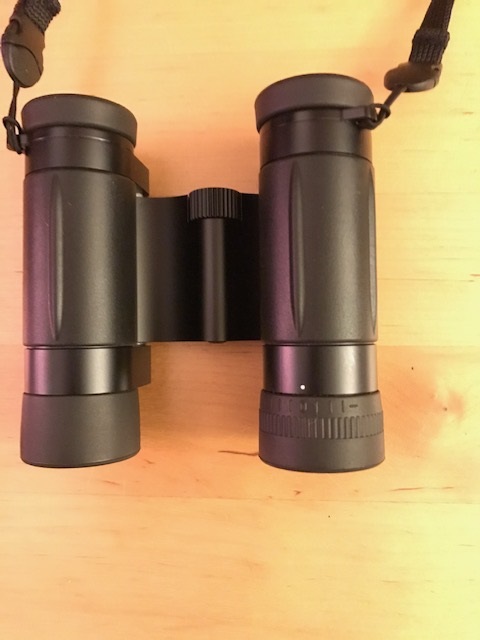
The quality of the device was immediately apparent to me as I prized the 8 x 20 from its somehwat oversized, soft carry case. Weighing in at just 235g, the Leica Trinovid BCA 8 x 20 measures just 9cm long, 6cm wide and 3.5cm deep when folded up. This makes it one of the smallest and most portable binoculars in continuous production today.

The binocular has a very traditional dual-hinge system but maintains a very classic look and feel, with an aluminium frame. Unlike their larger binoculars, the BCAs are described as ‘splashproof’, meaning that they will work fine in rainy conditions but are not hermetically sealed or dry nitrogen purged like the majority of roof prism binoculars today. The all-metal chassis is overlaid by a tough rubber armouring, which greatly improves its grip during field use and affords greater protection against accidental bumping or knocking about.

The strong and durable rubber armouring overlaying the aluminium chassis of the Leica Trinovid BCA 8 x 20.

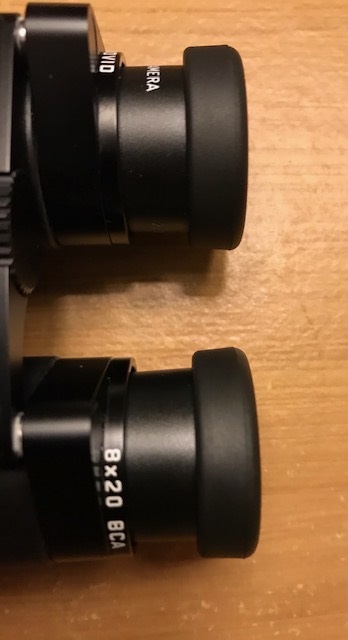
The eyepieces are of exceptionally high quality, being made of metal overlaid by soft rubber cushions for comfortable viewing. They offer just two positions; fuly extended upwards for non-eyeglass wearers(including yours truly) or fully retracted when used with glasses. Eye relief is pretty tight though, at just 14mm, so some eyeglass wearers may struggle seeing the full field. The eyecups hold their position very well and can only be retracted by using considerable downward force. I must say that these are the finest eyepieces I have thus far experienced in my survey of the binocular market. Simply put, they are beautifully designed.

The beautifully designed eyepieces click rigidly into place.

Intriguingly, the dioptre setting(+/-3.5) is located on the right objective lens, which turns either clockwise or anti-clockwise. The focus wheel, which appears to be constructed of a hard plastic, is quite small but moves very smoothly with zero backlash. At first, it’s a bit fiddly to use but with a little practice becomes easier to negotiate, though it may present problems to those who wear gloves.  All in all, the binocular is a study in elegant design. Clearly it was created not only to look good but to feel good in active service.

The Trinovid BCA has a high-quality, somewhat elastic, neckstrap, which is affixed via clips, so can be disengaged from the binocular if so desired. It is comfortable to use. Yet again, an unusual but very nice touch.

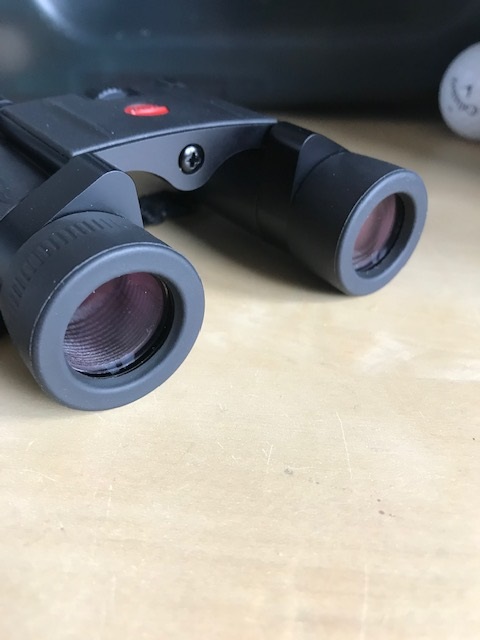
The objective lenses are not very deeply recessed in this model, perhaps because its designers aimed to minimise the length of the instrument. Having more deeply recessed objectives serves a number of useful purposes though, including protection against rain and dust, and serving well as an effective barrier against peripheral glare.

The objective lenses on the Trinovid are not very deeply recessed.

Optical Testing

As is customary for me with the arrival of any new binocular for testing, I began by assessing its performance in suppressing stray artificial light, internal reflections and glare. This is easily done by sharply focusing on a bright internal light source – I use my iphone torch at its brightest setting – in a darkened room and sharply focus on the light. Such tests quickly revealed highly satisfactory results. Stray light was very well controlled and very clean, with only very minor internal reflections and no sign of diffused glare often encountered in lesser models. The main artefact was a reasonably pronounced diffraction spike. Indeed, using two small ‘control’ binoculars; my Zeiss Terra 8 x 25 pocket and my recently acquired Celestron Trailseeker 8 x 32 (both of which exhibit excellent performance in this regard), I judged the Leica 8 x 20 to be as good, if not a little better, than my controls. All of these binoculars employ full, broadband multi-coated optics on all glass surfaces, with prisms that are dielectrically coated for highly efficient light transmission. The results predict that the Leica will perform excellently when pointed at strongly backlit daylight scenes, bright street lights and bright terrestrial targets like the Moon. There is no such thing as absolute perfection though. Such a complex optical device will always betray some degree of imperfection under these very stringent tests. I guess, it just comes with the territory!

The high quality HDC coating makes for exceptional light transmission.

In good accord with my flashlight tests, pointing the little Trinovid at a bright sodium street light at night showed no internal reflections, glare and only a very faint diffraction spike that I didn’t find intrusive. These tests were followed up by daylight optical assessments. Looking at tree trunks and branches during bright afternoon conditions showed that this 8 x 20  has excellent optics with a good, wide field of view. The image is tack sharp with a very large sweet spot. There is only slight softening of the images in the outer 10 per cent of the field. Colours are true to form and I detected only the merest trace of chromatic aberration and then only by looking very hard for it(I honestly find this activity rather pointless) on difficult targets. Contrast is exceptional with excellent control of stray light, as judged by imaging targets nearby a setting Sun under hazy sky conditions. There is a normal level of veiling glare which can be removed by blocking the Sun with an outstretched hand. There is also some minor pincushion distortion at the edge of the field but I still judged this to be well above average.

Excellent coatings make the objectives almost disappear.

Some readers will be surprised to learn that Leica did not employ any ED elements in the objective lenses of their BCA binoculars, proving once again that such an addition is not at all necessary to create an excellent optic(the Swarovski CL pocket and larger sibling, the CL 8 x 30 Companion are yet other examples). What really matters are well figured glass elements with high-quality anti-reflection coatings. Looking up its specifications online showed that Leica has spared no expense applying their famous(patented) High Durable Coating (HDC). It purports to be abrasion-resistant with enhanced light transmission, and then there’s the solid P40 dielectric phase coating applied to the Schmidt-Pechan roof prisms. What results is a highly efficient light gathering optic; an especially important commodity for tiny binoculars like these.

The Trinovid certainly delivers optically when the light is good and strong. But it does have some issues which are important to address. Because of its very small size, it’s actually quite challenging to hold steady during field use. It’s small exit pupil (2.5mm) also makes it considerably more difficult to position one’s eyes correctly compared with slightly larger binoculars, such as a good 8 x 25( with a 3.125mm exit pupil). Comparing its ergonomics with my Zeiss Terra 8 x 25 pocket glass showed that the Terra was simply much easier to engage with even though it’s only about 30 per cent heavier(310g). It’s larger frame also gives it the edge in terms of acheiving a good, stable image. This could prove important if the owner intends to use the 8 x 20 BCA for prolonged glassing periods, as the extra effort incurred in accurately positioning one’s eyes over the small exit pupils may induce eye strain with some users, so I think it’s important that people seriously considering this tiny glass try the more popular 8 x 25 units out before making that all-important purchase. Indeed, I believe this point was not lost on Ian when he tried the Terra out in the swing park that afternoon.

In an ongoing blog on using my 8 x 25 binos, I gave mention to why I think good pocket binoculars are quite expensive in the scheme of things. I attributed this to the extra difficulty in accurately positioning the many optical components stably within a scaled-down structure. The Leica Trinovid BCA 8 x 20 seems to follow this rule of thumb. It is smaller than any 8 x 25 model but is also more expensive(about £350 to £400 UK as opposed to £270 for the Zeiss Terra 8 x 25, for example). But there is surely folly in pursuing this to its logical conclusion. For example, would it be sensible to create an even smaller, state-of-the-art 15mm model say, that can fit on two fingers and cost £500?

Of course not! That would be daft. It would be too small and fiddly to use and the amount of light it would bring to one’s eyes- even if it were 100 per cent efficient – would severely limit its use. That’s probably why the other premium binocular manufacturers – particularly Zeiss and Swarovski – have discontinued their 8 x 20 models in favour of 8x and 10 x 25mm units. Indeed, all of this has close parallels to the premium, small refractor market, where folk seem to pay exorbitant prices for tiny, albeit perfect, optics. Is that really sensible? Not in my mind – which is why I turned my back on it- but your mileage may vary!

Assorted notes:

The Leica Trinovid BCA 8 x 20 has ocular lenses just a little smaller than its objective lenses.

The instrument comes with a ten year warranty.

Each Leica binocular comes with a test certificate which claims that it was examined at various times during its manufacture prior to leaving the factory.

The Leica mini-binocular didn’t appear to come with caps, either for the objectives or eyepieces. It does just fit the small Opticron branded rainguard for compact binos however, which I use with my 8 x 25s.

It’s hard to find the ‘made in Portugal’ stamp on the Leica. But it is there, stealthily placed under the left barrel of the optic, and only accessed by fully extending the instrument’s IPD to its maximum where you’ll see: Made by Leica Portugal in good light.

The Opticron-branded rainguard I use for my 8x 25s just fits the smaller leica binocular.

More info on this package here.

Comparison with other Premium Pocket Binoculars

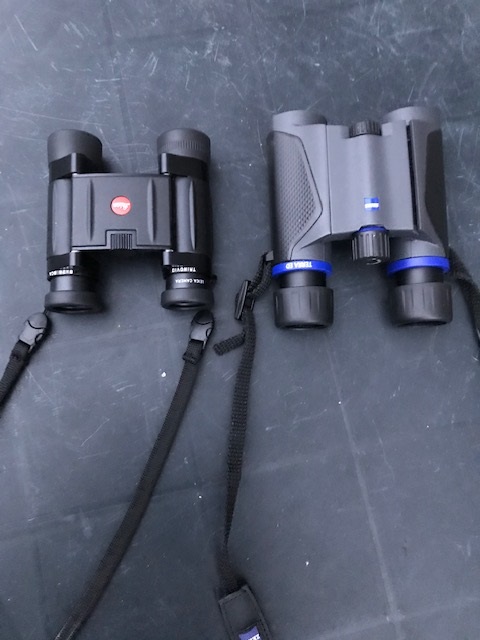
The Leica Trinovid BCA 8 x 20(left)versus with the Zeiss Terra 8 x 25(right). Note the latter’s larger frame and bigger focus wheel.

I spent a few hours comparing and contrasting the Zeiss Terra ED 8 x 25 and the Leica BCA 8 x 20 during bright sunny conditions(for January) and again under dull overcast conditions, as well as looking for performance differences at dusk, when the light rapidly fails afer sunset.

Under bright sunny conditions there was not much difference between both binoculars in terms of optical performance(both are excellent in this regard), except that the Zeiss has a noticeably wider field of view(119m compared with 110m@1000m). Because of its larger frame, larger focus wheel and larger exit pupil, the Zeiss proved easier to handle and  easily rendered the more comfortable, immersive view. The weight difference between these instruments is only 75g, so I don’t think many folk would quibble about the increase in bulk mass.

Under dull overcast conditions, the Zeiss produced a slightly brighter image, which became more and more pronounced as the light began to fade after sunset(around 5pm local time in the last week in January). This ought not surprise anyone, as both binoculars are highly efficient light gatherers and so simple physics dictates that the larger 25mm glass wins.

Close focus on the Leica was estimated to be about 1.8 metres, significantly longer than the Zeiss Terra at 1.4 metres.

Comparison under the Stars

The differences between the 25mm glass and its 20mm counterpart was most pronounced when aimed at the night sky. The larger exit pupil and aperture on the Zeiss Terra pocket allowed me to see significantly fainter stars around Orion’s belt and in the Hyades, compared with the Leica. At first I judged the contrast to be slightly better in the Leica than in the Zeiss but upon reflection, I attribute this to the smaller exit pupil in the former, which naturally generates a darker sky hinterland. The wider field of view in the Zeiss also helps frame objects that little bit better than the Leica. So, for casual stargazing the Zeiss proved noticeably superior to the Leica 8 x 20. I would not really recommend the 8 x 20 for such activities over a larger glass. But neither should anyone expect miracles here. The Leica is designed for daylight use in the main, although one can always enjoy the odd look at the Moon with the 8 x 20 when it is present in the sky.

Comparisons to a Celestron Trailseeker 8 x 32 Compact Binocular

How does the Leica Trinovid BCA 8 x 20 compare with a good 8 x 32 compact binocular?

Comparing a mid-sized, semi-compact binocular like the Celestron Trailseeker 8 x 32 with a diminutive 8 x 20 might seem a little out of place. But I think its inclusion is valid. The Trailseeker is very light; indeed, at just 453g, it ranks as one of the lightest 8 x 32s on the market, but still has many mechanical and optical features that only a few years ago were the preserve of premium binoculars; a magnesium alloy chassis, solid, well-designed metal-under rubberised adjustable eyecups, fully broadband multicoatings, dielectrically coated Bak-4 prisms et cetera.

Comparing the images served up by both the Celestron and the Leica in bright daylight in the open air, my wife and I both concluded that the Leica has slightly better contrast and sharpness across much of the field than the Celestron 8 x 32. With a small exit pupil of 2.5mm, the best part of your eye lens images the field. Edge of field performance is also significantly better in the Leica. But we also agreed that the Celestron was more comfortable to use, owing to its larger exit pupil (4mm). That said, we also reached the conclusion that the Celestron binocular rendered a slightly brighter image even in good light. But while there are perceptible differences between the two instruments, it must be stressed that these differences are small and subtle. Of course, that conclusion will likely upset a few of the more pestiferous premium bino junkies out there, but it is nonetheless true in our experience. The Celestron held its own very well indeed against the sensibly perfect Leica.

But there is considerably more to say about the economical Trailseeker. Move from the open air into a heavily canopied forest or copse and the advantages of the larger aperture binocular become much more apparent. Under these conditions, the Celestron fairs a lot better, delivering brighter images and more information to the eye. And as the light diminishes in the late afternoon, the Celestron clearly pulls ahead, as it ought to do, owing to its much greater light gathering power. At dusk, the differences between the two models are literally like night and day. Under these conditions, the 8 x 32 Trailseeker is vastly superior. It doesn’t matter if the optics in the Leica are sensibly perfect when you can’t see those details.

You see, the little Leica is like an elastic band – stretch it too far and it will break!

The same was true when pointing both binoculars at the night sky. After struggling to peer through the Leica, the Celestron was pure joy!  Its very efficient light transmission(~ 90 percent) and much wider field of view (7.8 degrees) brings so much more of the Universe to your eye!

These results helped us both to appreciate just how good the Chinese-made Celestron Trailseeker 8 x 32 really is. At roughly one third of the UK price(recently reduced to half its originanl market value(~£250) for clearance) of the Leica, we’d both say that it delivers 90 per cent of the bright, daytime performance of the Leica and vastly superior low light and night time performance. In many ways, this small and light-weight 8 x 32 is a more versatile performer than the 8 x 20 Leica Trinovid BCA, and those wishing to use their binoculars in more compromised lighting conditions would probably be better served with a good instrument in this size class.

And I have to ask this question again: is a weight of 453g really anathema to those who want to travel ultra-light?

nota bene: these comments regarding the Celestron Trailseeker 8 x 32 are also applicable to the previous discussion of my Zeiss Terra pocket glasss, in case you’re wondering.

These tests affirmed the excellent bang-for-buck the Celestron Trailseeker really represents. Veteran binocular enthusiast and fellow author, Gary Seronik, is dead right in highlighting these recent trends: mass produced, Chinese-derived optics are now coming so awfully close to premium performance-both optically and mechanically – that I would have reservations shelling out much more of my hard-earned cash just to get slightly better optical performance and the right to brag! For these reasons, I’m very pleased with and have no plans to upgrade the 8 x 32 Celestron; it will remain as part of my binocular stable.

Conclusions

The Leica Trinovid BCA 8 x 20: lean, mean optical machine.

The Leica Trinovid BCA 8 x 20 is a beautifully made pocket binocular that exudes elegance in both its solid mechanics and optics. It produces sensibly perfect images, rich in contrast and colour, whilst maintaining a very high degree of sharpness across the entire field. Perhaps uniquely, its advantages and disadvantages both pertain to its very small size.  Provided one knows its limitations though, it ought to provide its owners with many years of service as a high-quality, ultra-portable optical system that can be used for casual glassing at sports events, mountain climbing, hiking, birding, general sight-seeing and even some limited astronomical viewing.

I found my time with the little Leica binocular to be a particularly enriching experience. While it is expensive, it is certainly money well spent, especially if you plan to use it on a regular basis. Yet again, I know why Ian chose this little optical marvel. During the very long days of a Scottish summer, when the light is good and strong, I can imagine him enjoying this super light binocular for hours on end.

Highly recommended!


The author would like to extend his thanks to Ian for lending him the Leica Trinovid BCA 8 x 20 for this review.

Explore More:

Ken Rockwell’s Review of the Leica Trinovid BCA 8 x 20

Best Binocular Review of the Leica Trinovid BCA 10 x 25

Neil English is the author of seven books in amateur and professional astronomy. His 8th title, Choosing & Using Binoculars: a Guide for Stargazers, Birders and Outdoor Enthusiasts, will be published in late 2023.


De Fideli.

Old vs New.

How does a classic Zeiss binocular square up to a modern roof prism binocular?

Unlike telescopes, which are mainly used by dedicated amateur astronomers, binoculars, for obvious reasons, are owned and used by a much broader cross section of the general population. When my students get to know me, they will inevitably have to endure my unbridled enthusiasm for optical devices of all kinds lol, and that includes binoculars. One of my mathematics students, Sandy, expressed an unusual interest in some of my instruments, and he further informed me that his parents, who run a small ferrying business at Balmaha, on the shores of nearby Loch Lomond, used several binoculars in their everyday work. My interest was further piqued when Sandy told me that his grandfather owned a big Zeiss binocular, which was inherited by his father and would eventually be passed on to him in the goodness of time. I asked Sandy whether he would be willing to bring the Zeiss binocular by so that I could have a look at it. After checking with his parents, Sandy agreed and kindly allowed me to use it for a week in order that I could assess it and give it a good clean. Naturally enough, I jumped at the opportunity!

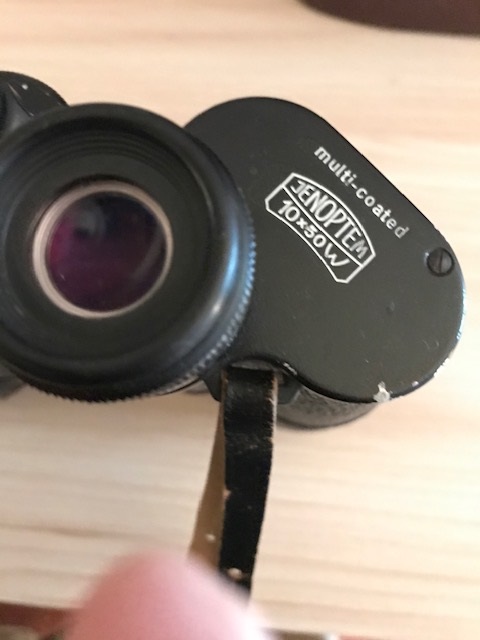
The instrument, a Carl Zeiss Jenoptem 10 x 50W porro prism binocular, came in a lovely leather case; a far cry form anything made in this era.

The Zeiss Jenoptem 10x 50W complete with original leather carry case.

The instrument had no lens caps and so had accumulated quite a bit of grime on both the ocular and objective lenses over the years. The Jenoptem, which was manufactured in East Germany(DDR), featured a Zeiss multi-coating, which helped me to date it to after 1978, when the company apparently began to apply their anti-reflection coatings to all the lenses and prisms in the optical train. So my guess is that it was probably acquired in the early 1980s. I believe Zeiss Jena offered a higher quality porro 10 x 50 in the Decarem line around the same period, but I have not had the pleasure of testing one of these units out.

The Zeiss Jenoptem is multi-coated.

The instrument has a very Spartan look and feel about it. Weighing in at about 1 kilogram, the Jenoptem is built like a proverbial tank, with a central focusing wheel and right eye dioptre.Turning the nicely machined metal focusing wheel first clockwise, and then anti-clockwise, all the way through its trave,l showed that it was still in excellent working condition, with zero backlash and bumping that one usually encounters with cheaper porro prism binoculars.

As expected from Zeiss, the Jenoptem has a very well made focuser that moves with silky smoothness and with zero backlash.

To begin the cleaning process, I unscrewed the objective housings from the front of the binocular in order to get at the inside surface of the objective lenses, which had a significant amount of grime as well as a small amount of fungal growth. Using a good quality lens brush, I carefully removed much of the dust before using a microfibre lens cleaning cloth soaked in a little Baader Optical Wonder fluid. In just a few minutes I was able to remove the remaining grime on both the outer and inner surfaces of the binocular objectives, as well as the surfaces of the prisms in the rear module of the instrument. The ocular lenses were also given a good cleaning.

The objectives of the Zeiss Jenoptem can be accessed by uncrewing the front of the binocular from the prism and ocular housing.

I was able to verify that the prisms were indeed coated in the same way as the objectives, although I also discovered that the steel clips holding the prisms in place had rusted significantly over time. I did not attempt to clean the clips, as I judged that doing so might throw the instrument out of collimation.

Note the rusted steel clip holding one of the prisms in place, as well as the anti-reflection coating of the second prism(after cleaning).

The objectives on the Jenoptem after cleaning. Note the anti-reflection coatings.

Seen in broad daylight, I was able to verify that the lens coatings had not suffered much in the way of wearing, looking smooth and evenly applied, giving a bluish or purple cast, depending on the angle of view.

The appearance of the objectives in broad daylight after cleaning.


And the ocular lenses.

Optical tests:

After screwing the objective modules back into place, I was now ready to begin my optical tests of this older Zeiss binocular. I compared the views served up by this instrument with those garnered by my Barr & Stroud 10 x 50 Sierra roof prism binocular that I use almost exclusively for astronomical viewing. After setting the right eye dioptre on the Zeiss to suit my own eyes, I started with an iphone torch test to assess how the instruments fared in suppressing glare and internal reflections.

The Zeiss 10x 50W Jenoptem(right) and my Barr & Stroud 10x 50 Sierra roof prism binocular(left).

Because the Zeiss does not have the same close focus (~2m) performance as my Barr & Stroud, I had to place my iphone torch several metres away in my hallway in order to get the Zeiss to focus on its light. As usual, the torch was adjusted to its highest (read brightest) setting. Comparing the two in-focus images, I could see that the Zeiss fared considerably worse than the Barr & Stroud. Specifically, it picked up two fairly bright internal reflections, as well as quite a lot of contrast-robbing diffused light, which rendered the Zeiss image considerably less clean and contrasted in comparison to my control binocular. The difference was quite striking!

After dark, I aimed the binoculars at a bright sodium street lamp and again compared the images served up in both instruments. As expected, the Zeiss showed much more in the way of internal reflections, with a lot of diffused light that produced a fog-like veil around the street lamp. The Sierra 10 x 50 in comparison served up a much more ‘punchy’ image with much better control of internal reflections and far less of the foggy, diffused light evidenced in the Zeiss.

Next, I compared the Zeiss and the Barr & Stroud Sierra on a daylight test, examining a tree trunk in the swing park about 80 yards from my front door. Again, the difference between both instruments was striking! Although the image was very sharp in the Zeiss at the centre of the field, it was noticeably dimmer than the Sierra. That diffused light I picked up in the iphone torch test created a foggy veil that significantly reduced its contrast in comparison to the control binocular. I was also able to discern many more low contrast details in the Sierra owing to its ability to gather significantly more light than the older Zeiss. The colour cast presented by both binoculars was also noteworthy. The Zeiss threw up quite a strong yellowish colour cast  to the Sierra, which showed a much more neutral cast in comparison.

Examining the periphery of the same field also showed that the Sierra was exhibiting a larger depth of focus than the Zeiss, which was quite unexpected, as I had been given to understand that porro prism binoculars in general show more depth of focus than their roof prism counterparts. In addition, the Zeiss showed more distortion at the edges of the field than the control binocular.

The Zeiss Jenoptem has very tight eye relief, which I estimated to be just 10mm. The Barr & Stroud Sierra, in contrast, has much more generous eye relief in comparison- 17mm – making it significantly more suitable for eye glass wearers. Indeed, I found it difficult to image the entire field in the Zeiss, having to move my eyeball around to see the field stops.

In summary, these daylight tests clearly showed that the venerable Zeiss was no match optically for the Barr & Stroud 10 x 50 roof prism I had tested it against. The latter was simply in a different league to the former, no question about it!

Handling in the Field:

The Zeiss is rather big and clunky in my small hands and is more difficult to find that optimal position while viewing for extended periods. Weighing more than 200g more than the Sierra, it is also harder to hold steady. The significantly smaller frame of the Sierra roof prism binocular is much easier to negotiate, and is simply more comfortable to use. In addition, the Zeiss has no provision to mount it on a lightweight tripod or monopod, but the Sierra, like most other modern binoculars, does.

Astronomical tests:

Though the weather proved quite unsettled during the week that I tested the Zeiss, I did get a few opportunities to test it out on the night sky. Once again, I used my Barr & Stroud Sierra 10x 50 roof prism as a suitable control. My first target was a bright, waxing gibbous Moon fairly low in the southern sky. The Zeiss threw up more in the way of internal reflections than the Sierra. The colour cast of the lunar surface appeared more yellow in  the Zeiss compared with the cleaner images of the Sierra. As I expected from my iphone torch tests, the sky immediately arround the Moon was also brighter in the Zeiss, with noticeably lower contrast than the Sierra. Moving the Moon to the edge of the field also showed that the Zeiss threw up more distortions than the Sierra control binocular.

Turning to Vega high in the northwest after sunset produced good on-axis images in both binoculars, but when moved to the edge of the field, the Zeiss threw up that little bit more distortion than the Barr & Stroud Sierra. The same was true when I examined the Pleaides and the Hyades in Taurus.

Conclusions and Implications:

The Zeiss Jenoptem was a good binocular in its day but is clearly inferior in almost every sense to the Barr & Stroud roof binocular used in comparison. 40 years ago, the Zenoptem would have set the average factory worker a whole month’s salary to acquire new. In contrast, the Barr & Stroud Sierra can be had for between £100 and £120 in today’s market.  The value of waterproofing was made manifest in the observation of rusting of some of the metal internal components of the Zeiss. The Sierra, in contrast, is fully waterproof, o-ring sealed and purged with dry nitrogen gas to inhibit internal fogging and corrosion of any metallic components used in its construction.

Enormous advances in optical technology over the last four decades, particularly full broadband multi-coatings applied to all lens and prism surfaces, higher quality optical glass, as well as phase coated prisms on the roof binocular, collectively allow very efficient light transmissions to the eye. This is all the more remarkable since roof prism designs usually have many more optical components than their porro prism counterparts.

Better eregonomics in modern roof prism binoculars as well the employment of strong, low mass polycarbonate housings in their design make them lighter and easier to use than their porro prism counterparts from a generation ago. All of these add to the comfort of using them either during the day or at night when looking at the heavens.

I had a look on ebay to see what these old Jenoptems were being offered for. I found quite a few of them selling for between £150 and £200, so not the high prices demanded by other classic binoculars.

Like with all optical firms, time has marched on, with modern binoculars offering much better performance than earlier models.

This comparison test must have implications for many people who already own or use older binoculars and who have not compared them to modern incarnations. And that’s as true for Zeiss as with any other manufacturer. Indeed, I was quite shocked at how much better my first quality roof prism 8 x 42 roof prism binocular fared compared to an old 7x 50 porro I was gifted back in the early 1990s. Technology has well and truly marched on! And while I like classic instruments just as much as the next guy, I see little point in using any when even modest instruments created in the modern age are likely to perform better than similar instruments made a generation ago. It’s just a hard fact of life.

The technology of the past is certainly interesting but it would be daft to neglect the advances offered in the modern era.


I would like to extend my thanks to Sandy and his parents for allowing me to test drive these old binoculars. I will be advising him to use lens caps on the optics when not in use and have also provided a sachet of silica gel desiccant to minimise moisture-induced corrosion of the optic.


Neil English discusses all manner of classic telescope technology in his 650+ page historical work, Chronicling the Golden Age of Astronomy(Springer-Nature).


De Fideli.

In Search of a Good 8 x 32 Binocular.

Two mid-priced 8 x 32 binoculars compared: the Celestron Trailseeker(left) and the Helios LightWing HR( right).

The march of technology continues apace and never ceases to amaze me. This is especially true when it comes to telescope and binocular optics. You can now buy very decent optics at budget prices that display a level of quality we could only dream of a couple of decades ago. And technologies that were only available on premium optics up to fairly recently are now being offered by companies offering much more economical packages to sate the requirements of the masses.

That’s exactly how I feel about my recent foray into binocular testing. Advances in coating technology, in particular, has allowed many new optical firms to offer products that are edging ever closer to the performance levels only available on premium models until recently. Even entry-level roof prism binoculars feature decent anti-reflection coatings on all optical surfaces(which can be as many as 30 in a good roof prism binocular), as well as phase correction technology that significantly increase contrast, accurate colour rendition and image brightness. These less expensive models used either aluminium or silver coatings to boost light transmissions to as high as 80 to 85 per cent, but one can now obtain very economically priced models that also feature super-high reflectivity, broadband dielectric coatings that have increased light transmission to above 90 per cent, in touching distance of the most expensive, premium binoculars money can buy.

Unfortunately, many amateurs who enjoy using quality binoculars mistakenly conflate high-level optical performance with the introduction of extra low dispersion (ED) glass, but the truth is that such an addition contributes little to the quality of the optical experience. Much more significant is the use of higher quality coatings that significantly increase both the brightness and contrast of the images, which in turn enables one to see those finer details, thereby boosting resolution(perhaps this is why the Helios has HR in its name?). Of course, many(but not all) premium binocular manufacturers use a combination of ED glass elements and the finest dielectric coatings, making it all the more difficult for the user to assess the relative importance of either component. But I was able to explore and confirm the dramatic effects of the latter by putting a couple of  mid-priced 8 x 32 compact roof prism binoculars through their paces; a Helios LightWing HR and a Celestron Trailseeker(both pictured above), both of which feature premium quality dielctric coatings on the prism surfaces as well as high-quality broadband anti-reflection coatings on the multiple lenses and prisms used in their construction. Neither instrument contains ED glass elements however. For more on this, check out this short youtube presentation by an experienced glasser and binocular salesman describing one of the models I will be evaluating in this blog(the Helios LightWing),  and who formed the same conclusions as this author.

Both instruments were acquired from the same source, Tring Astronomy Centre. Their friendly and knowledgeable staff have offered exceptional service with a number of past purchases and I had thus no hesitation approaching them again for the acquisition of these 8 x 32 compact binocular models.

The first model I acquired was the Helios LightWing HR 8 x 32, which set me back £127 plus £5 to ensure an expedited delivery of the package within 24 hours of ordering. As soon as it arrived, I inspected the contents, which included the binocular with a rain guard, soft carry case, a lens cloth and generic(read single page instruction sheet) and padded neck strap. Within minutes of its arrival, I had the binocular out of its case to perform my iphone torch test in my living room to see how well an intense beam of white light behaved as it passed through the instrument. As I outlined in a few previous blogs, such a test is extraordinarily sensitive, showing up even the slightest stray reflections in the field of view and revealing how well the optical components suppressed the tendency of the light to diffuse across the field, reducing contrast as it does. Well, to my great relief, the result was excellent! Despite the torch being set at its highest setting in a darkened room, the Helios LightWing HR showed only the feeblest level of ghosting on axis. What is more, there was no difraction spikes or diffused light in the field! The image was exceptionally clean. Indeed, comparing the result to my control binocular, a Barr & Stroud Savannah 8 x 42, which also exhibits exceptional stray light control, the Helios was providing even better results!

To put this in some additional context, the torchlight test result for the Helios 8 x 32 was better than my Zeiss Terra ED 8 x 25 pocket binocular and a Swarovski EL Range 10 x 42, as I recall from my notes!

I now had a new standard by which to measure all other binoculars!

The same was also true when I placed the light beam just outside the field of view. Only a very minimal amount of glare was seen in the field.

The Helios LightWing HR 8x 32 revealed exceptional control of stray light and annoying internal reflections.

Wow!

This told me that the binocular ought to produce very high contrast images in even the most demanding conditions, either by day, glassing in strongly backlit scenes, or at night, when looking at bright light sources, such as artificial street lighting or a bright Moon. No doubt, this is attributed to a variety of factors including excellent multi-layer coatings on all optical surfaces, as well as a sound knowledge of how to adequately baffle the instrument.

………………………………………………………………………………………………………………………………

Note to the reader: My pet peeve is seeing excessive glare and strong ghosting from internal reflections in a binocular image. Indeed, I am quite intolerant of it! Moreover, I usually dismiss any reviews that do not test for this phenomenon. Unfortunately, that also entails taking the majority of user reviews I read online with a large dose of salt!

………………………………………………………………………………………………………………………………..

Examining the Helios, I noted the unusual colour cast of the anti-reflection coatings on both the objective and ocular lenses. They seemed to be immaculately applied! I also noted how the objectives were recessed very deeply; with ~ 10mm of overhang. This is a very good(and often overlooked!) design feature, as it cuts down on peripheral glare during bright daylight observations and also affords considerable protection from dust and rain.

The unusual colour cast of the anti-reflection coatings of the Helios LightWing objective lenses.

Mechanical assessment: The Helios is very well constructed. The chassis is fabricated from a magnesium alloy which combines light weight(500g) with good mechanical strength. This is an unsual offering in such a low-cost instrument, with cheaper polycarbonate or even ABS plastic being the rule rather than the exception on models offered at this price point. The central hinge had enough tension to maintain my particular IPD but I would have liked it to be just a little bit stiffer(just like my wonderful Barr & Stroud Savannah 8 x 42). I found handling the binocular to be unusually tricky, as the rubber eyes needed to attach the neckstrap protrude from the barrels a little too much, making it rather more awkward to get the binocular comfortably placed in my hands while observing.

The focus wheel is very large in relation to the overall size of the instrument. Indeed, I thought it was a little too large! Although I could get a good grip, rotating it showed that it was somewhat clunky and offered unusual resistance to movement. In contrast, the dioptre ring moved with silky smoothness, and you can actually see the right ocular field lens moving as you rotate it!

The buttery smooth right-barrel dioptre ring is a joy to adjust.

The eyecups are rather stiff but do extend upwards with two clickstops. With an eye relief of 15.6mm, eyeglass wearers will find it difficult to image the entire field. Fortunately for me though, this wasn’t a problem, as I don’t wear eye glasses while glassing. The cups are made from quality metal covered by a soft rubber-like material. They are very firm and hold their positions securely even when undue pressure is applied to them. Overall, a very nice touch!

The chassis is covered by a rather thin rubberised skin, which was somewhat thinner than I’ve seen on a variety of other binoculars I’ve sampled. As a result, it has slightly less friction while man handling, which can prove important, especially if used for prolonged periods in the field. It also means that it would wear down that little bit faster after extended use.

The Helios can be attached to a tripod or monopod for increased stability via the built-in bush located between the barrels, toward the front of the instrument.

Optical daylight testing: Scanning some autumn leaves in my back garden confirmed what I had witnessed in the torchlight test. The image was very bright and tack sharp with wonderful contrast and colour fidelity. There was nary a trace of chromatic aberration( which continues to affirm my belief that ED glass is unnecessary: -a marketing gimmick? – for such small, low power binoculars). However, this was only true in the central 50 per cent of the field. The outer part of the field became progressively softer with the edge being out of focus. Examining a telephone pole about 25 yards in the distance unveiled very strong field curvature as it was moved from the centre to the edge of the field of view.

I hit another snag when I attempted to image the Fintry hills about a mile in the distance. The focus wheel was racked to the end of its natural focus travel but I still could not quite reach a sharp focus. Adjusting the dioptre ring on the right barrel allowed me to just get there but the left barrel was still not sharply focused. After dark, I did a test on the bright star Vega, which unfortunately confirmed my daylight tests. Although I could achieve pinpoint sharp images in the right barrel, the left barrel showed that the star was badly bloated. Another test on the Moon showed the same thing. The right barrel gave a razor sharp image with exceptional contrast and no internal reflections or diffused light around it, but the image at the edge was badly out of focus.

The whole experience left me somewhat bewildered. Why expend so much effort into applying state-of-the art coatings into a binocular with nice mechanical features, only to see excessive field curvature in the outer part of the field? It just didn’t make sense! I mean, Helios could have made the field a little smaller(it has a true field of 7.8 degrees) with sharper edge definition and I would have been happy.  In reallity you see, I had been spoiled by the nearly flat fields presented by my Barr & Stroud Savannah 8 x 42(and over a larger field to boot- 8.2 degrees), as well as those presented by my Zeiss Terra pocket and my other models with aspherical ocular lenses. Needless to say I was disappointed and decided to contact the staff at Tring the same evening, explaining my findings.

Next morning, they contacted me, apologising for the defective optic, as well as suggesting that I could have a replacement Helios LightWing, or try a Celestron Trailseeker 8 x 32, which apparently had very similar specifications to the former. Now, I had a bad experience with an 8 x 25 Celestron Nature DX(an entry-level roof prism binocular) which showed far too much glare and internal reflections for my liking. But I had a good look at the specifications on the Celestron Trailseeker models, which were recently discounted by 20 per cent and were now being offered at the same price as I had paid for the Helios LightWing. After some deliberation, I decided to accept their offer of trying the Trailseeker. And to their credit, Tring shipped out the binocular, together with a return label for the Helios, the same day, and I received it less than 24 hours later!

How about that for customer service!

The Celestron Trailseeker 8 x 32 package.

With some trepidation, I opened the package and inspected its contents. First impressions looked good. I received the binocular, a much higher quality carry case, a binocular harness, tethered rubber objective caps and rain guard, a decent quality padded neck strap, a lens cleaning cloth and a comprehensive instruction manual dedicated to the Trailseeker  line of binoculars( in five languages).

The Trailseeker binocular specifications looked very similar to the Helios, which included the application of premium-quality phase and dielectric coatings, a 7.8 degree field (136m @1000m), Bak-4 prisms, o-ring sealed, dry nitrogen purged, making it fog proof and water proof(though to what extent was not revealed). And just like the Helios, the Trailseeker can be mounted on a tripod or monopod.

As with the Helios, the Trailseeker has very deeply recessed objectives (again about 10mm) but the anti-reflection coatings looked different in daylight;

The Trailseeker also has deeply recessed objective lenses but the coatings appeared different.

Just like the Helios, the Celestron Trailseeker has a rugged magnesium alloy chassis but the focus wheel is significantly smaller. Weighing in at just 450g, it is 50g less bulky than the Helios. The Trailseeker build quality is excellent; rugged, much easier to handle than the Helios and overall having better ergonomics. The tough, rubberised covering has better grip than the Helios too, and small thumb indentations on the belly of the instrument makes it that little bit more comfortable to hold in the hand.

Nicely placed thumb indents on the underside of the Trailseeker make handling that little bit more intuitive.

Well, you can guess what I did next; yep, I set up my iphone torch, turned it up to its brightest setting and placed it in the corner of my living room with the curtains pulled to cut off much of the daylight. With a good close focus of about 6.5 feet, eagerly I aimed the Trailseeker binocular at the light and examined the image.

Drum roll……………………………………….

An excellent result! Internal reflections were minimal, diffused glare was all but absent and diffraction spikes were very subdued. Comparing the Trailseeker to my Barr & Stroud Savannah 8x 42 control binocular showed that it was on par with it. What a relief! To be honest, I had some reservations about the Celestron, owing to my unfavourable experience with the cheaper Nature DX model, and so I half expected that they might skimp on this important process. But no, they did a very good job! So far, so very good!

I was also impressed with the mechanical attributes of the Trailseeker, which is difficult to ascertain vicariously without man handling it. Though quite conservative in design, the eyecups are of high quality(metal over rubber) but have a nice feel about them. They twist up much more easily than those on the Helios and have two settings. Like the Helios, the eye relief is pretty tight(15.6mm) for eye glass wearers but is plenty good enough for those who observe without glasses.They do not budge even when considerable force is applied to them. I would rate their quality as very high, so much so that I don’t think I will have much in the way of problems with them going forward.

The metal-over rubber eyecups of the Celestron Trailseeker are a good step up from the Nature DX models and feel very secure while glassing.

The focus wheel has a ‘plasticky’ feel about it but unlike the Helios, infinity focus does not lie at the extreme end of the focus travel. This is actually useful for ‘focusing out’ some of the aberrations at the extreme edge of the field. Unlike other user reviews of the Trailseeker, the focus wheel on the unit I received was quite stiff to operate out of the box but this will surely loosen up with more use. Rotating the focuser both clockwise and anti-clockwise revealed little or no backlash or bumpy spots that you often encounter on cheaper binoculars. Some users balk at the idea of using a plastic focuser but I cannot for the life of me understand why it would make much difference. I mean, if it works, it works! What’s to give?

The focus wheel on the Trailseeker is nothing out of the ordinary but does work well in field use.

The dioptre ring is located under the right eyecup. It rotates smoothly with just the right amount of friction.

Optical daylight testing: As I’ve illustrated above, good mechanical design and great control of stray light don’t count for much if the images don’t deliver. So I was eager to see how the Celestron Trailseeker behaved when looking ’round the landscape. Accordingly, I examined the same autumn leaves in my back garden set a few tens of yards away. This time, the results were very much more encouraging! The leaves focused beautifully, throwing up excellent brightness, contrast and sharpness with a much wider sweet spot than in the Helios, which I estimated to be about 70 per cent of the field.  I could immediately tell that there was much less field curvature in this binocular than in the Helios, allowing me to sharpen up the edge of field definition with only minor tweaking of the focus. This much reduced field curvature was also apparent when I examined the same telephone poll I observed with the Helios. Instead of the strong off-axis distortions I encountered with that instrument, as the pole was moved from the centre to the periphery of the field, the Trailseeker proved much more forgiving.

What a relief!

Having said all of this, there was more off-axis field curvature in the Trailseeker than in my Barr & Stroud Savannah 8 x 42, which, in comparison, throws up a wider and flatter field nearly all the way to the edge. As I’ve said many times before, the Savannah is a phenomenal operator given its very modest price tag. Perhaps some of the drooling gayponauts reading this blog right now could get off their fat backsides and confirm it!

Nah, probably too much to ask!

The Barr & Stroud Savannah 8 x 42 wide-angle binocular; an existential threat to the hubris of thieving gayponauts.

Nightime testing:

After dark, the Trailseeker delivered excellent results on artificial street lights, just as my torchlight tests reliably anticipated. There was no annoying glare, internal reflections and the diffraction spikes were small and very subdued. Turning the instrument on a low Moon skirting the horizon showed wonderful sharpness on axis, with well above average contrast. And when I placed the Moon at the edge of the field, it remained quite sharp, though visibly softened by a small amount of field curvature. Needless to say, it was in a completely different league to the Helios in this regard!

Later in the night, with the Moon having set, I examined the appearance of the large and sprawling Alpha Persei Association located nearly overhead at the time. This provided an excellent test of how its many bright stellar members would behave from the centre of the binocular field to the field stop. To my relief, the stars remained acceptably small and sharp across the entire field, with the stars at the edge of the field requiring only a small tweak in focus to improve their definition. They did not balloon to stupidly large sizes like I observed in the Helios.

Turning the binocular on the Hyades in Taurus gave very pleasing results too. Contrast was excellent with its many colourful stellar components remaining acceptably small and crisp even at the edges of the field.

I considered these results to be very acceptable. This is one small binocular that can be used profitably for nightime observations!

A Walk in the Countryside with the Celestron Trailseeker 8 x 32

Although the Celestron Trailseeker 8 x 32 is a small, high-quality and lightweight instrument, it is not readily pocketable, unless you have a coat that has rather large and deep receptacles. Having tried a few 8 x 32 binoculars, I personally find them a little awkward to use in comparison to my two favourite pocket binoculars like my Opticron Aspheric LE and my Zeiss Terra(both of which are 8 x 25 formats) or a larger instrument such as my 8 x 42. I just find the 8 x 32 format a bit kludgy in my rather small hands. That said, the 8 x 32 seems to be a popular choice for birders and other nature enthusiasts, who tire of schlepping around a larger instrument for hours on end. In good light, there’s no real advantage in using a larger format binocular and so I tend to use my pocket binos most often. But if you are observing in low light conditions, such as a dull, overcast winter day, late in the evening or early in the morning, the 8 x 32 would definitely be a better choice. I have verified this wisdom by comparing the views through my  8 x 25 Terra and the 8 x 32 Trailseeker at dusk, where the brighter images served up by the latter are plainly in evidence. And because you have a relative abundance of good quality light to play with, you can see more details in the image. Shimples!

Choosing a small binocular is a deeply personal choice that you can only decide on after trying them in the field.

The consensus view is that larger binoculars are more comfortable to use since their larger ocular lenses make it easier to place your eyes in the correct position to see and immerse yourself in the field of view. I believe there is definitely some truth in this, but in the end it’s really about what you get used to. I personally have no trouble lining up my eyes with the smaller eye lenses on my pocket binos, so I never see this as being much of an issue.

Enjoying the rich colours of autumn on a hill walk overlooking Fintry.

All that having been said, the Trailseeker 8 x 32 is a very handy companion on my daily two-mile ramble ’round Culcreuch Castle Estate, which has some extensive wooded areas, a fast-flowing river, numerous small brooks, open fields which extend towards the surrounding hills and a small pond, where I enjoy watching the antics of a variety of water-loving avian species. The field of view is very generous at 7.8 degrees, which is quite large as most 8 x 32 binoculars go, though some models sport still larger fields in excess of 8( ~ >140m@1000m) angular degrees. The razor sharp optics on the Trailseeker has given me many wonderful views of golden autumn leaves glistening in weak November sunshine. I especially love to stand under a tree and glass the branches above me, focusing in on their wondrously complex contours. The low autumn Sun this time of year illumines the trunks of the trees in the wooded areas around the estate, highlighting the wonderful texture of the tree bark and the play of light upon the lichens and mosses that live symbiotically with it.

If time is not against me, sometimes I like to stop and focus in on a stretch of water flowing from the numerous small streams that feed into the Endrick, imaging the contours of rocks laden with fallen leaves and closing in on the foamy organic bubbles that swarm along the fast-flowing stretches. And when the Sun shines on the water, I can feast my eyes on the beautiful and intense reflections emanating from its surface. This is where glare control is paramount, as even a small amount of light leakage can ruin an otherwise compelling binocular scene.

Binoculars have come a very long way since their founding days. I find it amazing that one can acquire quality optics and durable mechanics like this at such keen prices. The Celestron Trailseeker 8 x 32 has been a very pleasant surprise, combining wonderful ergonomics with state-of-the-art optical science. I think a lot of people will enjoy it.  And now that its price has come down significantly, this is a good time to grab yourself a real bargain and enjoy the wonders of nature up close and deeply personal.

Just in case……………..


Thanks for reading!


Neil English has fallen in love with what binoculars have revealed to him, and is seriously thinking of compiling a larger portfolio of  binocular experiences for a future book-length treatise on their various applications.


De Fideli.

What I’m Reading.

“Escaping the Beginning? Confronting Challenges to the Universe’s Origin.

Did the universe have a beginning—or has it existed forever?

If the universe began to exist, then the implications are profound. Perhaps that’s why some insist it has existed forever.

In Escaping the Beginning?, astrophysicist and Christian apologist Jeff Zweerink thoughtfully examines the most prevalent eternal-universe theories—quantum gravity, the steady state model, the oscillating universe, and the increasingly popular multiverse. Using a clear and concise approach informed by the latest discoveries, Zweerink investigates the scientific viability of each theory, addresses common questions about them, and then focuses on perhaps the most pressing question for believers and skeptics alike: If the evidence continues to affirm the beginning, what does that imply about the existence of a Beginner?

About the Author: Jeff Zweerink (PhD, Iowa State University) is an astrophysicist specializing in gamma-ray astrophysics. He serves as a senior research scholar at Reasons to Believe and as a part-time project scientist at UCLA. He has coauthored more than 30 papers in peer-reviewed journals and numerous conference proceedings.


Some Reviews Thus Far Garnered:

“In Escaping the Beginning? Jeff Zweerink leads the reader through a fascinating tour of the scientific development of the big bang theory as well as the theological and philosophical implications of the beginning of our universe. More importantly, he addresses some of the recent speculations by scientists that attempt to circumvent both a beginning and a Beginner and shows that the best current scientific evidence continues to point to an actual beginning of our universe. The hypothesis that the universe came into existence through the actions of a transcendent intelligent Creator is still arguably the explanation that best fits the scientific data.”

—Michael G. Strauss, PhD
David Ross Boyd Professor of Physics
University of Oklahoma


“As an atheist detective investigating the existence of God, I hoped the evidence would reveal an eternal universe without a beginning because I knew the alternative would be hard to explain from my atheistic worldview. . . . Escaping the Beginning? examines the evidence for the universe’s beginning and the many ways scientists have tried to understand and explain the data. I wish I had his important book when I first examined the evidence. If I had, I would probably have become a believer much sooner.”

—J. Warner Wallace
Dateline-featured Cold-Case Detective
Author of God’s Crime Scene

“There are few books I read twice. but this is one of them. Although understanding this book will take effort  for anyone untrained in the sceinces, the effort is well worth it. Dr. Zweerink answered many of my questions about the existence of the multiverse, evidence for the beginning of the universe, and problems for common challenges to divine creation. . . . Escaping the Beginning? deserves wide readership by believers and skeptics alike.”

–Sean McDowell, PhD, Author of Evidence that Demands a Verdict


“Jeff Zweerink has done something I might have thought to be impossible. He has made cosmology accessible to scientific laypersons like me. Whether it’s quantum fluctuations, inflation theory, or the various models of the multiverse, Zweerink explains things clearly and with good humor. Even more importantly, he shows that the findings of modern cosmology give Christians even more reason to worship and adore our great God who created all things.”

-Kenneth Keathley

Senior Professor of Theology, Southern Baptist Theological Seminary.

“Does the universe have a beginning, or has the physical realm existed forever? This is an ancient question and still hotly debated today. The interest in the subject is not just from its obvious scientific significance, but also from its religious implications. Since the first cosmological and theoretical evidence for a universe with a distinct beginning was discovered a century ago, some of the most intense opposition among scientists to the notion of a beginning has been primarily on religious grounds. In this engaging book, Jeff Zweerink reviews the state of the theory and experiment, and argues that far from having been escaped, a bginning to the universe is the likely outcome of the current lines of research.”

-Bijan Nemati

Principal Research Scientist, University of Alabama in Huntsville.

“Did the universe have a beginning? If so, what would that imply? Does the origin require an Originator? Does a creation imply a Creator? What would that mean for our lives?

Paul Valery once said, “What is simple is wrong, and what is complex cannot be understood.” Dr. Zweerink splits the horns of this dilemma by raising many of the issues surrounding a cosmological beginning in an enjoyable  and accessible format for a general audience. yet this is done without sacrificing the critical details that attend the state-of-the-art.

He draws on his training and expereince as an astrophysicist to unpack the history of the big bang, its blossoming into the universe around us, and otther topics of fascination, interest, and wonder. Dr. Zweerink then goes to the heart of contemporary cosmology to find out what today’s cosmologists – our secular priests -are saying about cosmic origins.

While I might believe the scientific case for a beginning and a Creator is a bit stronger than Jeff does, his grasp of the issues and presentation style will serve his audience well.”

-James Sinclair

Senior Physicist, United States Navy.


“I had the privilege of debating Jeff Zweerink on two occasions. As an atheist, I was surprised to see how much common ground there was between us. And that is because Jeff is an incredibly honest and thoughtful person and his writing reflects that. Escaping the Beginning? is a well-written and carefully researched work that doesn’t shy away from challenges to cherished belief and deserves to be widely read by the community. It does what a good book should do—educate and (I hope) stimulate thoughtful debate.”

—Skydivephil
Popular YouTuber and Producer of the Before the Big Bang Series
Featuring Exclusive Interviews with Stephen Hawking, Sir Roger Penrose,
Alan Guth, and Other Leading Cosmologists


De Fideli.


Product Review: The Opticron Aspheric LE WP 8 x 25 Pocket Binocular.

Tiny little pocket binoculars have grown on me. They can be supremely useful to those who value or need ultra-portability, when larger binoculars simply are unworkable. Their tiny size ensures that they can be carried in a pocket or a small pouch, where they can accompnany hikers, hunters, sports enthusiasts, bird watchers and nature lovers who delight in seeing the full glory of God’s created order. Frustrated by a lack of any credible reviews of a variety of models, I began a ‘search out and test ‘ program that would teach me to select models that offered good optical and mechanical performance, as well as good value for money.  As you may appreciate, this was far easier said than done, but in the end, I did find a model that I could trust to deliver the readies; enter the Opticron Aspheric LE WP 8x 25 binocular.

Retailing for between £120 and £130 ( ~$175 US), the little Opticron pocket binocular didn’t come cheap. But good optics and mechanics are worth having, especially if the user intends to employ the instrument on a regular basis. As I explained, I chose this model based on the performance of a first generation Opticron Aspheric that I had purchased some time ago for my wife, possessing identical optical specifications to this newer model, but without having the additional advantage of being nitrogen purged, as well as being water and fog proof. In truth, I chose the original model without much in the way of research and with very little experience of what the market offered; Opticron is a good make, trusted by many enthusiasts for delivering good optical performance at a fair price.

Opticron began trading back in 1970, founded as a small British family firm, and offering binoculars, spotting scopes and other related sports optics for the nature enthusiast. Since those founding days, Opticron has continued to innovate, where it now is a major player in this competitive market, offering well made products catering for the budgets of both novices and discerning veterans alike. And while some of their less expensive models are made in China, many of their high-end products are still assembled in Japan.

What you get.

What your cash buys you: The Opticron was purchased from Tring Astronomy Centre. It arrived double-boxed and with no evidence of damage in transit. You get the binocular with both ocular and objective covers, a high quality neoprene padded case, a comprehensive instruction manual & warranty card. The details of that all-important warranty are shown below:

Details of the warranty.

After a few days of intensive testing I was satisfied that I had received a high quality instrument and so I elected to register my binocular on the Opticron website. Owners are not obligated to register the instrument in this way however, as all that is required is proof of purchase, should any issue arise with the instrument in normal use.

Binocular Mechanics: The Opticron Aspheric LE WP 8 x 25 is a classically designed pocket binocular with a double-hinge designed allowing the instrument to fold up into a very small size that can be held in the palm of your hand. The hinges have just the right amount of tension, opening up and holding their position even if held with one hand.

The focuser is slightly larger than the first-generation model, and has better grip, allowing you to use it even while wearing gloves. The barrels and bridge of the binocular are made from aluminium, overlaid with a tough, protective rubberised armouring. Compared to the first-generation model,  the new incarnation induces more friction with your fingers, an important feature if it is to be used for extended periods of time.

The New Opticron Aspheric LE is now water and fog proof.

Initially, I found that turning the focuser to be a bit on the stiff side, but after a few days of frequent use, I became used to it. Turning the focuser either clockwise or anticlockwise showed that there was no backlash, moving smoothly in either direction. The instrument has an integrated neoprene lanyard which can be wound up around the bridge while being stored in its case. I very much like this rather understated feature, as there is no need to fiddle about attaching a strap. Out of the box, it’s ready to use!

Using the Optricon Aspheric LE WP is child’s play; just twist up the eyecups and they click into place. There are no intermediate settings. If you wear glasses, leave the eyecups down.

The twist-up eyecups have a soft rubberised overcoat which are supremely comfortable on the eyes. There are just two positions; fully down or fully up. Once twisted up, the cups lock in place and rigidly stay in place with a click. Eye relief is very generous(16mm), allowing eye glass wearers to engage with the entire field. I don’t use glasses while observing through binoculars, so I always pop the eyecups up while viewing through them. Optimal eye placement is very easy to find quickly, thanks to the large field lens, with none of the annoying blackouts I experienced on a few lesser models.

The dioptre setting is located in a sensible place; right under the right eyecup. A small and very elegantly designed protruding lever on the dioptre ring makes it very easy to rotate either clockwise or anti-clockwise. It works well and stays in place even after repeatedly removing the instrument in and out of its small carry case.

An elegant design feature; a small protruding lever under the right eyecup makes it easy to adjust the dioptre setting.

I measured the IPD range to be between 32 and 75mm, ample enough to accommodate most any individual. Moreover, the well designed dual hinges on the bridge ensure that once deployed they stay in place with little or no need to micro-adjust while in use. The Opticron pocket binocular weighs in at just over 290 grams.

If the Opticron Aspheric pocket binocular were a car, it would surely be an Aston Martin.

Optical Assessment: Although this tiny binocular does not have a stalk to allow it to be mated to a monopod or tripod, I was able to assess how well collimated it was by resting the binocular on a high fence, and examining the images of a rooftop some 100 yards in the distance, checking to see that the images in the individual barrels were correlated both horizontally and vertically. This was sufficient to affirm that the binocular was indeed well collimated.

During daylight hours, the binocular delivers very bright and colour-pure images thanks to a well made optical system which includes properly applied multi-coatings on all optical surfaces, good baffling aginst stray light and silver coated prisms(boosting light transmission to 95-98 per cent). The binocular also has correctly executed phase coatings on the prisms to assure that as much light as possible reaches the eye. Sharpness is excellent across the vast majority of the field, with the aspherical optics minimising off-axis aberrations including pincushion distortion and field curvature. I wouldn’t be surprised if the overall light transmission is of the order of 80 to 85 per cent(revised in light of the tranmissitivity of the Zeiss Terra ED pocket glass with a light tranmsission of 88 per cent).

One of my pet peeves is seeing glare in the image when the binocular is pointed at a strongly backlit scene. I was delighted to see that apart from very slight crescent glare  when pointed near the Sun, the images generally remained stark and beautifully contrasted. These good impressions were also confirmed by more stringent tests conducted indoors by aiming the pocket binocular at my iphone torch set to its maximum  brightness. These tests showed that although there was some weak internal reflections  and flare, they were well within what I would consider acceptable. At night, I was able to see that when the binocular was aimed at some bright sodium street lamps, only very slight ghosting was evident. Finally, aiming the 8 x 25 at a bright full Moon revealed lovely clean images devoid of any on axis flaring and internal reflections. Placing the Moon just outside the field did show up some flaring however, but I deeemed the result perfectly acceptable. You can chalk it down that these results are excellent, especially considering the modest pricing of the instrument.

Colour correction was very well controlled in both daylight and night time tests on a bright Moon. On axis, it is very difficult to see any chromatic aberration but does become easier to see as the target is moved off axis. That said, secondary spectrum was minimal even in my most demanding tests, affirming my belief that a well-made achromatic binocular can deliver crisp, pristine images rich in contrast and resolution.

……………………………………………………………………………………………………………………………….

An interesting aside: My former colleague at Astronomy Now, Ade Ashford, reviewed a larger Opticron binocular- the Oregon 20 x 80 – for the October 2019 issue of the magazine. In that review, featured on pages 90 through 94, he confirmed what I had previously stated about larger binoculars with powers up to 20x or so; there is no need to use ED glass if the binocular is properly made and this goes for both daylight viewing and nightime observations. Below is Ashford’s assessment of the 20 x 80’s daylight performance:

And here are his conclusions:

Moreover, Ashford offers this sterling advice to the binocular enthusiast:

” …..don’t get hung-up on ED glass instruments. A well-engineered achromatic model will perform well, particularly if it uses Bak-4 prisms and its optical surfaces are multi-coated throughout.”

pp 91

Having ED glass counts for nothing if the binocular is not properly made. I would much rather have a well made achromatic instrument than have a poorly constructed model with super duper objective lens elements.

…………………………………………………………………………………………………………………………..

A fine quality pocket binocular in the palm of your hand.

My Little Aston Martin:

The little Opticron has already accompanied me on a few hill walks, a Partick Thistle FC( sad, I know!) testimonial and numerous rambles near my rural home, where it has delivered wonderful crisp images that never fail to delight. The field of view(5.2 degrees) is a little on the narrow side as pocket binoculars go, but its plenty wide enough for most applications and besides, the distortion free images nearly from edge to edge quickly override any perceived handicap of having a restricted viewing field.

Its tiny size and lack of garish colouring make it the ideal instrument to bring along to sports events, where it doesn’t attract attention from fellow crowd members. The Opticron is also a most excellent instrument to examine colourful flowers, butterflies and other marvels of nature near at hand, thanks to its excellent close focus; measured to be ~51 inches. And because its waterproof, it would also make an excellent companion while sailing or fishing.

The Opticron pocket binocular comes with a very high quality padded pouch to protect the instrument from any kind of rough handling.

Of course, the power of a small, high-quality pocket binocular quickly dwindles as the light begins to fade in the evening, or during the attenuated light before dawn, where a larger field glass really comes into its own. A little pocket binocular like this is far from the ideal instrument for viewing the night sky, but it can still be used for the odd look at the Moon, a starry skyscape or brightly lit cityscape.

I consider weatherproofing to be a sensible and worthwhile addition to any binocular and is certainly welcome on this second generation Opticron Aspheric. The instrument is purged with dry nitrogen gas at a pressure slightly higher than atmospheric pressure. This positive pressure helps to keep out dust and marauding fungi, and the sensibly inert nature of nitrogen ensures that internal components(including the silver coated prisms), will not tarnish or oxidise any time soon. This will only serve to increase the longevity and versatility of the binocular in adverse weather conditions, especially in my rather damp, humid climate. When not in use, I have taken to storing all my binoculars in a cool ( ~60 F) pantry with silica gel desiccant inside their cases. Yep, all my instruments are in it for the long haul.

Quality you can wear.

The Opticron Aspheric LE WP 8 x 25 is an excellent example of how a well made, achromatic binocular can deliver wonderful, sharp and high-contrast images. It is more expensive than many other pocket binoculars, but you most certainly get what you pay for.

 Thanks for reading!

Neil English’s new title, The ShortTube 80; A User’s Guide, will hit the bookshelves in early November 2019.


De Fideli.

Investigating the Jet Stream

but test everything; hold fast what is good.

                                                                           1 Thessalonians 5:21


My Local Weather


Jet Stream Data

Introduction:  One of the statements that is oft quoted by observers, particularly in the UK, is that the meteorological phenomenon known as the Jet Stream seriously affects the quality of high resolution telescopic targets. I have decided to investigate these claims to determine to what extent they are true or not, as the case may be. These data will also provide the reader with an idea of the frequency of nights that are available for this kind of testing over the time period the study is to be conducted.

Method: For simplicity, I shall confine my studies to just four double stars that have long been considered reasonably tricky targets for telescopists. To begin with, my targets will include systems of varying difficulty, ranging from 2.5″ to 1.5″ separation, and the aim is to establish whether or not I can resolve the components at high magnification. These systems include *:

Epsilon 1 & 2 Lyrae

Epsilon Bootis

Delta Cygni

Pi Aquilae

* These systems were chosen for their easy location in my current skies, but may be subject to change as the season(s) progress.

Viewers are warmy welcomed to conduct their own set of observations to compare and contrast results in due course.

Instrument Choice & Magnifications Employed:

The 130mm f/5 Newtonian telescope used in the present investigation.


A high-performance 130mm (5.1″) f/5 Newtonian reflector was employed to investigate the effects of this phenomenon, as this is an aperture regularly quoted as being sensitive to the vagaries of the atmosphere. Magnifications employed were 260x or 354x (they can however be resolved with less power). The instrument at all times was adequately acclimated to ambient temperatures and care was taken to ensure good collimation of the optical train. No cooling fans used on any of my instruments.

Results;

Date: August 17 2018

Time: 21:20 to 21:35 UT

Location of Jet Stream: Currently over Scotland

Conditions: Mild, 14C, very breezy, mostly cloudy with occasional clear spells, frequent light drizzle.

Observations: Power employed at the telescope 354x

Epsilon 1 & 2 Lyrae: all four components cleanly resolved.

Delta Cygni: Faint companion clearly observed during calmer moments

Epsilon Bootis: Both components clearly resolved during calmer moments.

Pi Aquilae: Slightly mushier view, but both components resolved momentarily during calmer spells.

Truth seeking.


Date: August 19 2018

Time: 20:30 – 21:50 UT

Location of Jet Stream: Currently over Scotland.

Conditions: Mild, 13C, mostly cloudy and damp all day but a clear spell occurred during the times stated above, no wind, heavy dew at end of vigil.

Observations: Seeing excellent this evening (Antoniadi I-II); textbook perfect images of all four test systems at 354x and 260x.

Nota bene: A 12″ f/5 Newtonian was also fielded to test collimation techniques and I was greeted with a magnificent split of Lambda Cygni (0.94″) at 663X. Little in the way of turbulence experienced even at these ultra-high powers. Did not test this system on the 130mm f/5.

Clouded up again shortly before 11pm local time, when the vigil was ended.

Date: August 22 2018

Time: 23:30-40 UT

Location of Jet Stream: Currently over Scotland

Conditions: Very mild (15C), breezy, predominantly cloudy with some heavy rain showers interspersed by some brief, patchy clearings.

Observations: Just two test systems examined tonight owing to extremely limited accessibility; Epsilon 1 & 2 Lyrae and Delta Cygni. Both resolved well at 260x.


Date: August 22 2018

Time: 21:00-21:25UT

Location of Jet Stream: Currently over Scotland

Conditions; partially cloudy, brisk southwesterly wind, bright Gibbous Moon culminating in the south, +10C, rather cool, transparency poor away from zenith.

Observations: The telescope was uncapped and aimed straight into the prevailing SW wind, as is my custom.

All four systems well resolved at 354x, although visibility of Pi Aql was poor owing to thin cloud covering.


Date: August 23 2018

Time: 20:30-45 UT

Location of Jet Stream: Moved well south of Scotland

Conditions: Mostly clear this evening, after enduring heavy showers all day; cool, 10C, fresh westerly breeze, good transparency.

Observations:  All four test systems beautifully resolved this evening (seeing Ant II) at 354x. Just slightly more turbulent than the excellent night of August 19 last.


Date: August 24 2018

Time: 20:30-45 UT

Location of Jet Stream: Just west of my observing site.

Conditions: Almost a carbon copy of last night, light westerly winds, cool (9C), good transparency and almost no cloud cover. Very low full Moon in south-southeast.

Observations: All four system resolved at 260x, but less well at 354x owing to slightly deteriorated seeing ( II-III). Delta Cygni seems especially sensitive to seeing.

Nota bene: Epsilon Bootis now sinking fast into the western sky. This test system will soon be replaced by a tougher target, located higher up in my skies; Mu Cygni.

A capital telescope.


Date: August 25 2018

Time: 20:20-21:00 UT

Location of Jet Stream: Right over Scotland.

Conditions: Very hazy, calm, poor transparency, cool (9C), seeing excellent (I-II)

Observations: Just three of the four systems examined tonight owing to very poor transparency. Only Pi Aquilae could not be examined. All three were beautifully resolved at 354x.


Date: August 26 2018

Time: 22:30-23:05 UT

Location of Jet Stream: Well south of Scotland.

Conditions: After a day of heavy rain, the skies cleared partially around 11pm local time. Fresh westerly breeze, fairly mild (12C), bright full Moon low in the south.

Observations: Mu Cygni observed instead of Epsilon Bootis owing to the latter’s sinking low into the western sky at the rather late time the observations were made.

Three systems well resolved ( Mu Cygni, Pi Aquliae and Epsilon 1 & 2 Lyrae) in only fair seeing, with Delta Cygni B only spotted sporadically in moments of better seeing. This system is very sensitive to atmospheric turbulence due to a large magnitude difference between components, as opposed to their angular separation. 260x used throughout.

Nota bene: Readers will take note of the frequency of observations thus far made.

Date: August 27 2018

Time: 20:30-21:05 UT

Location of Jet Stream: West of the Scottish mainland.

Conditions: Mostly cloudy, mild, 13C, light westerly breeze.

Observations: I took advantage of a few brief clear spells this evening to target my systems(including Epsilon Bootis). Seeing very good despite the cloud cover (II). All four systems easily resolved tonight at both 354x and 260x.

Date: August 29 2018

Time: 20:25-40UT

Location of Jet Stream: Not over Scotland.

Conditions: Mostly clear, occasional light shower, cool (11C), light westerly breeze, seeing and transparencyvery good (II).

Observations: Mu Cygni now replaces Epsilon Bootis.

All systems very cleanly resolved at 354x and 260x.

Nb. All systems also beautifully resolved in a 12″ f/5 Newtonian at 277x, set up alongside the 130mm f/5.


Date: August 30 2018

Time: 20:45- 21:00 UT

Location of the Jet Stream:  Not over Scotland.

Conditions: Partially cloudy with some good clear spells, cool (9C), very little breeze.

Observations: Seeing good tonight (II). All  four systems nicely resolved at 260x and 354x.

Note added in proof: Local seeing deteriorated (III-IV) somewhat between 21:00 and 22:00 UT, so much so that Delta Cygni B could no longer be seen.


Date: 31 August 2018

Time: 20:30-22:00UT

Location of Jet Stream: North of the British Isles

Conditions: Partly cloudy and becoming progressively more hazy as the vigil progressed. Mild, 12C, very light westerly breeze.

Observations: Seeing only fair this evning (II-III), all four systems resolved at 260x and 354x, though Delta Cygni B visibility was variable.


Date: September 1 2018

Time: 20:30-50UT

Location of Jet Stream: to the northwest of the Scottish Mainland.

Conditions: Partially clear, very mild (16C), light southerly breeze, good transparency.

Observations: Seeing quite good (II).  All four systems resolved at 260x and even better delineated at 354x under these clement conditions.


Date: September 4 2018

Time: 19:55-20:20UT

Location of Jet Stream: Not over Scotland.

Conditions: Cool (10C), mostly clear, light westerly breeze, good transparency.

Observations: Seeing very good (II).  All four test systems well resolved at 260x and 354x this evening.


Date: September 5 2018

Time: 20:35-20:55UT

Location of Jet Stream: Not over Scotland.

Conditions: Very unsettled with frequent squally rain showers driven in by fresh westerly winds. Good clear spells appearing between showers. Transparency very good. 12C

Observations: All four test systems resolved under good seeing conditions (II) at 260x and 354x.


Date: September 6 2018

Time: 20:00-25 UT

Location of Jet Stream: Not over Scotland.

Conditions: Cool (8C), little in the way of a breeze, mostly clear, excellent transparency.

Observations: Seeing good (II). All four test systems well resolved at 260x and 354x.


Date: September 7 2018

Time: 20:25-40UT

Location of Jet Stream: Not over Scotland.

Conditions: A capital evening in the glen; 11C, good clear sky, brisk westerly breeze, excellent transparency.

Observations: Seeing very good (I-II).  All four test systems beautifully resolved in the 130mm f/5 using powers of 260x and 354x

Nota bene:

Know thine history!

Any serious student of the history of astronomy will likely be acquainted with the early work of Sir William Herschel (Bath, southwest England), who employed extremely high powers (up to 2000x usually but actually he went as high as 6,000x on occasion) productively in his fine 6.3-inch Newtonian reflector with its speculum metal mirrors. The high powers employed by this author are thus fairly modest in comparison to those used by his great predecessor. Check out the author’s new book; Chronicling the Golden Age of Astronomy, due out in October/November 2018, for more details.

Note added in proof:

With the excellent conditions maintained well after midnight, I ventured out at about 00:00 UT,  September 8, and noted Andromeda had attained a decent altitude in the eastern sky. At 00:10UT I trained the 130mm f/5 Newtonian on 36 Andromedae for the first time this season and charged the instrument with a power of 406x. Carefully focusing, I was treated to a textbook-perfect split of the 6th magnitude Dawes classic pair that are ~1.0″ apart. It was very easy on this clement  night. The pair look decidely yellow in the little Newtonian reflector. I made a sketch of their orientation relative to the drift of the field; shown below.

36 Andromedae as seen in the wee small hours of September 8 2018 through the author’s 130mm f/5 Newtonian reflector, power 406x.


If you have a well collimated 130P kicking about why not give this system a try over the coming weeks?


Date: September 9 2018

Time: 21:10-25UT

Location of Jet Stream: Currently over Scotland

Conditions: Frequent heavy showers driven in from the Atlantic with strong gusts, 11C, some intermittent clear spells.

Observations: Seeing III. 3 systems fairly well resolved this evening. Delta Cygni B only seen intermittently. Magnification held at 260x owing to blustery conditions.

Date: September 12 2018

Time: 00:10-20UT

Location of Jet Stream: Currently over Scotland

Conditions: Very wet, windy with some sporadic clear spells, good transparency once the clouds move out of the way. 10C.

Observations: Seeing (II-III). Just three systems examined tonight; the exception being Pi Aquliae, which was not in a suitable position to observe. All three were well resolved at 260x. Did not attempt 354x owing to prevailing blustery conditions.


Date: September 12 2018

Time: 21:40-55 UT

Location of Jet Stream: Not over Scotland

Conditions: Still unsettled, blustery light drizzle and mostly cloudy with some clear spells. 10C.

Observations: Seeing (III), three systems resolved well, Delta Cygni B not seen cleanly at 260x under these conditions.


Date: September 14 2018

Time: 19:30-50UT

Location of Jet Stream: Currently over Scotland.

Conditions: Rather cool, (9C), very little breeze, rain cleared to give a calm, clear sky.

Observations: Seeing II. All four systems cleanly resolved at 260x and 354x


Date: September 16 2018

Time: 19:20-40UT

Location of Jet Stream: Currently over Scotland

Conditions: Mild (12C), fresh south-westerly breeze, some occasional clear spells.

Observations: Seeing very good (II), all four systems cleanly resolved at 260x and 354x.


Overall Results & Conclusions:

This study was conducted over the course of one month, from mid-August to mid-September 2018, a period covering 31 days.

The number of days where observations could be conducted was 21, or ~68% of the available nights.

No link was found between the presence of the Jet Stream and the inability to resolve four double star systems with angular separations ranging from ~2.5-1.5″. Indeed, many good nights of seeing were reported whilst the Jet Stream was over my observing location. In contrast, some of the worst conditions of seeing occurred on evenings when the Jet Stream was not situated over my observing site.

There is, however, a very strong correlation between the number of nights available for these observations and the efforts of the observer.

Many of the nights the Jet Stream was located over my observing site were windy, but this was not found to affect seeing. While the wind certainly makes observations more challenging, it is not an indicator of astronomical seeing per se. That said, no east or northeast airflows were experienced during the spell these observations were conducted. At my observing site, such airflows often bring poor seeing.

The archived data (from January 16 2014) on the Jet Sream site linked to above provide many more data points which affirm the above conclusions.

I have no reason to believe that my site is especially favoured to conduct such observations. What occurred here must be generally true at many other locations.

These results are wholly consistent with the available archives from keen observers observing from the UK in the historical past. This author knows of at least two (or possibly three) historically significant visual observers who enjoyed and documented a very high frequency of suitable observing evenings in the UK.

Contemporary observers are best advised to take Jet Stream data with a pinch of salt. It ought not deter a determined individual to carry out astronomical obervations. Perpetuating such myths does the hobby no good.

Post Scriptum:

June 18 2019: Irish imager, Kevin Breen, used his C11 to obtain decent images of Jupiter under a very active Jet Stream. Details here.

July 2 2019: Another testimony of “good seeing” under Jet Stream here


Neil English debunks many more observing myths using historical data in his new book, Chronicling the Golden Age of Astronomy.


De Fideli.

Book Review: “Improbable Planet” by Hugh Ross.

A Fresh Look at our World.

For He did not subject to angels the world to come, concerning which we are speaking. But one has testified somewhere, saying,

What is man, that You remember him?
Or the son of man, that You are concerned about him?
You have made him for a little while lower than the angels;
You have crowned him with glory and honor,
And have appointed him over the works of Your hands;
You have put all things in subjection under his feet.”

For in subjecting all things to him, He left nothing that is not subject to him. But now we do not yet see all things subjected to him.

                                                                                                       Hebrews 2: 5-8


Title: Improbable Planet: How Earth Became Humanity’s Home (2016)

Author: Hugh Ross

Publisher: Baker Books

ISBN: 9780801016899

Price: £12.99 (paperback) pp 283

I love my long summer vacations after another year of intense teaching, from mid-May to late August. I get to do lots of things around the house.

Recently I decided that it was high time to re-organize some of the books in my library. So I went ahead and removed all the titles by Carl Sagan, Charles Darwin, Richard Dawkins, Stephen J. Gould, Richard Fortey, Frank Drake, Seth Shostak, Richard Leakey, Jacob Bronowski and a few others, and re-shelved them in my newly enlarged fiction section.

“Heresy!” I hear you shout. Well, after reading this new book, Improbable Planet, by astronomer and Christian apologist, Hugh Ross, I was compelled to do so. Ross is no scientific shrinking violet. Holding a bachelors degree in physics from the University of British Columbia and a Ph.D in astronomy from the University of Toronto, Ross also carried out post-doctoral research on quasars at Caltech before his Christian faith led him to begin a ministry that seeks to show the harmony between science and faith; a worldview informed from the idea that the Creator provided not one, but two revelatory books; Scripture and Nature. In 1987, he founded his organisation, Reasons to Believe(RTB), in southern California, which has grown in size and influence, helping thousands of thoughtful people make the transition from unbelief to belief. Not only does RTB address astronomical topics, his team now includes PhD-trained scientists in molecular biology, chemistry and physics, as well as a number of highly trained philosophers and theologians. Ross has also built up a huge ‘extended family’ of like-minded people, not just from the sciences and medicine, but the wider community in general, which you can find in presentations of their testimonies on the RTB website.

The thesis of Dr. Ross’ book is this: far from being an ordinary planet orbiting an ordinary star in an undistinguished planetary system, lost in an obscure part of a typical galaxy adrift in a vast sea of other like galaxies, the Earth was the location of an extraordinary chain of events that took place over the aeons, where a super-intelligent agency (which he identifies as Jesus Christ), prepared our planet for its eventual seeding by human beings for the purposes of redeeming billions of souls – a sizeable minority of all the humans that have ever walked the face of the Earth. In support of these claims, Ross calls on an enormous body of scientific evidence from the fields of astronomy, cosmology, planetary science, paleontology, geology and biology to make his case.

Of course, for some, the fact that Ross identifies as a Christian is a complete showstopper. That’s unfortunate, as many will dismiss the book simply based on the man’s spiritual beliefs, but that’s a terrible argument from ignorance; no different in essence from any other kind of bigotry. But rest assured, if you enjoy science, once you settle into the work, you’ll soon appreciate how compelling his arguments are.

Ross can best be described as an Old Earth Creationist, by which I mean, he accepts the consensus view in the scientific community that the Earth and the Universe in which we find ourselves in is old. But not all OECs believe in all the same things. He defends hot big bang cosmology as the origin of space-time and all the matter and energy it contains. He believes that stars and planets evolve over time, citing a huge body of evidence in support of his beliefs. What you won’t find in this book however, is support for biological (read Darwinian) evolution. A long-time sceptic of the evolutionary paradigm, his highly trained team has expertly critiqued the ‘wooly’ scientific claims of its adherants. Now that Neo-Darwinian evolution is coming away at the seams, with an army of biologists now abandoning it by the droves, his long-held and deeply entrenched scepticism of this so-called ‘science’ has been fully vindicated.

Sadly, Ross has endured criticisms, not so much from secular scientists, who largerly respect his work, but from other Christians who hold to a Young Earth Creationist(YEC) perspective, that is, the Earth and the Universe around us are only 6,000 years old. And some YECs have acted very aggressively toward his apologetics. This is also unfortunate, since the age of the Earth is not an issue that Christians should divide over. In truth, both groups have much more in common than they have differences. Indeed, it matters not whether the Earth is 6,000 years old or billions of years old; nature alone will never produce something as complex as a living system in either scheme. Fortunately, his gentle demeanour has won over many YECs over the years and gained the admiration of still more.

That said, there will always be diehard YECs….and that’s OK.

…………………………………………………………………………………………………………………………….

An interesting aside:

Dr. Ross presents some very intriguing facts about the demography of the human race over time. Consider this data found on page 229:

Date  (AD)                          # of Non-Christians per Christian

100                                            360

1000                                          220

1500                                            69

1900                                            27

1950                                             22

1980                                             11

1990                                               7

I suppose we could add a data point for today’s world as well; 3.57

……………………………………………………………………………………………………………………………..

A fresh interpretation of the facts:

The opening chapters of the book assesses the big scientific picture; we live on the outskirts of an unusually large and symmetric barred spiral galaxy, our solar system orbiting the Milky Way galaxy about 26,000 light years form the centre. But astronomers have discovered that the location of our solar system lies just inside the edge of the so-called co-rotation axis of the galaxy, where stars orbit at the same speed as the nearby spiral arms. This is highly fortuitous, Ross argues, as it largely prevents the solar system from entering and leaving spiral arms which would likely have severely disrupted any life that would have developed on the planet. But we know that the solar system very likely did not form where it is located today. The evidence suggests that the unsually high metallicity of the Earth and the solar system at large, points to a location of origin much closer to the galactic centre, where the abundance of such metals are much higher than at the co-rotation axis.

Nota bene: Astronomers refer to all elements heavier than hydogen, helium and lithium as ‘metals’. Such metals were forged inside ancient stars and released to the interstellar medium when they die, either as planetary nebulae or in cataclysmic supernovae events. The incidence of the latter was much higher nearer the galactic centre where the densities of stars was considerably higher than it is at our present location. Indeed stellar metallicty peaks about 50 per closer to the galactic centre than it does at our present orbital radius.

A detailed analysis of the solar system’s elemental abundance strongly suggests that it was enriched by a number of different supernovae explosions(including a very rare type) that enriched it with unsually high levels of heavy elements, particualrly long-lived radionuclides such as uranium and thorium but also short lived species like aluminium 26. This is clearly seen in the abundance of aluminium in the Earth’s crust which comes in at about 8.1 per cent as opposed to the 0.01 per cent for the Universe at large. The rapid decay of these relatively huge quantities of radioactive aluminium released a great deal of heat which helped purge our neonatal solar system of much of the volatile material it would have otherwise ended up with. Our Sun is also anamolous in its oscillatory motion above and below the mid-plane of the Milky Way. Stars in the solar neighbourhood oscillate at right angles to the galactic plane with an amplitude of about 400 light years. In contrast, the Sun exhibits an oscillatory amplitude about half of this value, protecting it from being excessively bathed in galactic radiation, which would have also destroyed the ozone layer, resulting with an increased UV irradiance upon the Earth, scuppering future land life.

The Moon-forming event is discussed in detail, where a Mars-sized object(nicknamed Theia) collided with the neonatal Earth sometime between 50 and 100 million years after our world formed by accretion of material from the solar nebula. Ross explains that this has caused quite a bit of ‘philosophic disquiet’ among some of leading researchers in the field:

The cover article for the December 5, 2013, issue of Nature reported Canup’s concern that “current theories on the formation of the Moon owe too much to cosmic coincidences.”

pp 54

In any event, the collision produced a Moon with sufficient mass to stablise the Earth’s rotation tilt axis, protecting our planet from rapid and extreme climatic variations. Over the aeons, our Moon has gradually recessed from the Earth, slowing its rotation rate to a life-sustaining level. The Moon-forming event further removed large quantities of volatiles from the primordial Earth, preventing it from outgassing enormous quantities of water vapour which would have caused our world to end up with a choking global ocean hundreds of kilometres deep, prevening the formation of continents required for efficient re-cycling of nutrients necessary for all life.

Chapter 6 describes the dynamical history of the planets in our solar system, particualrly the formation of the asteroid belt and the ‘grand tack’ migrations of Jupiter from its rapid formation beyond the snow line of the solar system, followed by its migration inward before moving back out from the Sun to its present stable position. Indeed, the Sun’s family of planets and their positioning is unlike any exoplanetary system thus far characterised.

Chapter 7 provides a fascinating overview of the concept of a habitable zone but takes it far beyond what most science writers are willing to consider. Most of us, for example, are familiar with the water habitable zone; that annulus around a star where temperatures allow a planet to maintain liquid water over geological timescales. Ross takes this concept to a whole new level though, describing not one, but a further seven other zones that must be set in place to allow life to flourish on Earth. These include:

  1. The Ultraviolet habitable zone
  2. Photosynthesis habitable zone
  3. Ozone habitable zone
  4. Rotation rate habitable zone
  5. Obliquity habitable zone
  6. Tidal habitable zone
  7. Astrospheric habitable zone

Without revealing too much in the way of details, Ross writes concerning the UV habitable zone:

The fact that the liquid water and UV habitable zones must overlap for the sake of life eliminates most planetary systems as possible candidates for hosting life. This requirement effectively rules out all M dwarf and most K dwarf stars, as well as O-, B- and A- stars. All that remain are F-type stars much younger than the Sun, G-type stars no older than the Sun, and a small fraction of the K dwarf stars. As  described in chapter 5, only stars at a certain distance from the galactic core can be considered candidates for life support. In the Milky Way Galaxy, some 75 per cent of all stars residing at this appropriate-for-life-distance are older than the Sun. Once these and other non-candidate stars are ruled out, only 3 per cent of all stars in our galaxy remain as possible hosts for planets on which primitive life could briefly survive.

pp 85

Chapter 8 is particularly meaty from a scientific perspective, as it is in this chapter that Ross lends his decades-long studies to the thorny issue of how life appeared on Earth. He writes:

More than a decade ago, evidence indicated that the origin of life occurred within an immeasurably brief time span. The late heavy bombardment (LHB) raised the temperature of the entire planetary surface so high as to evaporate all its water and melt all its rocks. Then, according to multiple isotopic studies, just as soon as the surface temperature cooled enough for the possibility of life’s existence, life appeared. This evidence prompted paleontologist Niles Eldredge to comment, “One of the most arresting facts that I have ever learned is that life goes back as far in Earth history as we can possibly trace it…..In the very oldest rocks that stand a chance of showing signs of life, we find those signs.”
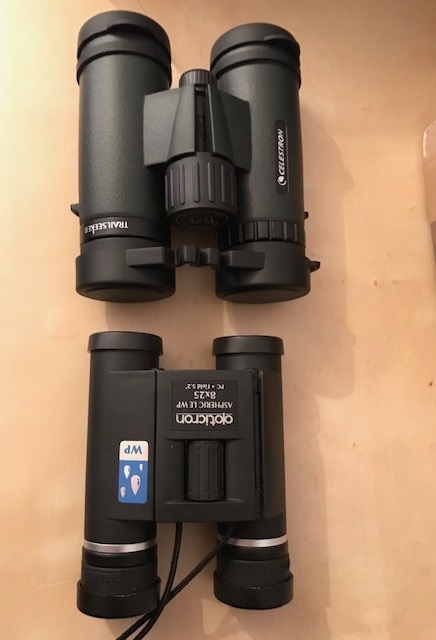
pp 97

That the Earth had life as soon as conditions were cool enough to accommodate them  seems inescapable, and Ross quotes numerous studies recently(as in the last decade) conducted on ancient zircon minerals, graphitic carbon, and metamorphosed shale that clearly show that a complex biosphere was already established as early as 3.8 billion years ago. The ‘smoking gun’ to this complex origin of life may, according to Ross, come from the isotopic signature of photosynthetic life as early as 3.7 billion years ago. He writes:

Another research team found that the carbon isotope signature of planktonic oragnisms in metamorphosed shale dating to 3.7 bliion+ year ago. In the same shale they measured a high ratio of uranium to thorium. This finding indicated a sequence whereby organic debris produced by a local reducing environment that precipitated uranium deposited in the shale sediment by oxidized ocean water. The presence of this oxidised water implies that oxygenic photosynthetic life was abundant prior to 3.7 billion years ago. Given that the simplest oxygenic photosynthetic bacteria contain over 2,000 gene products, this finding suggests that highly complex unicellular life already existed sometime before that date.

pp 98-99

How this complex cellular biochemistry originated so early completely eludes an evolutionary mechanism. It is simply incredulous that such complex cellular life could could come into being by a blind(by necessity) Darwinian process in such a short a time window. Indeed, more and more studies are revealing the same pattern: life began complex.

…………………………………………………………………………………………………………………………….

Another curious  aside: What’s the status of prebiotic chemical research?

Even the first chemical steps towards life require an in-ordinate amount of human ingenuity(read intelligent design or foresight). That much was recently admitted by a high-ranking  German prebiotic chemist in a leading scientific journal. Other heavy weights in the field have also waded into this debate, including Professor James Tour (who favourably reviewed an earlier draft of Ross’ book), who has exposed the scale of ignorance exhibited by educators towards this intractable scientific problem. Furthermore a credible source(terrestrial or extraterrestrial)  of homochiral enantiomers of sugars and amino acids needed to build the first cells has not yet been identified. Indeed the origin of life is the oustanding scientific problem of our generation and will likely remain so for many decades, if not centuries to come.

Much of this is not reported in the popular science periodicals, so readers beware!

……………………………………………………………………………………………………………………………..


Many people think it reasonable to believe in some vague evolutionary sequence of events simply by noting that the first lifeforms were microbes with multi-cellular organisms following them before the most complex creatures of all appeared; vascular plants and animals. But Ross entertains an entirely novel idea; the reason why life started out with microbes before introducing more complex life has nothing to do with evolution; more specifically he notes that the environment of the early Earth was very hostile to life, with large swings in temperature and pH, very high concentrations of unprocessed vital poisons** and with radiation levels(from the decay of radioactive atoms) five times higher than exist today. The reason why life started with microbes is that they are much hardier than more complex life (eukaryotes and muti-cellular lifeforms). Indeed, Ross points out that these biochemically sophisticated microbial species removed large amounts of vital poisons from the environment turning many of them into ores (many of which are now used by humanity in high technology devices).
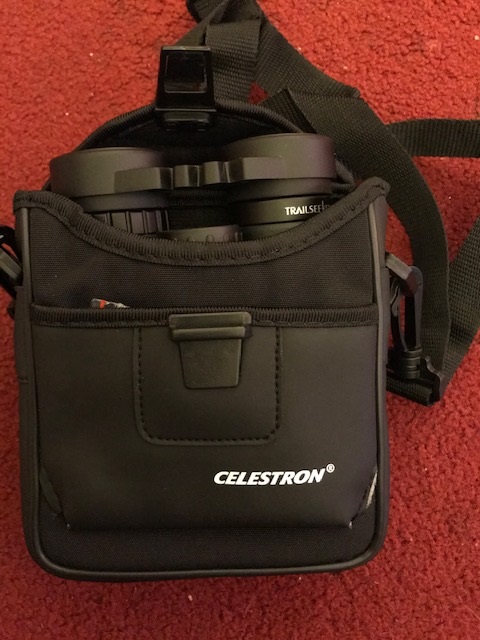
………………………………………………………………………………………………………………………………

**

What are vital poisons?

Vital posons are elements that are toxic if ingested at too high concentrations but are needed at specified low concentrations in body tissues to enable life processes to be maintained. Such elements include boron, fluorine, iron, sodium, magnesium, phosphorus, sulphur, chromium, manganese, copper, zinc, iodine, molybdenum, cobalt and nickel etc.

……………………………………………………………………………………………………………………………..

Thus, in this scheme of events, the Creator put these microbes to work as early as possible to terraform (my own terminology) the Earth’s earliest environments, clearing it of solubilised toxins which was necessary before eukaryotic and multicellular life-forms could be introduced!

In chapter 9, Ross provides an excellent overview of how primitive life functioned in maintaining the large-scale geologic health of our planet, particularly in playing a starring role in stimulating long-lived plate tectonic activity:

In 2015, two geophysicists, Eugene Grosch and Robert Hazen, noted that the subsurface fluid-rock microbe interactions could result in more efficient hydration of the early Earth’s  oceanic crust. This hydration would promote bulk melting leading to the production of felsic crust( igneous rocks rich in feldspar and quartz), which, being lighter than basaltic crust, in turn would generate microcontinents. That is, Earth’s first microbes, by faciliating extensive hydrothermal alteration of ocean floors, yielded extensive mineral diversification that soon resulted in the formation of several microcontinents.

pp 111


What is more, as life began to gorge on the minerals formed in Earth’s early crust, it accelerated its weathering, which in turn fed the resulting sediments into subduction zones, thereby stimulating still greater tectonic activity. This was vitally important for Earth’s future history, as the decline in long-lived radioisotopes over time might not have generated the required levels of thermal energy needed to keep the crust in a pliable state needed to build the large continents our planet would end up having. In addition, the early introduction of global  oxygenic photosynthesis drew large amounts of carbon dioxide from the atmosphere to compensate for a steadily brightening Sun. What Ross makes clear is that without the early introduction of life on Earth, this planet would most likely be sterile or nearly so, by now.

……………………………………………………………………………………………………………………..

Yet another curious aside:

Our world is richly endowed with minerals. Indeed, compared with Mars and Venus, which have an estimated 500 and 1000 different types of minerals, respectively, Earth is lavished with over 4,600 known mineral varieties, many of which required the active presence of living systems to create them! See Robert Hazen’s 2013 book, The Story of Earth, for further details.

……………………………………………………………………………………………………………………………….

As described in chapter 11, ongoing plate tectonic activity resulted in the formation of virtually all of Earth’s continental land mass by about 2.5 billion years ago, resulting in 29 per cent of our planet’s surface area being covered by dry land above sea level. To most onlookers, a value of 29 per cent seems somewhat arbitrary, but in fact, it may be highly fine-tuned. Greater land surface areas would induce too little precipitation in the interior of those ancient continents, preventing life from gaining a foothold in these places. On the other hand, land areas significantly less than 29 per cent would not be able to re-cycle enough valuable nutrients between the land, the sea and the atmosphere to maintain a healthy biosphere.

Chapter 13 & 14 of Improbable Planet discuss the significance of the many mass extinction events in Earth history with forensic detail. Again, at first glance, this might indicate that the cause of life on Earth has no author, but Ross begs to differ. Indeed, he suggests that the sporadic cycles of extirpation followed by rapid recovery of the biosphere with new forms of life achieved two aims;

1. The remains of these ancient life-forms yielded massive amounts of new biodeposits that would be used by humanity to launch a global civilization( think of how fossil fuels led to the Industrial Revolution, for example).

2. The lifeforms that replaced those that went extinct were more efficient collectively at drawing more greenhouse gases out of the Earth’s atmosphere, thereby compensating for the greater heating effects of an ever-brightening Sun.

…………………………………………………………………………………………………………………………….

A Question for your consideration: If God designed life so that it could evolve from one kind into another, then why does Earth history reveal so many mass extinction events? Why would He bother?

……………………………………………………………………………………………………………………………….


Ross calls on the second revelatory book of Scripture to advance his claims. Consider the words of the Psalmist of old:

These all wait for You,
That You may give them their food in due season.
What You give them they gather in;
You open Your hand, they are filled with good.
You hide Your face, they are troubled;
You take away their breath, they die and return to their dust.
You send forth Your Spirit, they are created;
And You renew the face of the earth.

Psalm 104: 27-30

Intriguingly, the fossil record agrees with the creation and extinction events discussed in Psalm 104 but, significantly, does not support a gradualistic scheme long envisaged by evolutionists.  Accordingly Ross takes his trained scientific eye and applies this to the study of the most famous explosive events in the history of life on Earth; the Avalon (574 -543 Million years ago) and Cambrian Explosions (543-533 Million years ago), the latter of which led to the sudden emergence of some 80 per cent of all existing animal body plans without any credible evolutionary antecedents! Perectly formed eyes, brains, nervous systems, skeletal systems etc, appearing as if out of nowhere.

Ross discusses the sense of bewilderment expressed by paleontologists seeking to provide an evolutionary explanation for these quantum leaps in biology, which are outlined in pages 172 to 179, quoting some leading researchers in the field, and in particular the utter failure of molecular clocks to keep pace with all the innovations wrought by these  explosive events in the history of life.

…………………………………………………………………………………………………………………….

Some further reading on the Cambrian Explosion: I would highly recommend readers  consult and study Stephen C. Meyer’s New York Times best-selling book Darwin’s Doubt: The Explosive Origin of Animal Life and the Case for Intelligent Design(2013). Concerning this book, paleontologist Dr. Mark McMenamin(Mt. Holyoke College) said:

It is hard for us paleontologists, steeped as we are in a tradition of Darwinian analysis, to admit that neo-Darwinian explanations for the Cambrian explosion have failed miserably. New data acquired in recent years, instead of solving Darwin’s dilemma, have rather made it worse. Meyer describes the dimensions of the problem with clarity and precision. His book is a game changer for the study of evolution and points us in the right direction as we seek a new theory for the origin of amimals.

……………………………………………………………………………………………………………………………..

In the final few chapters of the book, Ross outlines an extraordinary sequence of events involving continental breakup, mountain formation, ocean current changes, and ice ages that prepared our planet for the arrival of the pinnacle of God’s creation; humans. He notes that mankind’s appearance coincided with a time when solar activity flaring was at its lowest and solar luminosity (the Sudbury study) reached its greatest stability. Putting it all together he writes:

Is it mere coincidence that our one-of-a-kind long cool summer occurs simultaneously with the following unique events: (1) The Sun becomes exceptionally stable in luminosity, with minimal flaring and ultraviolet and X-ray radiation; (2) no nearby supernova eruptions occur: (3) maximization of the diversity and abundance of life on Earth; (4) various habitable zone windows align perfectly; and (5) many other coincidences described in these pages all come together? Not likely. These amazingly arranged features should give us pause to consider the meaning of our human existence.

pp 218-19

The final chapter reveals the spiritual reasons for human existence as outlined in the pages of the Bible. The enormous body of scientific ‘coincidences’ that Ross presents make it very clear that God deliberately and painstakingly prepared the Earth for humans and that our existence is truly a miracle. That said, these conditions cannot persist indefinitely. We are living in a very narrow window of time in which all these factors work optimally. The story Ross weaves makes it very unlikely that other lifeforms will exist elsewhere in the Universe, as many other scientific authorities in the field are now beginning to concede, and certainly nothing like human beings, but he does point out that we are not alone. The God of the Bible created a host of angelic creatures, the majority of which remained loyal to their Maker and have some capacity to interact with humans. It’s up to each and every one of us to accept Christ’s offer of redemption with exigency or suffer the eternal consequences.

I will leave you with the words of Professor James Tour concerning this wonderful book:

“In Improbable Planet, Ross holds the readers’ hand, leading them in a readable yet gently technical format through a compelling layer-upon-layer argument for the distinctiveness of the planet on which we live and of the preparation for inimitable life on Earth. The text is replete witth references from primary scientific articles in some of the most well-respected journals, underscoring the highest academic rigor taken in substantiating the factual claims. Only the shamefully flippant could dismiss this book as being a faith-filled presentation rather than the scholarly work it represents.”

I wholeheartedly agree!


Dr. Neil English is the author of a large(650+ pages) historical work, Chronicling the Golden Age of Astronomy, recently published by Springer-Nature.


 De Fideli.