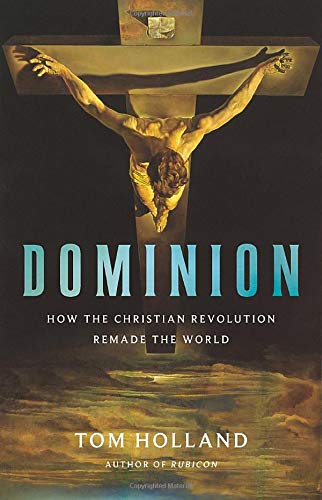
Book Review: “Dominion” by Tom Holland

The Christian influence on Western Civilisation will never be erased.

Dominion: How the Christian Revolution Remade the World by Tom Holland

Little Brown 2019

(594 pages, Hardcover $20.79)


As I sat down to collect my thoughts for the review of the distinguished British historian and author, Tom Holland’s latest book, Dominion- How the Christian Revolution remade the World,  we are in lockdown, owing to the COVID-19 pandemic that has swept the planet. Deprived of our usual liberties to roam where we will, humanity had risen above the drudgery of government imposed captivity, and shown its better side – if only for a while – helping those who are vulnerable, the sick and the elderly, the poor and the destitute, supporting our health care workers on the front line, raising countless millions of dollars for struggling charities, as well as lifting the spirits of families around the world with songs, stories, games and jests.

The irony of this predicament was not lost on me as I finished the final chapters of Holland’s latest tour de force. The thesis of Dominion is that, despite the west’s departure from Judeo-Christian values upheld for centuries and millennia, and though we largely live in a post-truth society more concerned with feelings than facts, the Christian message still casts a long shadow over the shared values of our contemporary, secular, civilisation. Acts of charity, selflessness, compassion and sacrifice – all of which are deeply anchored in the gospels of the New Testament- were abundantly on display in our societies during this time of crisis.

Drawing on 25 centuries of human civilisation, Holland calls upon a rich depository of ancient, medieval and modern history to drive his point home. Beginning with the Jews, who were the first people to receive instruction from the Creator God of the Bible, Holland contrasts the strict monotheism of Judaism to the polytheism of the surrounding nations. In addition, unlike the idols of silver, gold and fine polished stone used to characterise the gods of other nations, the Biblical God first revealed to the patriarchs was not to be worshipped in like manner. Drawing on the moral laws preserved in the Torah, Holland explores the implications of the Ten Commandments, the sabbath and laws establishing proper sexual relations in this ancient people. These laws and precepts, Holland convincingly argues, though resisted by the Persians, Babylonians, Greeks and Romans, gradually became written on the hearts of what we might call western civilisation in the aftermath of the fall of the Roman world.

The singular life of Christ – an itinerant preacher and healer born and raised in the Roman-occupied territories of Palestine, and subjected to a horrific execution on a Roman Cross – Holland argues, set in motion the greatest revolution in human cultural history the world has ever seen. Indeed, Holland goes so far as to suggest that the ideas conveyed in the New Testament effectively detonated the cumulative wisdom of the ancient world. We are not the benefactors of Greek and Roman civilisation, as many historians have asserted, but of Christendom.

Accordingly, Holland lays out the evidence for this startling conclusion, exploring how the early Christians followed the example of their Lord and Savior through great acts of charity, caring for the sick, the orphaned, the poor and the weak, not to mention heroic acts of martyrdom that shocked and horrified the pagans who lived alongside them. Surviving waves of persecution under tyrannical Roman Emperors, the blood of its martyrs sowed the seed of evangelism in the hearts and minds of both slave and free for the cause of Christ. And instead of stamping the new religion out, such heroism only served to swell its ranks across all tiers of society, from the mega-rich to the abject poor.

After Constantine the Great  granted his imprimatur to the Christian religion in the 4th century AD, a golden age of Christian literature blossomed in its wake, including many of the writings of the early Church Fathers – Ambrose, Jerome and Augustine of Hippo, in the western tradition, and Basil of Caesarea, Athanasius of Alexandria and John Chrysostom in the eastern tradition. And after the collapse of the Roman Empire in the west in the late 5th century AD, Christian ecclesia become synonymous with centres of learning. On the precipice of the known world, Christian monasteries preserved the knowledge passed down from classical antiquity and would eventually become the seedbeds for the establishment of the first university towns such as Padua, Bologna, Oxford, Cambridge and Madrid, to name but a few.

Holland explores the long ascent of what would emerge to be the powerful Roman Catholic Church, which came nearest to making the Christian religion truly catholic, or universal, but does not shy away from the problems within the Roman See which eventually led to its greatest schism; the Reformation and Protestantism. Holland displays a nuanced understanding of how key individuals of the Reformation such as Martin Luther, fanned the flames of antisemitism by equating Jews with vermin and calling for their extirpation for the rejection and murder of the true Messiah. How could Luther, who was in lockstep with the beating heart of so many ordinary people, turn out to be a hater of the original People of the Book? Are not all human beings made in the image of God? Whatever the reasons, antisemitism remained alive and well in the centuries that followed, as Holland explores in discussing the persecution of Jews by the Spanish Church throughout the 14th and 15th centuries, and culminating with the Nazi regime which ordered the extirpation of millions of Jews in the years leading up to and throughout World War II.

But antisemitism was just one aberration that emerged from what Holland couches more generally as muddled theology. The same could be said to have occurred with the problem of slavery and racism in general. Holland recounts stories about folk who could look you straight in the eye and tell you that their Bible – in both the Old and New Testaments – condoned slavery in its various forms. And yet, while it’s easy to take a few Biblical verses out of context to justify almost anything, most references to bondservants in the Old Testament do not have the same meanings we ascribe to slavery in our own society. Evidence of this is clear enough in Exodus 23:9 when the Lord warns the people of Israel not to oppress the ‘alien’ and the ‘foreigner’ in the land, and that to remember that they too were once under bondage. Furthermore, St. Paul boldly proclaimed that there is neither slave nor free, neither Jew nor Greek – all are one in Christ Jesus. It was with such convictions that prominent Christians such as William Wilberforce and others -curiously not mentioned by Holland – who provided the abolitionists with the political power to end slavery, first across the British Empire, and later in the New World,  especially through the monumental efforts of Abraham Lincoln in the aftermath of the American Civil War. The author revisits racism later in the book in his discussion of the late Nelson Mandela and the thorny issue of apartheid in the Republic of South Africa.

Holland also explores the radical effects of science on the Christian faith, particularly the works of Charles Darwin and his theory of evolution by natural selection. Darwin’s dangerous ideas gave intellectuals who either hated or held the Christian worldview in contempt – Aldous Huxley, Karl Marx, Vladimir Lenin, Andrew Carnegie and Adolf Hitler – plenty of ammunition to show that blind, impersonal and implacable forces shaped the origin and development of all life on earth. And man, long held to be a special creation by God – was merely just another evolved animal. One idea united all these men; if nature was red in tooth and claw, where the fittest only survived, surely human societies had a duty to follow suit. Suddenly the centuries old Christian ideals of compassion, sympathy and charity, respecting all individuals as unique creations of the Godhead, were now being portrayed as vice – deluded and ‘pusillanimous’ – and certainly not how an enlightened mankind ought to behave. And yet, all the while, there were (and still are) Christians who came to accept evolution, they do so ignorantly, since the latest scientific advances, which sadly, are not investigated by Holland in this treatise, are now rapidly and firmly demolishing those claims.

The God of the Bible is the God of love. Shouldn’t love always win? Holland looks at some controversial manifestations of ‘love wins,’ including the rise of homosexuality as an acceptable lifestyle in the modern world and the ordination of women clergy. If life-long monogamous relationships are the Christian ideal, Holland asks, what is so immoral about gay marriage? And if the Bible teaches that men and women are equal but different in the eyes of God, who shows no impartiality, why can’t women deliver sermons from the pulpit? Holland shies away from offering his own opinion on these questions but suffice it to say that a close reading of the Bible condemns all homosexual acts as gross violations of God’s plan for human beings. What’s more, such deviant behaviour has a strong destabilising influence on the nuclear family. And, as to the question of women clergy, St. Paul only offers his opinion (in the negative) rather than stating that it is a decree from Sovereign Lord, and thus is open to fresh debate.

Dominion is a book that deserves to be read by a broad cross-section of society, by people of faith and those of none. And while Holland maintains a decidedly agnostic tone throughout, he is certainly sympathetic to and, I suspect, somewhat in awe of the long shadow the Christian worldview has cast over human civilisation; a shadow that shows little sign of abating in the 21st century.


Dr. Neil English is the author of seven books in amateur and professional astronomy. He also earned a Diploma in Classical Studies from the Open University. His latest historical work, Chronicling the Golden Age of Astronomy, demonstrates how the science of astronomy was profoundly influenced by observers fully committed to the Christian faith.
 

De Fideli.

Paradigm Shifts.

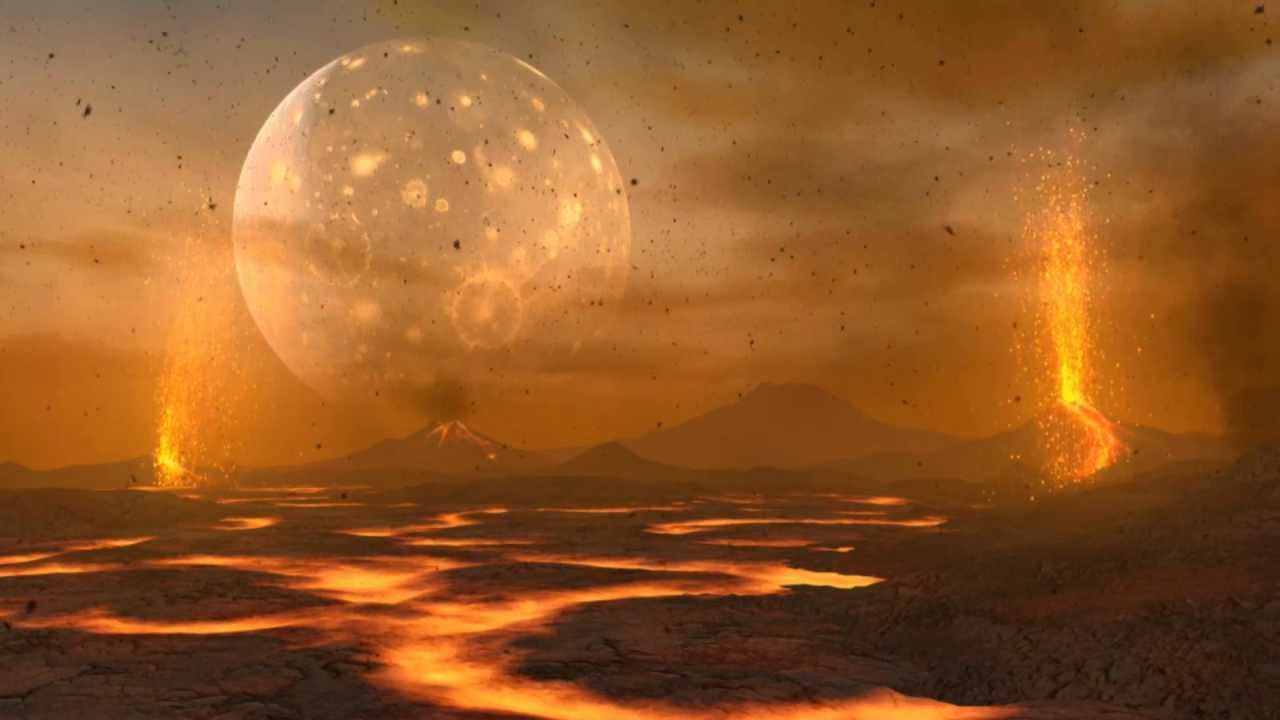
The Story of the Solar System: The Primordial Earth - skyatnightmagazine

Originally Published in Salvo Magazine Volume 50

“Life should not exist. This much we know from chemistry. In contrast to the ubiquity of life on Earth, the lifelessness of other planets makes far better chemical sense.” So writes Professor James Tour, one of the world’s foremost synthetic organic chemists, based at Rice University in Texas. Intimately acquainted with the latest research in prebiotic chemistry, Tour has expressed severe skepticism that a plausible naturalistic mechanism for the origin of life will be found any time soon. But he goes even further:


“We synthetic chemists should state the obvious. The appearance of life on Earth is a mystery. We are nowhere near solving this problem. The proposals offered thus far to explain life’s origin make no scientific sense. Beyond our planet, all the others that have been probed are lifeless, a result in accord with our chemical expectations. The laws of physics and chemistry’s Periodic Table are universal, suggesting that life based upon amino acids, nucleotides, saccharides and lipids is an anomaly. Life should not exist anywhere in our Universe. Life should not even exist on the surface of the Earth.”1

Dr. Tour’s views have surfaced at a time when astronomers have been peering into the depths of space, searching for intelligent signals from hypothetical alien civilizations. Yet although they have been listening for more than half a century, ET has not chimed in. The quest to detect life beyond the Earth is admittedly in its infancy, but the negative results thus far produced have caused more than a few scientists to question the underlying assumptions made by the early pioneers in the quest to find extra-terrestrial life: Frank Drake and Carl Sagan.

Despite what the general media report, there are a number of serious problems with the standard origin-of-life models, for which their proponents have failed to provide good answers. For example, life on Earth requires a source of homochiral molecules, that is, molecules that are capable of rotating the plane of polarized light either to the left (L) or to the right (D). Specifically, life invariably requires L amino acids and D sugars. But so far, chemists have been unable to identify a plausible natural mechanism by which these left- and right-handed biomolecules can be generated at the high level of purity necessary for the first cells to form. Indeed, such molecules can only be synthesised under highly constrained laboratory conditions, using purified (read bought in) reagents, which have little or no relevance to the environment of the early Earth. And while meteorites have been found that contain small amounts of amino acids, they invariably are shown to contain equal amounts of L and D isomers (technically known as a racemic mixture).

In short, no conceivable naturalistic scenario could result in the generation of the large, stable ensembles of homochiral ribose and homochiral amino acids that all naturalistic origin-of-life models require, affirming why no such natural sources have ever been found.2 I recently asked Dr. Tour directly if the problem of homochirality had been solved, and he firmly responded, “No; it is far from solved.”


The Phosphorus Conundrum

The element phosphorus is vital for the proper functioning of living cells, being a constituent of both RNA and DNA, as well as of adenosine triphosphate (ATP), the universal energy currency of all known life forms. But recent work conducted by Cardiff University astronomers suggests that phosphorus could be scarce in many parts of the universe. “Phosphorus is one of just six major chemical elements on which Earth organisms depend,” says Dr. Jane Greaves, and it is crucial to the compound ATP, which cells use to store and transfer energy. Astronomers have just started to pay attention to the cosmic origins of phosphorus and found quite a few surprises. In particular, phosphorus is created in supernovae—the explosions of massive stars—but the amounts seen so far don’t match our computer models. I wondered what the implications were for life on other planets if unpredictable amounts of phosphorus are spat out into space and later used in the construction of new planets.3


The Cardiff team used the UK’s William Herschel telescope, situated on La Palma in the Canary Islands, to measure the levels of phosphorus and iron in the Crab Nebula, a well-known supernova remnant. They compared those figures to measurements taken earlier from another supernova remnant known as Cassiopeia A (Cas A). Their preliminary results proved very surprising. While the measurements of Cas A showed relatively high levels of phosphorus, those from the Crab Nebula showed far lower levels. “The two explosions seem to differ from each other, perhaps because Cas A results from the explosion of a rare type of super-massive star,” said Dr. Phil Cigan, another member of the Cardiff team. “If phosphorus is sourced from supernovae,” added Greaves, and then travels across space in meteoritic rocks, I’m wondering if a young planet could find itself lacking in reactive phosphorus because of where it was born? That is, it started off near the wrong kind of supernova? In that case, life might really struggle to get started out of phosphorus-poor chemistry on another world otherwise similar to our own.4


Re-evaluating the Drake Equation

Ever since the American astronomer Frank Drake introduced his famous eponymous equation in the early 1960s, astronomers have produced widely varying estimates of the number of extant extra-terrestrial civilizations present in the Milky Way Galaxy. Until fairly recently, the estimates varied from 10,000 to a few million. Countering these estimates, some scientists have re-examined the so-called Fermi Paradox, posed by the distinguished Italian physicist Enrico Fermi in the form of a question: If the universe is so large, with innumerable habitable planets, then why have we not detected any sign of ET?

A team of scientists and philosophers based at the Institute of Humanity in Oxford University has taken a new look at the reasoning behind the Drake equation, and found that its optimistic expectations are linked to models like the Drake equation itself. The problem, as these researchers point out, is that all such models “implicitly assume certainty regarding highly uncertain parameters.” Indeed, following an analysis, they concluded that “extant scientific knowledge corresponds to uncertainties that span multiple orders of magnitude.” When these uncertainties are introduced, the outcome is strikingly different: “When the models are re-cast to represent realistic distributions of uncertainty, we find a substantial ex ante probability of there being no other intelligent life in our observable universe, and thus that there should be little surprise when we fail to detect any signs of it.” This result, they assert, “dissolves the Fermi paradox, and in doing so removes any need to invoke speculative mechanisms by which civilizations would inevitably fail to have observable effects upon the universe.”5


Questioning the Mediocrity Principle

Over the past few decades, astronomers have discovered thousands of exo-planets orbiting nearby stars, so that now there is little doubt that the number of planets in the observable universe likely exceeds the number of stars. Exo-planet hunters have discovered that many of these planets orbit their stars within the so-called habitable zone—that narrow annulus around a star that allows for the stable existence of water on a planet’s surface. Nevertheless, as geologist Peter Ward and astronomer Donald Brownlee argued in their highly influential book, Rare Earth; Why Complex Life Is Uncommon in the Universe,6 many of the features of planet Earth that have made it suitably equipped to allow both microbial and complex life to flourish on it over billions of years are likely very rare in the rest of the Universe.

For instance, the vast majority of potentially habitable exo-planets orbit low-mass red dwarf stars, which make up 75 percent of all the stars in the galaxy.7 These stars are much more active than sun-like stars, thus exhibiting higher rates of flaring than does the Sun. Many such stars also generate strong stellar winds that could strip away the atmospheres of their planets.8 And many planets are located so close to their parent stars that they have become tidally locked, meaning that they do not rotate on an axis but constantly present the same face to their stars as they move in their orbits. Yet another issue pertains to the potential of gravitational perturbations of a habitable planet by its neighbouring planets. Even small changes to the orbital characteristics of a planet could extirpate any developing life that might exist upon it. All these conditions raise many problems for the development of any hypothetical life forms on the surface of these planets over long periods of time.

NASA’s Hubble Space Telescope is currently being utilized in a special program called HAZMAT—Habitable Zones and M Dwarf Activity Across Time. And the early results from the program do not look encouraging. Preliminary data on just a dozen young red dwarf stars show that the frequency of flaring is much higher in them than in stars like the Sun; they typically emit flares with energies that are between 100 and 1,000 times higher than those of their elder counterparts. The most energetic red dwarf flares, dubbed Hazflares, are far more energetic than the most energetic flares ever to come from the Sun. “With the Sun, we have a hundred years of good observations,” says Parke Loyd, a member of the scientific team involved in the project.

And in that time, we’ve seen one, maybe two, flares that have an energy approaching that of the Hazflare. In a little less than a day’s worth of Hubble observations of these young stars, we caught the Hazflare, which means that we’re looking at superflares happening every day or even a few times a day.9

So-called super-earths—worlds larger than the Earth but smaller than Neptune—have recently been identified as possible candidate worlds for the development of life, but there is as yet no scientific consensus on whether they can maintain or even allow plate tectonic activity to occur in their crusts. Without plate tectonics, there will be far less efficient nutrient re-cycling, which would greatly hinder the flourishing of hypothetical life forms.

In March 2019, a team of astronomers based at the Australian National University dealt yet another blow to the prospects of finding viable exo-planetary biosystems. Modelling the magnetic fields of a large number of exo-planets, the astronomers concluded that planets with a strong magnetic field, like Earth, are likely to be very rare. “Magnetic fields appear to play an essential role in making planets habitable, so I wanted to find out how Earth’s magnetic field compared to those of other potentially habitable planets,” says Sarah Macintyre, the lead author of the paper.10 “We find most detected exo-planets have very weak magnetic fields, so this is an important factor when searching for potentially habitable planets,” she added.

Life on Mars or Venus?

Scarcely a year goes by without the question arising of whether or not Mars has microbial life. This issue was brought into sharp focus in June 2018, when NASA scientists announced the discovery by the rover Curiosity of organic matter in the soil of an ancient lakebed.11 But “organic matter” means different things to different people. Simply put, matter that is carbon-rich is not necessarily derived from biogenic sources.

More broadly though, if evidence of either extant or past life on Mars is uncovered, it might well also be discovered that such life originated on Earth. Indeed, it is estimated that over the 4-billion-year history of life on Earth, so much terrestrial soil has found its way to Mars that the Red Planet can boast an average of 2 kilograms of terrestrial soil per square kilometre of its surface (or about 11.3 pounds per square mile).12 It is certainly possible that some microbial life was delivered there along with the soil—in fact, the discovery of either extant microbial life or microfossils on Mars or the recent claim of life in the clouds of Venus might well be anticipated. If that happens, astrobiologists will need to consider the possibility that it came from Earth before claiming that any such life originated on these worlds. The popular media, pushing sensationalism, would never be so cautious.

Questioning Biosignatures on Exo-planets

Oxygenic photosynthesis by plants is the mechanism that produces the vast majority of the molecular oxygen in the terrestrial atmosphere. So for several decades, astrobiologists have speculated that the detection of oxygen in the atmosphere of an exo-planet would provide good evidence that life must exist there.13 While the detection of substantial levels of this gas would certainly be suggestive of the presence of plant life as we know it, it pays to remember that there are established abiotic mechanisms (mechanisms derived from non-living sources) that also can generate substantial molecular oxygen.

A group headed by Chinese astronomer Feng Tian of Tsinghua University published two interesting papers in 2009 that show that stars having less than 50 percent of the mass of the Sun (i.e., the majority of stars) emit copious quantities of hard UV rays and soft X rays throughout their long nuclear burning phases of up to 10 billion years.14 They also showed that when a lifeless exo-planet possessing carbon dioxide in its atmosphere is irradiated, the rays can break down the CO2 into carbon atoms and molecular oxygen. Over time, the carbon atoms, being less massive, escape into space, leaving the molecular oxygen behind. Tian’s calculations show that this molecular oxygen can reach concentrations of a few percent and so might be confused with a genuine biosignature.

 When a team of chemists from Johns Hopkins University simulated the atmospheres of exo-planets beyond the solar system, they found that they could create simple organic molecules and oxygen under various scenarios without the mediation of life.15 “Our experiments produced oxygen and organic molecules that could serve as the building blocks of life in the lab, proving that the presence of both doesn’t definitively indicate life,” says Chao He, assistant research scientist in the Johns Hopkins Department of Earth and Planetary Sciences. “Researchers need to more carefully consider how these molecules are produced.” Up-and-coming missions, such as the highly anticipated ones utilizing the James Webb Space Telescope, would need to take results like these into account before jumping to any firm conclusions about the habitability of a candidate planet. As a case in point, the recent flap in the media about the detection of phosphine on Venus, upon further analysis, showed that the biomarker in question was not,  in fact, present in statistically significant levels.

In a recent development, a team of planetary scientists led by Li Zeng at Harvard University estimated that as many as 35 percent of exo-planets may have impenetrable water oceans hundreds of kilometres deep.16 But while NASA has long adopted the mantra, “follow the water,” the same scientists caution that these planets are very unlikely to be habitable. Their fathomless ocean worlds would generate pressures millions of times greater than those found on Earth, resulting in exotic, rock-like ice formations many kilometres deep (such as ice VII) covering their floors. Such conditions would prevent any nutrient recycling from occurring, thus rendering these planets sterile.

Call for Caution

Investigating whether extra-terrestrial life exists or not is a profoundly important and interesting scientific endeavor, but at this point, there are good grounds for remaining skeptical about whether it actually exists. Given the arguments raised in this article, it is entirely reasonable to think that life might be extraordinarily rare in the universe, perhaps even unique to Earth. Only time will tell.


Notes

  1. James Tour, An Open Letter to My Colleagues (August 2017): http://inference-review.com/article/an-open-letter-to-my-colleagues.
  2. Hugh Ross and Fazale Rana, Origins of Life (RTB Press, 2014).
  3. “Paucity of phosphorus hints at precarious path for extraterrestrial life” (Apr. 4, 2018): eurekalert.org/pub_releases/2018-04/ras-pop040318.php.
  4. Ibid.
  5. Anders Sandberg et al., “Dissolving the Fermi Paradox” (June 8, 2018):

https://arxiv.org/pdf/1806.02404.pdf.

  1. Peter D. Ward and Donald Brownlee, Rare Earth; Why Complex Life Is Uncommon in the Universe (Copernicus Books, 2000).
  2. “Superflares from young red dwarf stars imperil planets,” NASA News (Oct. 22, 2018):

https://exoplanets.nasa.gov/news/1527/superflares-from-young-red-dwarf-stars-imperil-planets.

  1. O. Cohen et al., “Magnetospheric Structure and Atmospheric Joule Heating of Habitable Planets Orbiting M-Dwarf Stars,” Astrophysical Journal 790 (July 2014): doi:10.1088/0004-637X/790/1/57.
  2. Ibid., note 7.
  3. “Strong planetary magnetic fields like Earth’s may protect oceans from stellar storms,” Royal Astronomical Society (Mar. 14, 2019): https://m.phys.org/news/2019-03-strong-planetary-magnetic-fields-earth.html.
  4. Jennifer L. Eigenbrode et al., “Organic Matter Preserved in 3-Billion-Year-Old Mudstones at Gale Crater, Mars,” Science 360 (June 8, 2018): https://doi:10.1126/science.aas9185.
  5. Ibid., note 2.
  6. Carl Sagan et al., “A Search for Life on Earth from the Galileo Spacecraft,” Nature 365 (Oct. 21, 1993): nature.com/articles/365715a0.
  7. Feng Tian, “Thermal Escape from Super Earth Atmospheres in the Habitable Zones of M Stars,” Astrophysical Journal 703 (Sept. 2, 2009): https://dspace.mit.edu/bitstream/handle/1721.1/96200/Tian-2009-THERMAL%20ESCAPE%20FROM.pdf;sequence=1; Feng Tian et al., “Thermal Escape of Carbon from the Early Martian Atmosphere,” Geophysical Research Letters 26 (Jan. 31, 2009): https://agupubs.onlinelibrary.wiley.com/doi/full/10.1029/2008GL036513.
  8. Chao He et al., “Gas Phase Chemistry of Cool Exoplanet Atmospheres: Insight from Laboratory Simulations,” ACS Earth Space Chemistry (Nov. 26, 2018): https://pubs.acs.org/doi/10.1021/acsearthspacechem.8b00133.
  9. Li Zeng et al., “Growth model interpretation of planet size distribution,” PNAS (Apr. 29, 12019): pnas.org/content/early/2019/04/23/1812905116.


Neil English has been following developments in pre-biotic chemistry and astrobiology for the last 25 years. He holds a Ph.D. in biochemistry and a BSc(Hons) in physics & astronomy. His latest book, Chronicling the Golden Age of Astronomy (Springer, 2018), explores four centuries of visual astronomy. The article first appeared in Salvo Magazine Summer 2019. You can support his ongoing work by making a small donation to his website. Thanks for reading!


De Fideli.