A Work Commenced August 10 2026
Product: Svbony SA207 8 x 32
Country of Origin: China
Chassis: Magnesium alloy overlaid by protective rubber
Exit Pupil: 4.0mm
Eyecups: Twist up, innovative step-less design
Eye Relief: 19mm
Field Flatteners: Yes
IPD Range: 56-74mm
ED Glass: Yes, APO designation
Coatings:FBMC, dielectric phase coatings, hydrophobic coatings on exterior lenses
Field of View: 142m@1000m(8.12 angular degrees)
Dioptre Compensation: +\-4
Close Focus: 2.03m measured
Light Transmission: 90%
Waterproof: Yes IPX7
Nitrogen Purged: Yes
Tripod Mountable: Yes
Weight: 552g
Accessories: Padded case with carry strap, neck strap, rain guard and objective covers, instruction manual
Warranty: 2 Years
Price(UK): £219.99
Five years ago, I reviewed my very first SvBony binocular: a little SV202 ED 8 x 32. As I explained in that review, I bought a unit in to test the claims of SvBony since they were offering so many advanced features in a binocular that cost just £99.00, including phase corrected prisms, ED glass and a full multi-coating. Although I was initially very sceptical I discovered that the claims were true. This was (and still is)a great little binocular for the price. Since then I’ve followed SvBony with great interest as they have expanded their product line. In this review I’m going to provide my thoughts on their latest and greatest compact binocular: the SA 207 8 x 32.
Five Years in the Making
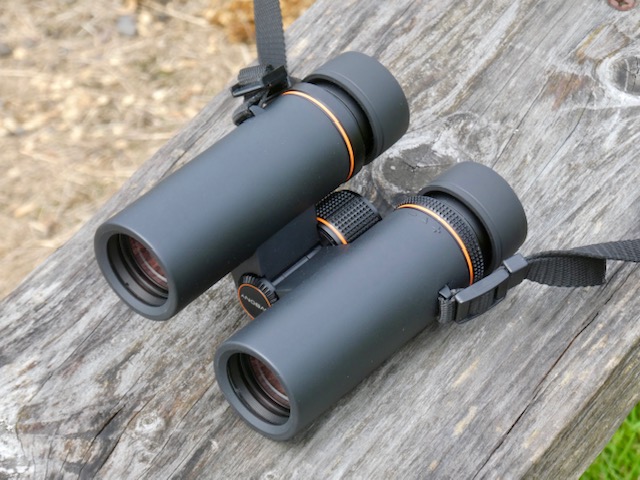
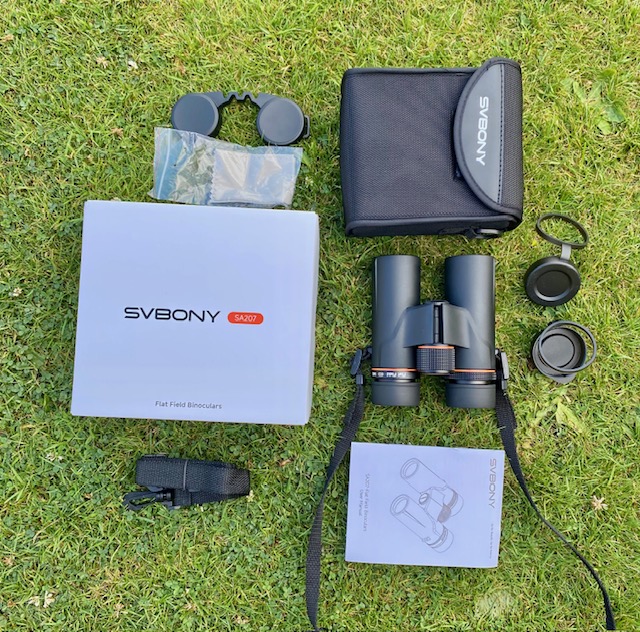
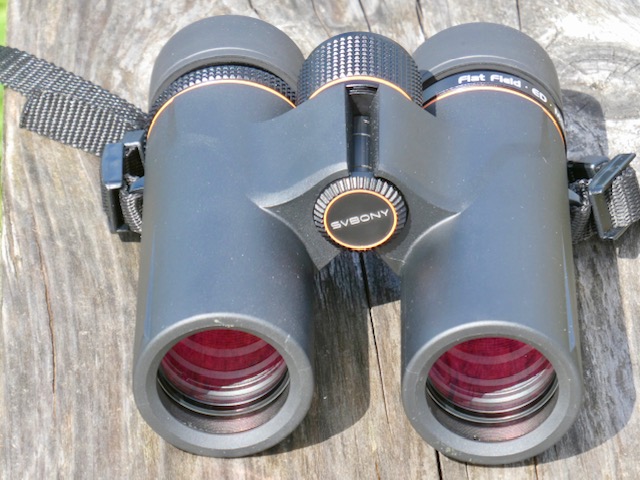
The SA207 arrived in a small, perfectly packaged box. The binocular was found inside a small black case with the SvBony logo on the front. This is one handsome binocular, featuring an understated, stealthy, all-black colour scheme with splashes of bright orange accent lettering and trim on the focus wheel and on the base of the eyepieces.
Eye relief is very generous too: I was easily able to access the entire field with my ordinary eye glasses.
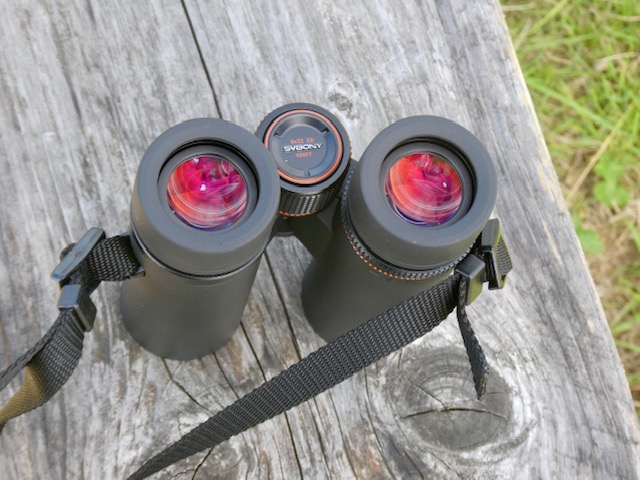
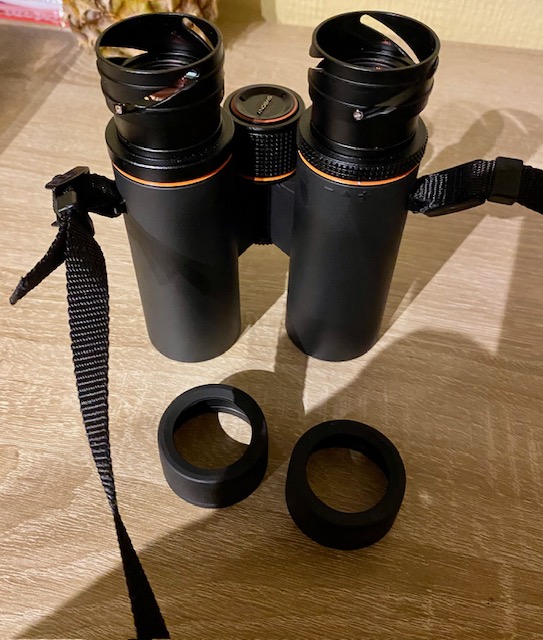
The twist up eye cups are composed of high quality silicone affording an exceptionally comfortable substrate upon which you rest your eyes. Like the more advanced SA207 PRO 8 x 42, there are no fixed positions. You literally move them up as much or as little as you like, and they hold their positions very well. I think it’s a godsend – the ability to tailor your own eye relief!
Moi? I like to use the minimum amount of eye relief that prevents blackouts as well as providing full access to the entire field. In addition, they can be removed to get full access to the eye lenses for cleaning.
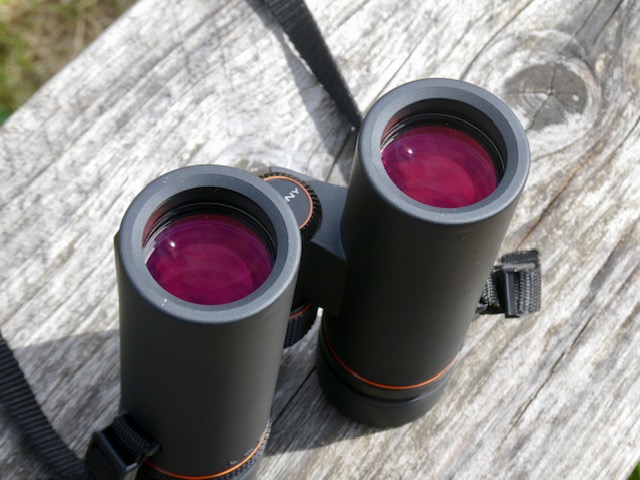
The lenses have a lovely purple bloom from the immaculately applied anti-reflection coatings. Note how deeply recessed the objective lenses are- excellent for curtailing stray light, dust and rain.
The focus wheel is perfectly tuned on my unit, going through about 1.5 revolutions anticlockwise from its closest focus to infinity and a bit beyond. The metal focus wheel has a lovely textured feel to it and moves with buttery smoothness and absolutely no free play. Just a joy.
The dioptre compensation mechanism is traditional; tried and trusted, located under the right eyepiece. Rotate left or right as required. I’ve had instruments with many alternate mechanisms – lockable included -but none come close to the sheer simplicity and effectiveness of this traditional design solution.
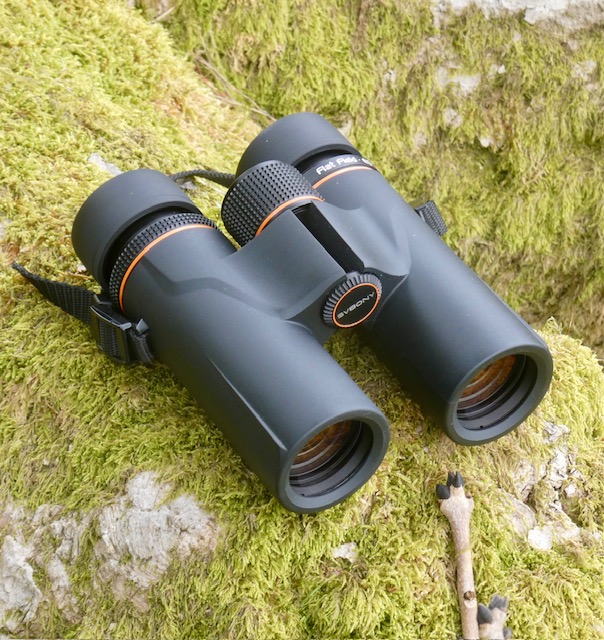
Ergonomically it ranks very highly in my estimation. It sits gracefully and relaxed in the hand. The soft silicone eyecups make for a supremely comfortable viewing experience, with a silky smooth focus wheel rapidly finding optimal sharpness.
Optics
As delightful as the ergonomics are on the SA207 8 x 32, they count for very little if the instrument doesn’t deliver optically. I’m relieved to report that the SA207 offers excellent optical performance to match its superb handling.
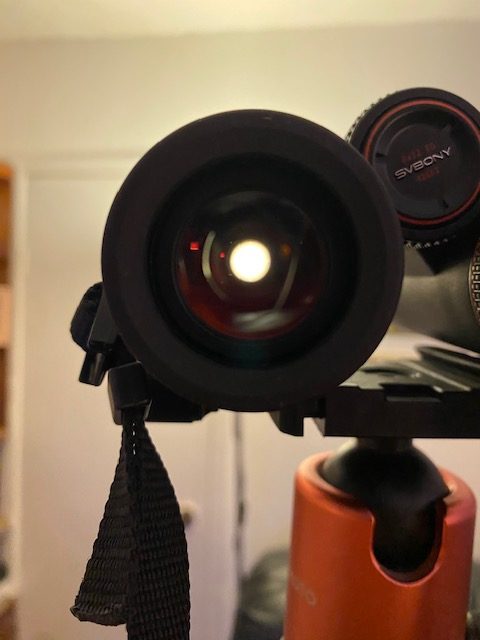
Beginning with a bright light test, I examined how the instrument would behave after I directed an intense beam of white light into the binocular to see how it handled it. I’m pleased to report an excellent result: there was no prominent diffraction spike and only a couple of very subdued reflections.
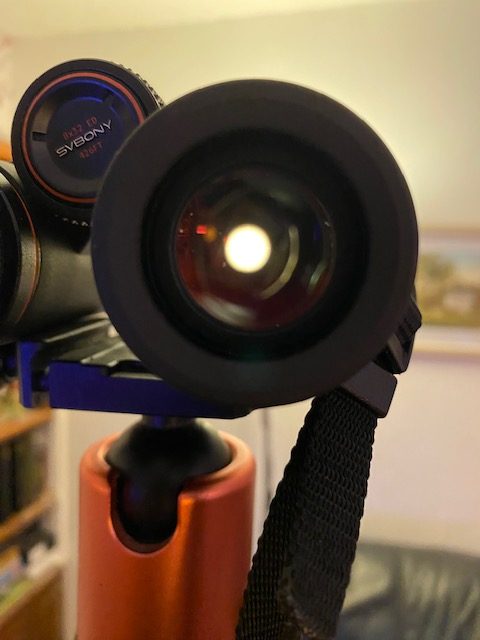
Then I examined the entrance pupils by placing a bright room lamp ahead of the objectives. As you see below, the result was fantastic: check out those perfectly round exit pupils with no light leaks in their vicinity. Collectively these results indicate that the SA 207 should present a lovely high-contrast image with excellent resistance to glare.
The view is every bit as good as I expected: tack sharp across the entire 8.12 degree field, with superb contrast. Colour correction is also exceptionally well handled with only a trace seen at the edges of the field. Pincushion distortion is very moderate, better than many other high-end binoculars I’ve tested, but not quite as well corrected in this regard compared with their bigger flagship model, the SA207 PRO 8 x 42. Brightness is very good and colour cast is very natural to my eyes.
Where this instrument really excels is resistance to glare. It is far better than the vast majority of instruments I’ve tested and fully the equal to my Leica Ultravid HD Plus 8 x 32. Even with a bright Sun placed just above the SA 207, I was able to enjoy wonderful, high contrast views of foreground objects where many other binoculars would utterly fail! These are amazing results for a compact binocular with such a modest price tag!
I tested its off-axis performance by centring a bright star in the field of view and moving it slowly to the edge of the field. The star remained very sharp and pinpointed nearly all the way to the edge, where I could see a little bit of flaring due to coma and astigmatism.
Conclusions & Recommendations
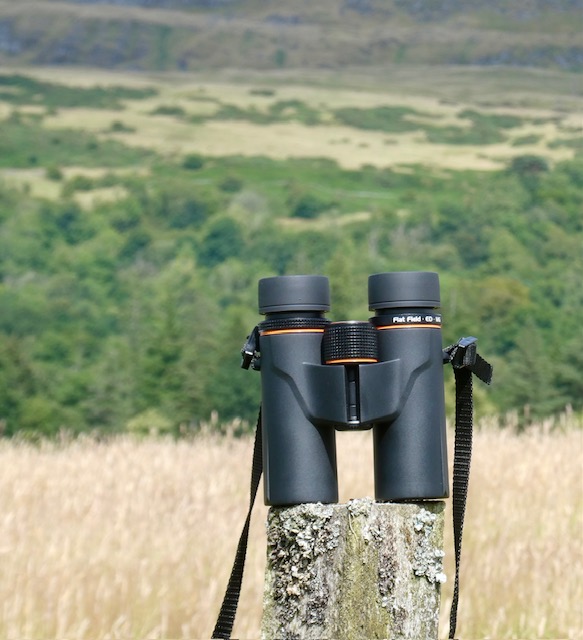
The SvBony SA207 8 x 32 is a real touch of class. I find it amazing to learn that the SA207 8 x 32 is not at all related to the SA207 PRO 8 x 42. They are. I’m reliably informed, made by different manufacturers in different factories. Indeed SvBony plan to release another member of each series: a larger 8 x 42 SA207 and a smaller SA207 PRO 8 x 32. Personally I find it hard to comprehend how much better a 32mm SA207 PRO could significantly exceed the quality of the SA207, apart from offering an even wider field of view and an even flatter field. Time will tell I suppose. In the meantime, if you are after a first-class compact glass for birding, hiking or travelling, you could do whole a lot worse than choosing the SA207 8 x 32. Indeed, it has replaced my Leica Ultravid HD Plus 8 x 32, since it offers the same or better performance, but with much more eye relief, and a larger, flatter field of view.
Very Highly Favoured!
Dr Neil English is author of Choosing & Using Binoculars: A Guide for Stargazers, Birders and Outdoor Enthusiasts.