A Work Commenced May 21 2026
Get $15 off the purchase price by using the code Neil 15 at the following link
Product: Svbony SA207 Pro 8 x 42
Country of Origin: China
Chassis: Magnesium alloy overlaid by protective rubber
Exit Pupil: 5.25mm
Eyecups: Twist up, innovative step-less design
Eye Relief: 19.8mm
Field Flatteners: Yes
IPD Range: 56-74mm
ED Glass: Yes, APO designation
Coatings:FBMC, dielectric phase coatings, hydrophobic coatings on exterior lenses
Field of View: 159m@1000m(9.1 angular degrees)
Dioptre Compensation: +\-4
Close Focus: 1.51m measured
Light Transmission: 91%
Objective filter threads: Yes
Waterproof: Yes IPX7
Nitrogen Purged: Yes
Tripod Mountable: Yes
Weight: 944g
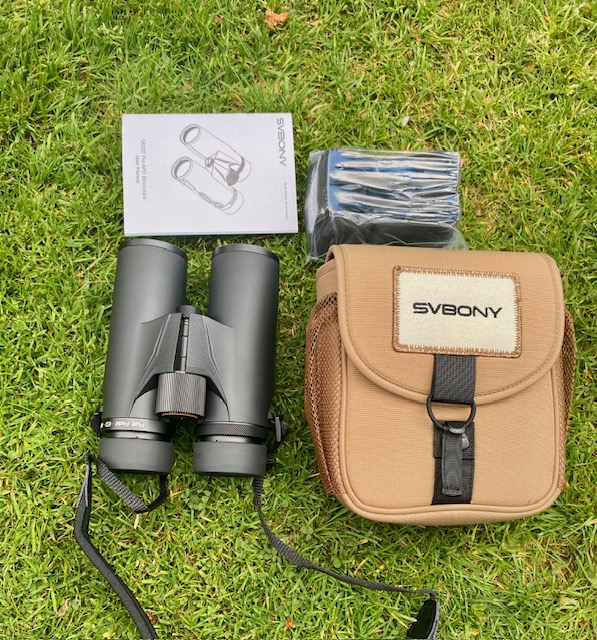
Accessories: Padded case with carry strap, neck strap, rain guard and objective covers, instruction manual
Warranty: 2 Years
Price(UK): £399.99
Without a shadow of a doubt, we are living in the golden age for purchasing high quality binoculars. For many decades, the finest optics were the purview of companies like Zeiss, Swarovski and Leica, who command very high prices for their optics, but in the last few years some serious challenges to the status quo have emerged.
When I first set out surveying the binocular market, I discovered, quite by accident, a relatively new company, Svbony, who were offering good quality binoculars at incredibly low prices. I speak of the SV202 series which is now enjoyed by thousands of binocular enthusiasts across the world. The SA205 series was a significant improvement over the SV202s, offering a much flatter field of view. Most recently, Svbony has launched their new flagship binocular series, the SA207 Pro, which promises top notch optical performance comparing very favourably with the highest quality wares offered by European manufacturers. In this review, I’ll be test driving the SA207 Pro 8 x 42.
First Impressions
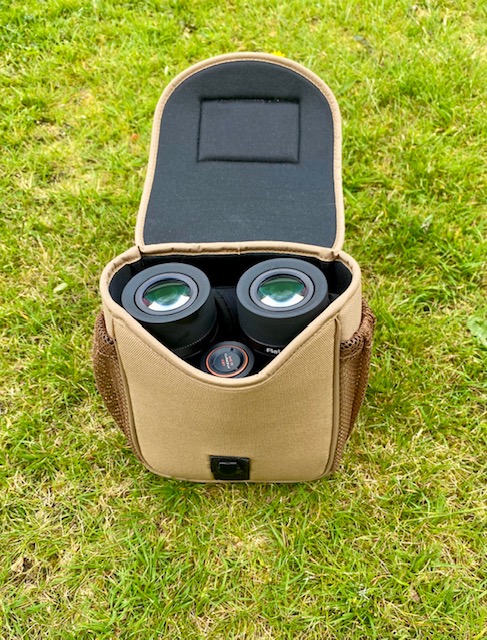
The instrument arrived well packed with nothing out of place. I was first struck by the quality of the carry case for the SA207 Pro which is very nicely padded to protect the optics with its rich, beige colour. The instrument fits snugly inside and has plenty of room to accommodate the neck strap. On the rear end of the case a separate zipped compartment allows you to carry a lens cloth and some lens wipes etc.
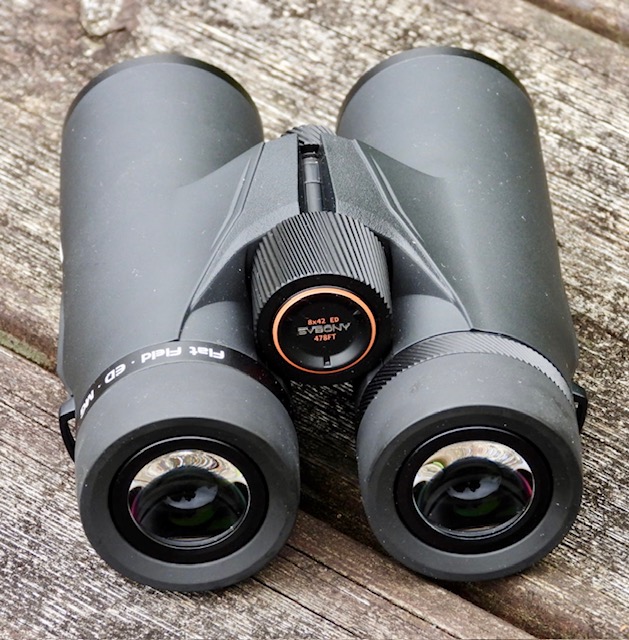
Turning to the instrument itself, my first impressions went something along the lines of, “ this is one solidly built binocular,” its large frame and sleek black rubber armouring protecting the magnesium alloy chassis underneath. I love the splashes of orange complementing the black colour of the chassis.
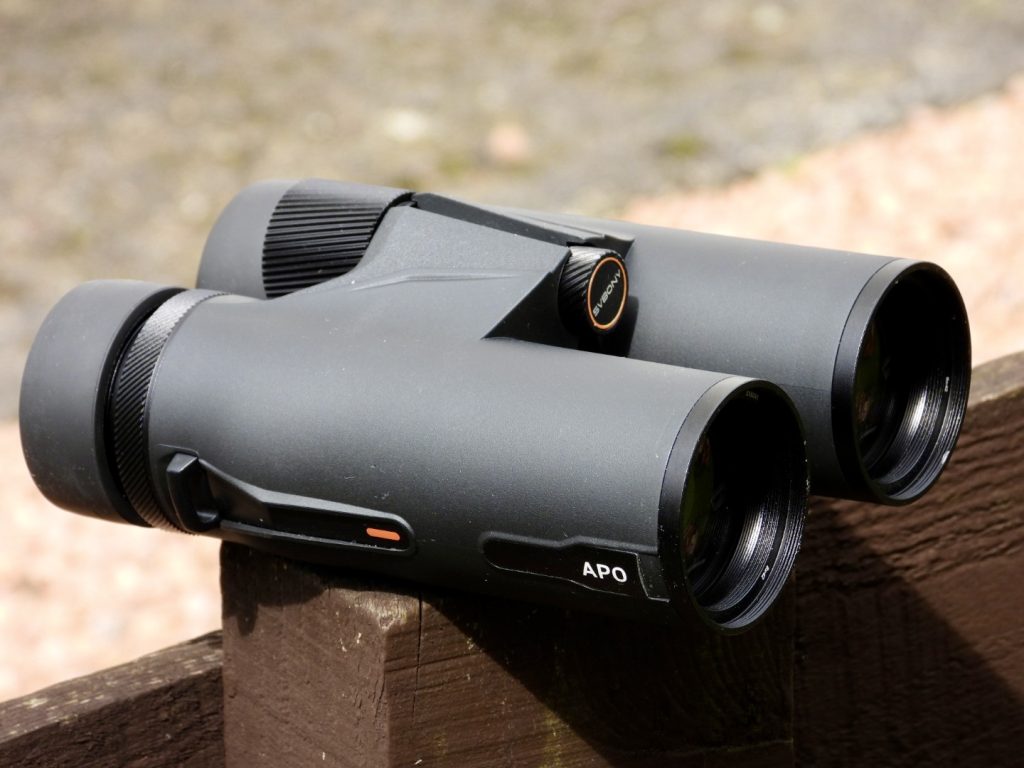
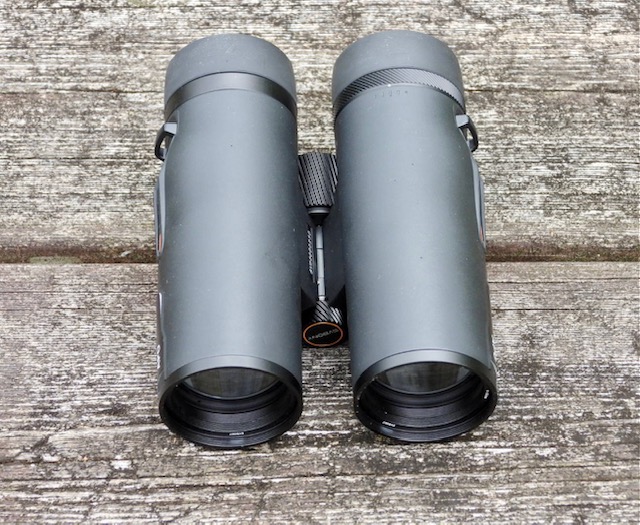
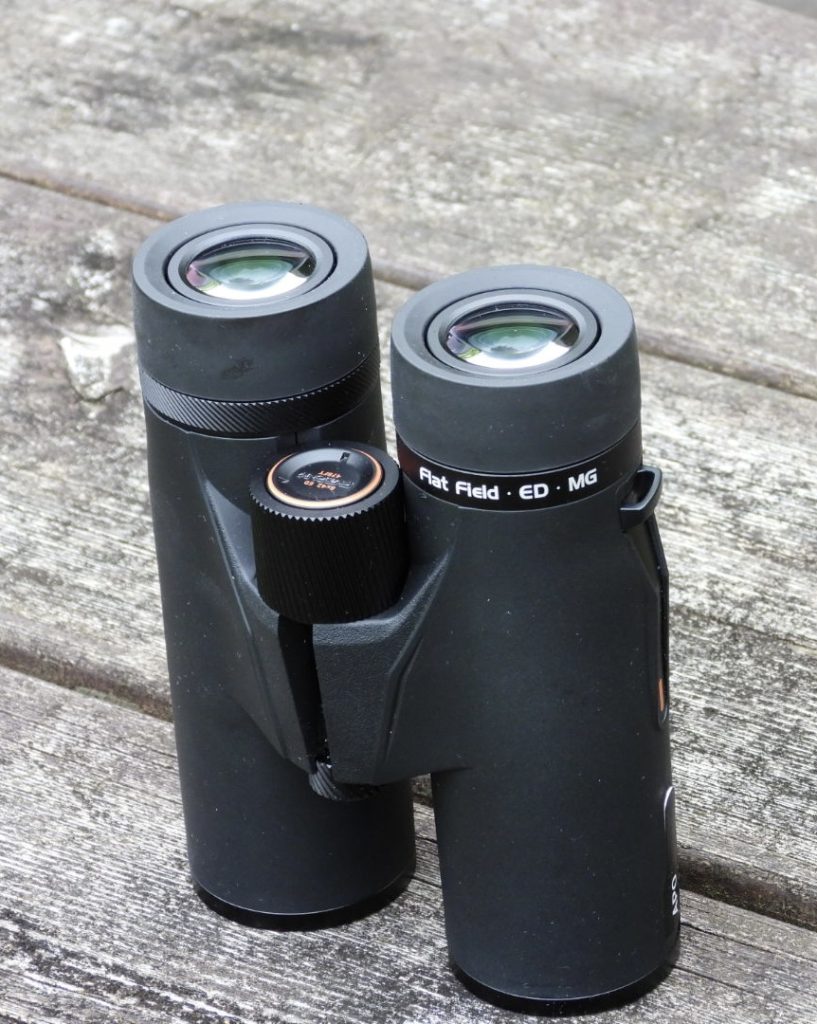
My first surprise came when I went to twist up the eyecups. Unlike any other model I’ve tested, the SA207 Pro offers no fixed detents. You simply rotate the eyecups and watch them move upwards. That means that the user can set them to whatever distance from the eye lens that is most comfortable. They work incredibly well by the way, rigidly holding their positions no matter how much or how little they are twisted. This gives the user an extra degree of freedom in reaching the optimal eye relief for their physiology.
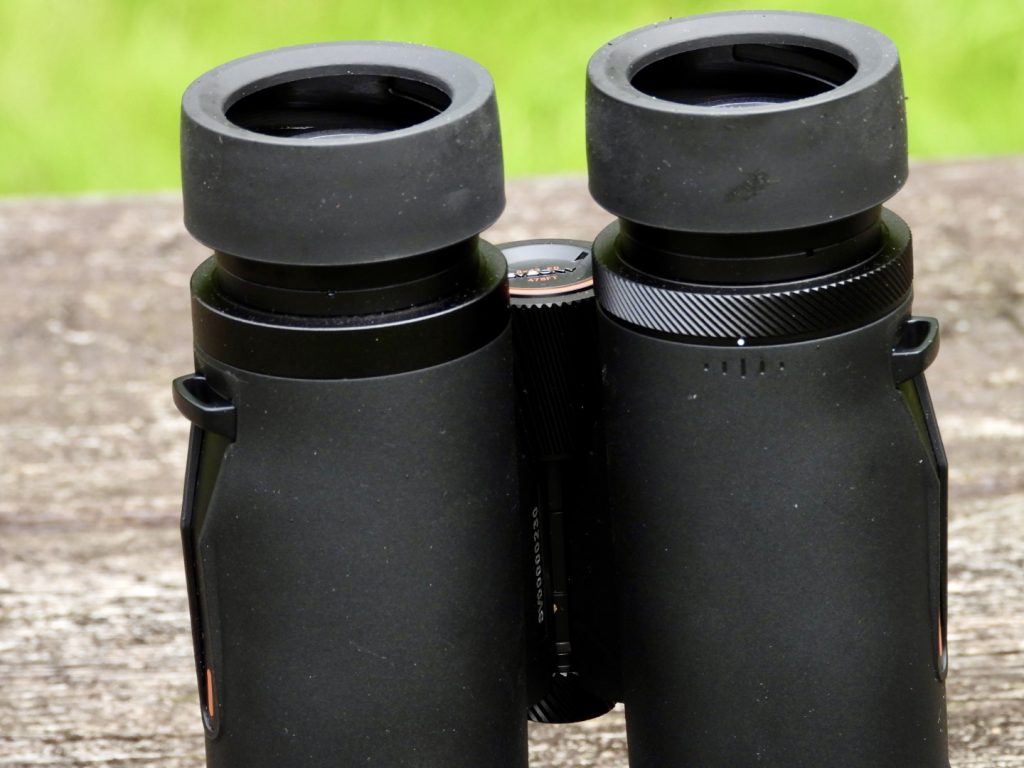
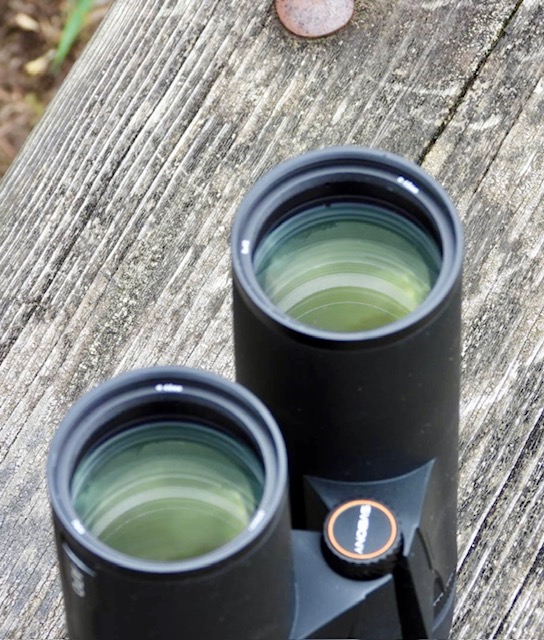
The eyepieces are large and extremely comfortable to rest your eyes against, with the generously large exit pupil rendering it child’s play to correctly centre them on your target. The objective lenses are well recessed and the antireflection coatings generating tobacco coloured hues in broad daylight. The reader will also note that the objectives are threaded to accept a variety of astronomical filters. The interior was spotlessly clean, with no finger prints, dust or metal shavings I see all too often in other models.
Another useful upgrade featured on the SA207 Pro 8 x 42 are the hydrophobic coatings applied to the exterior lenses of the instrument. In my damp Scottish climate, this will help repel water droplets, condensation and dirt, making them easier to clean.
The dioptre compensation ring is located under the right ocular lens. It rotates smoothly but with a nice amount of inertia, enabling it to hold its position precisely in field use.
The textured metal focus wheel is superb – buttery smooth to rotate in both directions and with zero play. It’s beautifully tuned too, allowing the user to quickly and accurately focus from just a few metres away to infinity and a little bit beyond. About one and a half revolutions of the wheel anticlockwise takes you from its closet focus to infinity. That said, I found myself using only about 5 per cent of the focus travel to glass nearly all the subjects I used to test this model. The main reason for this is the SA207 Pro’s incredible close focus, bringing objects as near as 1.5m into sharp focus!
While the accompanying neck strap is padded out enough to handle the substantial weight of this binocular (944g), I felt an instrument as sturdy as this would benefit from stronger support, if only for added peace of mind. I had one small niggle about the rain guard accompanying the SA207 Pro. It’s just too tight! Indeed, the rubber eyecups come off with the rain guard, which is not ideal! Thankfully, the rubber eye cups are designed to be pulled off to aid in cleaning the eyepiece lenses.
The SA207 Pro 8 x 42 handles superbly. It’s easy to hold in my medium sized hands. It has the look and feel of an instrument costing far more than its modest asking price suggests.
Optics
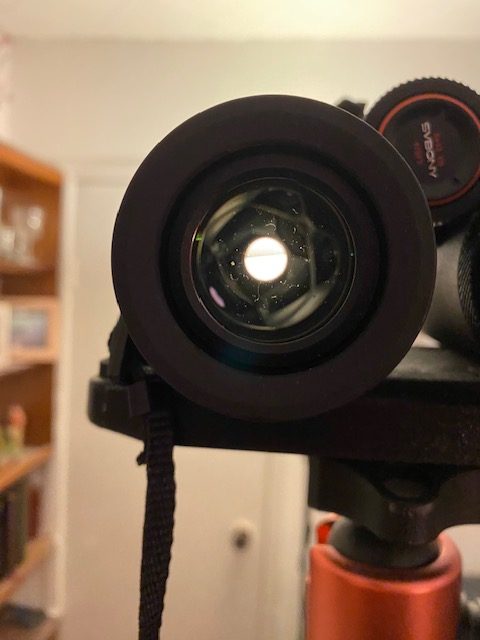
I began my optical testing by shining an intensely bright beam of light from across my living room to see how the binocular handled it. The result was very encouraging: a couple of very subdued internal reflections and a modest diffraction spike. When I turned the SA207 Pro on a less bright streetlight after dark the internal reflections had all but disappeared but the diffraction spike remained.
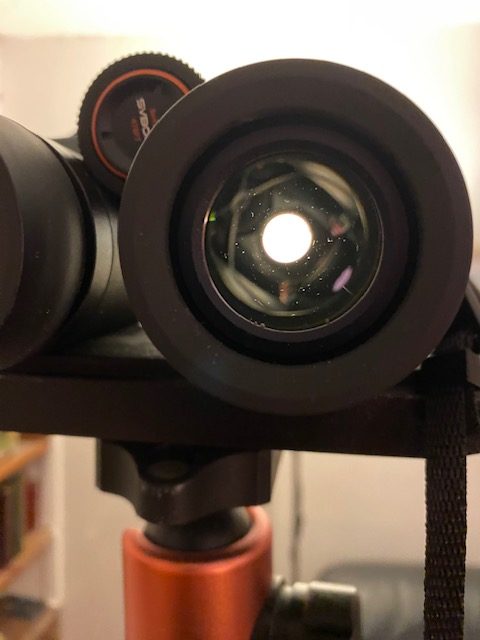
Next I examined the light around the exit pupils. The results were excellent, as you can see below: perfectly round entrance pupils and no light leaks in their vicinity. This is good evidence that the SA207 Pro will deliver high contrast images even against the light.
The view is excellent: tack sharp from centre to edge, bright, and vivid natural colours and lovely contrast. The big eye box makes getting a relaxed view easy to achieve. Comparing it to the view through my Leica Ultravid HD Plus 8 x 32, I was delighted to see that the views were very comparable.
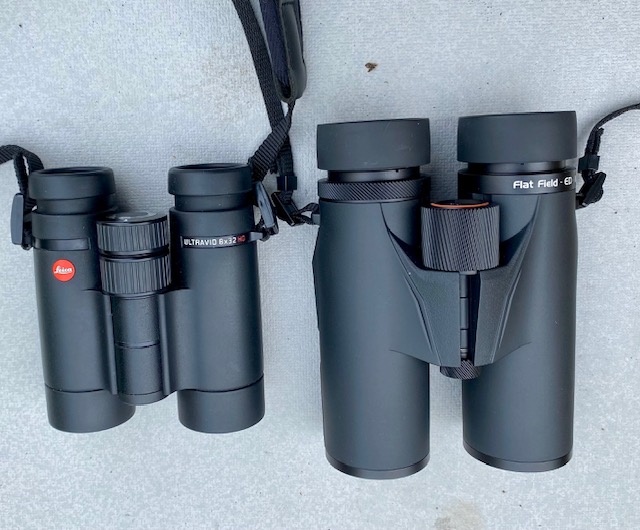
The biggest difference was the near elimination of any pin cushion distortion in the SA207 Pro that was all too obvious in the Leica glass, as well as the much larger field(40 per cent larger) of view presented by the Svbony. Leica has a reputation for delivering optics that suppress glare better than nearly all other brands and in these tests – glassing against the light – it did pull ahead, but not by much. Chromatic aberration was exceptionally well controlled in the SA207 Pro with only a trace seen right at the edge of the field. Indeed, I felt the Svbony glass showed less colour fringing than the Leica. Resolution at distance seemed to be a tad better in the SA207 Pro compared with the Leica too. Eye relief was also much better in the SA207 Pro 8 x 42 than in the Leica. Keeping the eyecups in their fully retracted position I could access nearly all the field of view with my regular (non progressive) glasses.
Testing the SA207 Pro 8 x 42 on the night sky, I centred the bright star, Arcturus, to see how the instrument would behave as I moved the star from the centre all the way to the field stops. The star remained tightly focused nearly all the way to the edges, with very mild coma and a trace of astigmatism showing up in the outermost 10 per cent of the field. This will make an excellent stargazing glass for cruising the summer Milky Way.
All in all, the SA207 Pro optics are indeed top notch, comparing favourably with instruments costing three or four times its retail price!
Conclusions & Recommendations
To say that I’m impressed with the SA207 Pro 8 x 42 would be an understatement. It clearly performs well enough to place it in the top tier of contemporary mid-sized binoculars, yet is offered at an incredible price. It’s ideal for birding, casual stargazing, and landscape exploration. I’m very much hoping Svbony will bring other members of the SA207 family to market, including perhaps a 10 x 42, 8 x 32 or even a 10 x 50. Only time will tell!
Highly Recommended!
Dr Neil English is author of Choosing & Using Binoculars: a Guide for Stargazers, Birders and Outdoor Enthusiasts.
De Fideli.